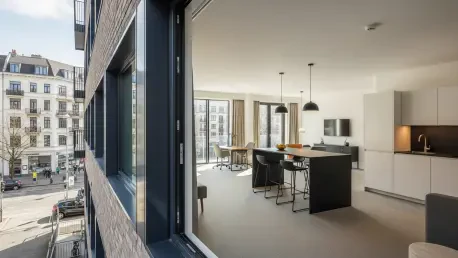

The institutionalization of the European hospitality sector has reached a tipping point where the distinction between a professional suite and a residential flat determines the long-term viability of multi-million dollar portfolios. Historically, serviced apartments existed on the periphery of the lodging industry, viewed as a niche alternative for transient workers or niche travelers. However, the current landscape of 2025 and 2026 has seen this model transform into a mainstream institutional asset class. This evolution is driven by a sophisticated understanding of the hybrid model, which effectively bridges the gap between the rigid, service-heavy nature of traditional hotels and the hands-off, long-term nature of residential rentals. Institutional interest is no longer speculative, as evidenced by the massive commitment of capital from global entities such as CBRE Investment Management and Brookfield AM.
A diverse range of players now defines this maturing market, creating a competitive environment that forces both sectors to refine their value propositions. Staycity Ltd remains a dominant force, particularly through its Wilde brand, which leans into the “home-away-from-home” aesthetic that modern travelers crave. Simultaneously, hospitality giants like Marriott International have doubled down on the sector with concepts like Residence Inn and the more streamlined StudioRes. Hilton has also made significant inroads with its Home2 Suites brand, signaling that the extended-stay segment is no longer an afterthought but a central pillar of corporate strategy. These brands are competing for a modern traveler who prioritizes flexibility and privacy, particularly in high-demand urban centers across the United Kingdom, Germany, France, and Spain.
Evolution of the European Accommodation Market
The current market activity across Europe suggests a strategic rebalancing where the serviced apartment is no longer just a “cheaper” hotel but a specialized tool for specific travel patterns. In Germany, urban hubs like Berlin, Munich, and Hamburg are seeing a surge in tech-driven apartment solutions, while the United Kingdom remains a primary laboratory for the evolution of brand standards. This shift toward institutionalization has brought a level of standardization and reliability that was previously lacking in the short-term rental market. Travelers now expect the same brand promise from a Limehome GmbH unit in Barcelona as they would from a full-service Marriott hotel, even if the service delivery differs fundamentally.
This convergence has significant implications for both corporate and leisure travelers who now navigate a spectrum of options rather than a binary choice. The purpose of the serviced apartment has matured into a sophisticated hybrid that offers the kitchen facilities and space of a residential unit alongside the safety, security, and professional management of a hotel. As the market in France and Spain continues to absorb new supply, the relevance of this model for modern corporate relocations and family leisure travel has never been more apparent. The ability to cook a meal or have a separate living area provides a psychological anchor for guests staying more than a few nights, a factor that traditional hotels struggle to replicate without expensive suite upgrades.
Key Performance Indicators and Structural Differences
Financial Performance and Revenue Metrics
The financial health of the European lodging market in 2025 and 2026 reveals a complex interplay between volume and pricing power. While traditional hotels often capture headlines with their ability to drive high Average Daily Rates (ADR) during peak events, serviced apartments have demonstrated a remarkable ability to maintain stable occupancy. Recent data indicates that serviced apartments across major European cities have held steady at approximately 80% occupancy. However, the sector is currently navigating a period of rate compression. After the aggressive, inflation-led price hikes of previous years, the market has entered a cooling phase where operators are finding it harder to push ADR without sacrificing volume.
In contrast, traditional hotels have experienced more dramatic swings in Revenue Per Available Room (RevPAR). The “Olympic effect” in Paris served as a stark example of this volatility; while hotels saw astronomical rate spikes during the games, the subsequent correction was equally sharp. Serviced apartments in the French capital managed to navigate this more smoothly, benefiting from a return to normalized corporate demand. Meanwhile, the performance gap in the United Kingdom has widened. London continues to show resilience, but regional UK markets are facing a dual challenge of softening rates and a slight pullback in occupancy, leading to a downward trend in RevPAR that contrasts with the stability seen in previous cycles.
Development Economics and Construction Requirements
From a capital expenditure perspective, the assumption that serviced apartments are universally cheaper to develop is a common misconception. In reality, the cost per key for an upscale serviced apartment can fluctuate significantly, ranging from 20% below a traditional full-service hotel to 20% above, depending on the specific location and building type. The primary driver of these costs is the inherent complexity of the apartment unit itself. Unlike a standard hotel room, which requires basic plumbing and electrical work, a serviced apartment necessitates high-specification kitchens and utility infrastructure. This adds layers of Mechanical, Electrical, and Plumbing (MEP) complexity, including specialized drainage and enhanced ventilation systems to manage cooking odors and heat.
The structural requirements for serviced apartments are also more rigorous due to fire compartmentation and acoustic separation needs. Because these units are designed for longer stays, the building codes often treat them more like residential dwellings, which can increase the cost of construction materials and labor. For investors, the most cost-efficient path is often an office-to-residential conversion, where the existing structural grid allows for a logical layout of apartment units. Conversely, heritage buildings or the conversion of existing hotels often lead to escalating costs because of the rigid internal compartments and the difficulty of retrofitting modern kitchen infrastructure into century-old floor plates.
Operational Efficiency and Profitability Margins
Where the serviced apartment model truly shines is in its operational efficiency, often yielding Gross Operating Profit (GOP) margins that surpass those of full-service hotels. This profitability is not necessarily the result of higher revenue, but rather a significantly leaner cost base. By focusing on a longer Average Length of Stay (ALOS), operators can drastically reduce turnover costs, which are the primary drain on hotel resources. The reduction in labor requirements is perhaps the most notable advantage; without the need for 24-hour room service, multiple Food and Beverage (F&B) outlets, or labor-intensive spa facilities, a larger percentage of the revenue flows directly to the bottom line.
Traditional hotels remain burdened by the high overhead of maintaining extensive public spaces and a large staff-to-guest ratio. While these amenities allow luxury hotels to command a premium, they also make the business more vulnerable to labor shortages and rising wage costs. In contrast, the “home-away-from-home” value proposition of a serviced apartment emphasizes privacy and self-sufficiency. This model eliminates the need for expensive departments that many modern travelers, particularly those on business, rarely use. However, the absence of a high-end concierge or signature restaurant does create a “rate ceiling,” as it prevents serviced apartments from matching the extreme price points of five-star luxury hotels.
Implementation Challenges and Market Limitations
Navigating the regulatory landscape across Europe remains one of the most significant hurdles for the serviced apartment sector. In France, for instance, the permitting process for serviced apartments is notoriously more complex than for traditional hotels, often involving different zoning classifications and stricter fire safety mandates. These structural hurdles can delay projects and add unforeseen costs, making it difficult for operators to scale quickly. Furthermore, the technical difficulty of scaling Furniture, Fixtures, and Equipment (FF&E) to meet long-stay expectations cannot be ignored. Providing high-specification kitchens and robust, enterprise-grade Wi-Fi in every unit is a capital-intensive requirement that traditional hotels can often bypass in their standard rooms.
Market volatility also impacts these two sectors differently, particularly during post-event corrections. The French market provides a practical example where the post-Olympic period saw a significant softening of event-driven demand. While hotels struggled to fill rooms that were previously booked at premium prices, serviced apartments faced their own challenge: justifying their rates when the lack of on-site amenities became more apparent to leisure travelers. There is a persistent risk that if serviced apartments are marketed solely on the basis of being a cheaper alternative to hotels, they will devalue their unique brand of flexible, private living. The “rate ceiling” is a real constraint that requires operators to focus on the quality of the living experience rather than just the price per square foot.
Strategic Recommendations for Investors and Travelers
The European development pipeline currently stands at approximately 19,800 units, a clear signal of the sector’s long-term growth potential. For investors, the primary growth hubs remain Germany and the United Kingdom, which together account for nearly half of all new supply. Germany is particularly attractive for those looking at tech-driven, urban infill projects, with companies like Limehome leading the charge in efficiency. In the United Kingdom, the focus on London continues to offer the best prospects for high occupancy, though the regional markets require a more cautious, brand-led approach. Utilizing office-to-residential conversions is the most viable strategy for maintaining cost-efficiency in an environment of high construction costs.
For the modern traveler, the choice depends on the specific requirements of the trip. Corporate travelers and families should prioritize serviced apartments for stays exceeding three nights to benefit from the added space and kitchen facilities. Brands like Staycity’s Wilde or Marriott’s Residence Inn offer the institutional quality and reliability needed for these longer durations. Conversely, traditional hotels remain the superior choice for short-term, service-oriented stays where high-end concierge services and on-site dining are essential components of the experience. Travelers seeking a tech-forward, seamless experience should look toward brands like Limehome, which capitalize on the lack of physical reception to offer more competitive rates in prime urban locations.
The comparative analysis of 2026 revealed that the choice between these two accommodation models depended largely on the intersection of stay duration and desired service levels. Investors who pivoted toward the serviced apartment model found success by focusing on lean operations and the conversion of existing office stock, which minimized the impact of rising development costs. While traditional hotels maintained their dominance in the luxury and short-stay segments, the serviced apartment sector solidified its position as a resilient and profitable alternative. The market demonstrated that a hybrid approach, balancing the privacy of an apartment with the reliability of a global brand, was the most effective way to address the evolving needs of the European traveler. Actionable steps for the coming years involved a deeper focus on sustainable MEP solutions and the expansion of branded portfolios into secondary European markets where the supply of quality long-stay options remained underserved. This strategic focus allowed the industry to move beyond the post-pandemic volatility into a phase of sustained, professionalized growth.