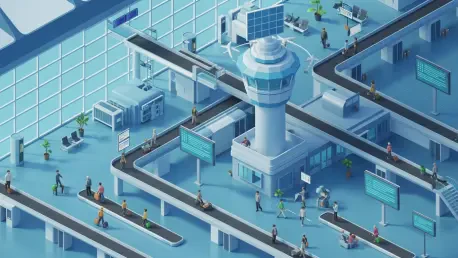

Currently, travelers across the United States are facing an unprecedented era of aviation instability where record-breaking passenger numbers collide with a fragile operational framework that lacks the resilience to handle even minor interruptions. This surge in travel interest has pushed the nation’s flight schedules to their absolute maximum capacity, leaving virtually no room for recovery when severe weather or technical glitches inevitably arise. From the congested airspace of the Northeast to the rapidly growing hubs in the South, the entire aviation network is functioning on a razor-thin margin that frequently collapses under the pressure of peak summer demand. This systemic fragility means that a single localized issue can quickly cascade into a nationwide crisis, stranding thousands of passengers and forcing airlines to cancel hundreds of flights in a matter of hours. As the industry attempts to balance profitability with operational stability, the current summer season has become a testing ground for the limits of modern air travel infrastructure and the patience of the public.
Infrastructure and Workforce Pressures
The Impact of Extreme Weather and Geography
Meteorological challenges remain the primary catalyst for the widespread disruptions currently plaguing the American skies, particularly within the densely packed flight corridors of the East Coast. Intense summer thunderstorms, which have become more frequent and unpredictable, often necessitate immediate ground stops and significant rerouting by the Federal Aviation Administration to ensure the safety of both passengers and crew. These weather patterns are no longer isolated events but represent a systemic challenge that forces air traffic controllers to implement restrictive flow measures across multiple states simultaneously. When a major hub like Newark or Chicago experiences a severe weather event, the resulting delays are not confined to those regions; they radiate through the entire network, affecting departures and arrivals in cities that may be experiencing perfectly clear skies. This interconnectedness, while efficient for routing during calm periods, serves as a massive liability during the volatile summer months when weather patterns shift rapidly.
The problem is further exacerbated by the incredibly tight turnaround times that airlines have adopted to maximize the utilization of their expensive aircraft fleets. In the current operational environment, many planes are scheduled for six or more flight segments a day with minimal buffer time between arrival and the next departure. This strategy leaves ground crews with almost no opportunity to catch up if a previous flight is delayed by even thirty minutes, leading to a cumulative effect that often results in the cancellation of evening flights once crews reach their legal work limits. Furthermore, the lack of available spare aircraft at major hubs means that a mechanical issue in one city can leave passengers in another city stranded because their scheduled plane is stuck elsewhere. This lean operating model prioritizes short-term efficiency over long-term reliability, a choice that has become increasingly visible to the public as they navigate the recurring meltdowns that characterize modern summer travel.
Technological Fragility and Staffing Shortages
Beyond the physical constraints of weather and scheduling, the industry is currently struggling with aging digital infrastructure that frequently buckles under the weight of modern logistical requirements. The recent high-profile IT failures, including a massive system-wide disruption in July 2026, underscored the extreme vulnerability of the platforms that manage everything from passenger check-ins to the critical task of crew scheduling. When these centralized digital tools fail, airlines are often forced to revert to manual workarounds that are prohibitively slow and prone to human error, leading to a total collapse of operational control. Modern aviation is now so dependent on real-time data and automated coordination that even a brief server outage can necessitate a complete reset of the airline’s flight schedule. These technological bottlenecks are not easily solved, as many legacy carriers are still operating on core systems developed decades ago, creating a significant mismatch between current travel demands.
Human capital remains another critical bottleneck, with a chronic shortage of certified air traffic controllers significantly limiting the overall capacity of the national airspace. Many of the most vital facilities, particularly those managing traffic in the New York metropolitan area, have reported staffing levels well below the recommended targets, forcing the implementation of flight caps during peak hours. Simultaneously, the airline industry is still grappling with the fallout of the massive exodus of experienced pilots, mechanics, and ground handlers that occurred in previous years. While recruitment efforts have intensified from 2026 to 2028, the intensive training requirements mean it will take years to fully replace the lost institutional knowledge. Without a sufficient pool of backup personnel, even minor staffing gaps can lead to significant service reductions, as there are simply not enough qualified professionals available to cover for those who reach their mandatory rest periods during a prolonged period of operational stress.
The Traveler Perspective and Legal Protections
Compensation Rules and Defensive Strategies
The escalating frequency of flight disruptions has reignited a national debate regarding the adequacy of passenger rights and the specific obligations airlines have toward their customers. Currently, federal regulations establish a stark distinction between delays that are within the airline’s control, such as mechanical repairs or crew scheduling errors, and those deemed uncontrollable, like weather or air traffic control mandates. While many carriers have voluntarily committed to providing vouchers for meals or hotel stays during controllable delays, the lack of a standardized federal mandate leads to significant inconsistency in how these policies are applied across the industry. This ambiguity often leaves travelers in a state of confusion, as they are forced to navigate complex terms and conditions while standing in long lines at service desks. Furthermore, the definition of what constitutes a controllable event is often subject to interpretation, allowing some airlines to avoid the financial burden of displaced passengers.
In response to the perceived unreliability of the aviation system, many travelers are fundamentally altering their approach to booking and managing their summer trips. Strategies that were once reserved for the most seasoned business travelers, such as booking the earliest possible flight of the morning to avoid the afternoon storm cycle, have now become standard practice for families and casual vacationers. Additionally, there has been a significant rise in the use of third-party tracking apps and travel insurance policies that provide more comprehensive coverage than what is offered by the airlines themselves. Many individuals are now maintaining secondary itineraries or researching alternative transportation options, such as trains or rental cars, before they even arrive at the airport. This shift toward defensive travel highlights a growing lack of confidence in the airline industry’s ability to deliver on its service promises, as the burden of mitigating systemic risk is increasingly shifted away from the corporations and onto the individual consumer.
Future Risks and the Consumer Burden
Looking toward the remainder of the decade, the core issues plaguing the American aviation network appear to be deeply entrenched and resistant to quick fixes. The combination of unpredictable meteorological shifts, aging technological platforms, and a persistent workforce deficit creates a volatile environment where disruptions are the expected norm rather than the exception. While airlines have announced plans for major investments in more resilient software and increased hiring, the actual implementation of these upgrades is a slow process that cannot keep pace with the immediate surge in demand. As long as travel volumes remain at record highs while the underlying infrastructure remains under-resourced, the system will continue to be prone to seasonal meltdowns that frustrate millions. The current state of the industry suggests that the period of cheap and reliable air travel may be giving way to a new era where passengers must pay higher prices for a service that is significantly more prone to failure.
In light of these systemic challenges, stakeholders recognized that building a more resilient aviation network required immediate and sustained investment in both physical infrastructure and human resources. The industry took several steps to mitigate the immediate crisis, including the implementation of more robust air traffic control training programs and the adoption of decentralized digital platforms that reduced the risk of total system failure. For the individual traveler, the focus shifted toward proactive management, such as prioritizing direct flights and avoiding major connection hubs during peak storm seasons. Policymakers also began exploring more stringent consumer protection laws that mandated clear compensation structures, which incentivized airlines to maintain larger pools of standby crews and spare aircraft. Ultimately, the lessons learned from the disruptions emphasized that operational stability must be prioritized alongside growth to ensure that the American skies can safely and reliably accommodate the demand.