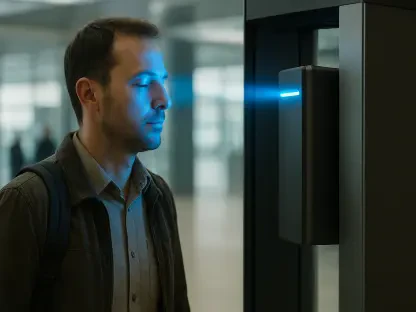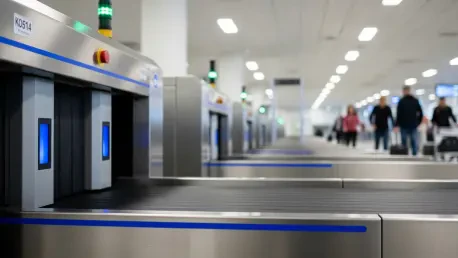

The sudden collapse of critical security infrastructure at McGhee Tyson Airport on June 1, 2026, demonstrated the fragile state of regional aviation hubs when technology fails during peak demand. This specific operational crisis was triggered by a mechanical malfunction in the scanning and conveyor systems of a primary security lane, rendering a significant portion of the checkpoint inoperable. Because this failure occurred at the height of the summer travel season, the airport’s ability to process passengers was drastically reduced, leading to a bottleneck that quickly overwhelmed the terminal’s capacity. The transition from an orderly environment to a state of total terminal congestion highlights the risks inherent in facilities that lack redundant systems for their most essential hardware. As lines spilled into the ticketing lobby, it became clear that the breakdown was more than a mere inconvenience; it was a systemic failure that disrupted the travel plans of thousands and forced a radical rethink of local airport logistics.
The Anatomy of a Regional Bottleneck
Resource Scarcity: The Single Point of Failure
In smaller regional airports like Knoxville, the lack of surplus screening capacity means that the loss of even one lane can have immediate and devastating effects on the entire facility. Unlike massive international hubs that can reroute thousands of travelers to secondary checkpoints or alternative terminals, McGhee Tyson relies on a lean configuration of security lanes to maintain its efficiency. When the mechanical scanning hardware went offline, there were no immediate internal alternatives available to absorb the displaced passenger volume, causing an instant and aggressive backlog. This “perfect storm” of mechanical failure and high traveler volume underscored a critical vulnerability in regional aviation infrastructure. The inability to pivot during a hardware crisis meant that the airport’s standard operating procedures were effectively discarded in a matter of minutes. This lack of resilience is a growing concern for regional authorities who must now account for the reality that their hardware is being pushed to its limits.
Information Lags: The Disconnect Between History and Reality
This crisis was further intensified by a significant information lag, as many regular travelers arrived at the terminal expecting the airport’s historical fifteen-minute security turnaround time. For years, McGhee Tyson has enjoyed a reputation for being one of the most efficient regional hubs in the country, leading many passengers to arrive with very little buffer time before their departures. Because of this established precedent, commuters did not account for the possibility of a multi-hour delay caused by a mechanical failure of this magnitude. The disconnect between these outdated traveler expectations and the grim reality of the equipment breakdown left many passengers trapped in stanchions with no realistic way to reach their boarding gates on time. This situation created a frantic atmosphere as travelers realized that the efficiency they had come to rely on had vanished. The event serves as a cautionary tale for those who assume that past performance is a guarantee of future reliability, especially when dealing with aging mechanical infrastructure.
Gridlock Dynamics: Cascading Effects on Terminal Logistics
The physical impact of the security breakdown was felt immediately throughout the entire building, as queues quickly extended past the designated stanchions and spilled into the main ticketing lobby. This overflow created a secondary layer of gridlock that prevented arriving travelers from reaching airline check-in counters or baggage drop-off points, further complicating the terminal’s workflow. Airline staff found themselves overwhelmed as they attempted to assist passengers who were essentially blocked from reaching the very people who could help them. The sheer volume of people standing in the public spaces of the airport created a safety hazard, as movement between the entrance and the security area became nearly impossible. This congestion highlighted the lack of spatial redundancy in smaller airports, where every square foot is designed for a specific purpose and cannot easily accommodate massive, static crowds. The ripple effect of the mechanical failure touched every department, from ground handling to concessions, as the terminal’s rhythm broke.
Consequences for the Modern Traveler
New Procedural Realities: Adapting to Operational Mandates
In direct response to the terminal gridlock, airport authorities were forced to fundamentally alter the recommended behavior for the region’s traveling public to prevent further safety issues. A new emergency mandate was issued, advising passengers to arrive at least two hours before their scheduled flights—an eightfold increase over the typical processing time seen in previous months. This significant shift was necessary to provide a sufficient temporal buffer for the agonizingly slow security lines and to help ground staff manage the massive crowds filling the terminal’s limited public spaces. By extending the arrival window, administrators hoped to spread the passenger load over a longer period, reducing the intensity of the pressure on the remaining active screening lanes. However, this change also required travelers to adjust their personal and professional schedules significantly, leading to a ripple effect of disruption beyond the airport’s walls. The mandate was a reactive measure designed to keep the facility operational while technicians worked.
Modern Navigation: Stress Management Through Digital Adaptation
To navigate this volatile and unpredictable environment, passengers were encouraged to adopt more aggressive mitigation strategies to speed up the remaining active security lanes. Travelers were urged to utilize live TSA wait-time applications on their smartphones to monitor the status of the bottleneck in real-time, allowing them to make informed decisions about when to enter the queue. Additionally, airport management emphasized the critical importance of strict packing discipline to ensure that carry-on luggage was perfectly compliant with all current federal regulations. Avoiding the need for secondary manual screenings was paramount, as every extra minute spent checking a bag added to the cumulative delay for everyone else in line. This reliance on personal technology and meticulous preparation became the only way for individual travelers to reclaim some sense of control over their journeys. The situation highlighted the necessity of digital tools in modern air travel, especially when physical infrastructure fails to meet the basic demands of the public.
Lasting Impact: Psychological and Professional Tolls of Delay
The massive disruption at McGhee Tyson took a significant psychological and professional toll on the traveling public during the first week of June. For business commuters, the terminal gridlock resulted in missed meetings, canceled presentations, and a substantial loss of productivity that could not be easily recovered. Families saw their long-planned summer vacations threatened or ruined by the sudden operational collapse, leading to high levels of emotional stress within the terminal. Airport safety coordinators and customer service representatives had to work overtime to manage the rising tension as boarding times approached for passengers who were still stuck far back in the security queue. The atmosphere was one of frustration and helplessness, as the mechanical failure was out of the control of both the travelers and the airport staff. These human consequences emphasize that airport infrastructure is not just a collection of machines, but the foundation of modern economic and social connectivity that requires constant maintenance and investment to remain functional.
Building a Resilient Transportation Hub
Technological Integrity: Addressing the Infrastructure Overhaul
The Knoxville crisis has accelerated a nationwide discussion regarding the widening gap between aging infrastructure and the ever-increasing passenger demand seen at regional hubs. Industry experts and airport administrators now largely agree that the current model, which relies on older mechanical hardware, is no longer sustainable for modern travel volumes. In response to the breakdown, McGhee Tyson is moving forward with a fundamental overhaul of its security operations, focusing on the concept of “technological integrity” to prevent future failures. This involves not just repairing the broken lane, but reevaluating the entire mechanical chain that supports the security checkpoint. The goal is to eliminate single points of failure by introducing more robust components that can withstand the stress of continuous, high-volume operation. By investing in higher-quality materials and more advanced monitoring systems, the airport aims to detect potential mechanical issues before they lead to a full-scale operational collapse. This proactive approach marks a significant shift in how regional airports view hardware.
Future Integrity: Automated Review Systems and Smart Scanning
Project tracking data reveals a new collaboration with federal partners to implement next-generation automated scanners throughout the security checkpoint at McGhee Tyson. These advanced systems are designed to optimize throughput by using automated review processes for carry-on items, which significantly reduces the need for manual intervention by TSA officers. By replacing traditional conveyor belts with more robust, high-tech alternatives, the airport aims to establish a permanent shield against the mechanical backlogs and terminal chaos experienced during the June 1 incident. These new scanners utilize sophisticated algorithms to identify prohibited items with higher precision, allowing for a faster and more consistent flow of luggage through the machines. This technology not only improves security outcomes but also enhances the overall passenger experience by minimizing the stops and starts associated with older machinery. The implementation of these systems is seen as a vital step in modernizing the airport’s footprint and ensuring it can meet the demands of a growing regional population.
Resilient Planning: Strategic Investments in Redundancy and Scale
In the aftermath of the mechanical failure, McGhee Tyson Airport committed to a comprehensive strategy of building redundancy into every level of its screening operations. The focus shifted toward creating a system that could absorb a hardware failure without compromising the functionality of the entire terminal. Planners finalized designs for additional screening lanes that would serve as a permanent reserve, ensuring that a single malfunction would never again trigger the level of chaos seen on June 1. Furthermore, the airport coordinated with regional transit authorities to improve communication protocols, ensuring that travelers received real-time updates long before they reached the terminal doors. These steps represented a proactive turn toward resilience, moving away from the reactive posture that characterized the initial response to the breakdown. By prioritizing the integration of automated tech and physical expansion, the facility established a new standard for regional aviation hubs. These actions ensured that the infrastructure was prepared for the continued growth of the travel sector.