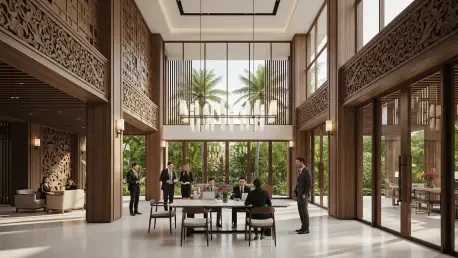

Across the vibrant landscapes of Southeast Asia and the Pacific, the silhouette of hospitality is undergoing a dramatic transformation as Radisson Hotel Group accelerates its presence with a record-breaking momentum that redefines regional travel standards. This expansion is characterized by a significant milestone of 17,000 rooms across 89 properties, signaling a billion-dollar ambition that stretches from the bustling streets of Bangkok to the serene shores of Fiji. The group has consciously moved away from the traditional “one-size-fits-all” hospitality model, favoring instead a specialized, market-first approach that prioritizes local nuances over generic luxury.
This strategic pivot marks the transition of Radisson from a conventional hotel operator into a comprehensive, multi-brand hospitality provider. By diversifying its portfolio, the group has successfully addressed the varying needs of modern travelers who demand more than just a place to sleep. Whether it is a high-energy urban hub or a secluded island retreat, the focus remains on delivering an experience that feels authentic to the destination while backed by the commercial power of a global network. This regional ambition is not merely about increasing room counts but about establishing a resilient ecosystem where brand relevance and operational excellence coexist.
Beyond the Standard Suite: Radisson’s Billion-Dollar Regional Ambition
The significance of the 17,000-room milestone in the Southeast Asia Pacific (SEAP) region reflects more than just physical growth; it represents a fundamental shift in how global hotel chains interact with local markets. By reaching this scale, Radisson has established a formidable footprint that allows it to command significant market share across 89 distinct properties. This expansion is fueled by a commitment to specialized service models that cater to the specific economic and cultural drivers of each territory, ensuring that every new opening serves a clear purpose within the broader regional strategy.
Moving toward a market-first approach has allowed the group to break the mold of traditional hospitality. Instead of imposing a rigid brand identity, the focus has shifted toward adaptability. This means that a property in a dense urban center like Hanoi will operate with a completely different philosophy than a flagship leisure property in a destination like Cam Ranh. By transitioning into a multi-brand provider, Radisson has effectively insulated itself against localized downturns, as its portfolio now spans everything from entry-level comfort to high-end lifestyle and luxury offerings.
The billion-dollar ambition is anchored in the belief that the SEAP region is the most dynamic hospitality frontier of the decade. As the group scales, the emphasis remains on high-value assets and strategic locations that promise long-term commercial viability. This approach has transformed the group’s relationship with hotel owners, who now see Radisson not just as a manager of buildings, but as a strategic partner capable of navigating the complexities of a rapidly evolving regional economy.
Navigating the Post-Pandemic Travel Renaissance in Asia
In the current landscape of 2026, the Southeast Asia Pacific market has emerged as the vital engine for the global recovery of the tourism sector. The region has seen a profound renaissance in travel, driven by a renewed desire for connection and exploration. This recovery is not a simple return to the old ways; it is a sophisticated evolution where shifting traveler demographics have redefined brand requirements. From digital nomads looking for high-speed connectivity and social hubs to luxury seekers demanding privacy and personalized wellness, the market is more fragmented and demanding than ever before.
Radisson has successfully tapped into these trends by recognizing that the “lifestyle” stay is no longer a niche preference but a dominant market requirement. Modern travelers are increasingly blending work and leisure, a trend that has necessitated a change in how hotel spaces are designed and utilized. By connecting localized growth to these broader economic trends, the group has ensured that its properties remain relevant to a generation that values experiences over possessions. This alignment with contemporary travel habits has allowed the group to capture a larger share of the “bleisure” market, which continues to grow across major Asian hubs.
Furthermore, the rise of the middle class within the region has created a massive surge in domestic and intra-regional travel. This demographic shift has been a primary driver for the expansion of midscale and upper-midscale brands, which provide international quality at accessible price points. By positioning itself at the intersection of these shifting traveler needs, Radisson has managed to maintain high occupancy rates and strong brand loyalty, even as the competitive landscape becomes increasingly crowded with both local and international players.
A Geographic Deep Dive: Tailoring Brands to Unique Destinations
Vietnam stands as a cornerstone of Radisson’s regional expansion, offering a perfect laboratory for balancing urban growth with leisure excellence. In Hanoi, the group is aggressively expanding its urban footprint to meet the needs of business travelers, while simultaneously launching flagship leisure properties in iconic locations like Ha Long Bay and Cam Ranh. This dual-track strategy ensures that the group is present at every stage of the traveler’s journey, whether they are visiting for a high-stakes conference or a family vacation at a UNESCO World Heritage site.
The Philippines has emerged as a powerhouse for the group, largely due to a strategic and long-standing partnership with SM Hotels and Conventions Corp. This alliance is set to introduce seven global brands to the archipelago by 2030, leveraging local expertise to achieve rapid market penetration. From the vibrant energy of Radisson RED in Cebu to the introduction of the first Radisson Individuals Premier property in Bohol, the group is utilizing a diverse brand stable to capture every segment of the Philippine market. This localized approach allows for a level of market saturation that would be impossible with a more centralized, less flexible strategy.
In Australasia and the wider Pacific, the focus is split between urban lifestyle debuts and the strategic repositioning of heritage island resorts. New Zealand has seen the successful launch of lifestyle-centric brands in Auckland and Queenstown, catering to a younger, design-conscious crowd. Meanwhile, in Fiji and Samoa, the group is focusing on bringing independent island resorts into its global network through the Radisson Individuals brand. This strategy allows unique, localized properties to benefit from international distribution systems while maintaining their distinct island charm. Additionally, the rise of serviced apartments in Phuket and Bali has allowed the group to capture the lucrative long-stay market, providing a home-away-from-home for the modern global traveler.
The Selective Philosophy: Expert Perspectives on Strategic Relevance
The driving force behind this rapid expansion is a philosophy of “highly selective and relevant” growth, a mandate championed by Chief Development Officer Ramzy Fenionos. This approach dictates that the group does not pursue growth for the sake of numbers alone; instead, every project must demonstrate a clear path to commercial success and brand alignment. By being selective, Radisson ensures that it only enters markets where it can offer a competitive advantage, either through brand prestige or operational efficiency. This discipline has been instrumental in building a pipeline that is both ambitious and sustainable.
Central to this philosophy is the cultivation of trusted owner relationships. In the SEAP region, success often depends on the strength of local partnerships, and Radisson has prioritized transparency and shared goals with its property owners. This collaborative model allows for faster decision-making and more efficient market entry. When owners trust the group’s commercial capabilities, they are more likely to invest in multiple brands and projects, creating a virtuous cycle of growth that benefits both the operator and the investor.
Moreover, the integration of MICE (Meetings, Incentives, Conferences, and Exhibitions) and residential components has created a more resilient business model. By diversifying the revenue streams within a single property, the group can mitigate the risks associated with the seasonality of tourism. Large-scale event spaces and branded residences provide a stable income base that complements the more volatile hotel room revenue. This multi-faceted approach to property development ensures that each asset is optimized for maximum return, regardless of broader market fluctuations.
The Radisson Roadmap: A Framework for Regional Market Penetration
The group’s roadmap for regional penetration relies heavily on flexible development models that can adapt to the specific needs of an asset. This involves a calculated determination of when to invest in a brand-new build versus when to refurbish and reposition an existing property. In mature markets, refurbishment is often the faster route to market presence, allowing the group to breathe new life into older assets through design-led renovations. In emerging destinations, new builds allow Radisson to set the standard for hospitality from the ground up, ensuring that the property is perfectly aligned with the latest brand standards.
Identifying the right brand fit is another critical component of the roadmap. The “Radisson Individuals” brand has been a particularly effective tool in this regard, acting as a gateway for independent boutique hotels to join a global network without losing their unique identity. This brand allows the group to enter high-demand markets where land for new development is scarce, providing a win-win scenario for both the independent owner and the global chain. This strategy has been key to expanding into specialized leisure markets where travelers seek “one-of-a-kind” experiences rather than standardized corporate environments.
Building a diversified portfolio is the final piece of the framework. By blending luxury, lifestyle, and midscale offerings, Radisson is able to mitigate market-specific risks and appeal to a wider range of price points. This diversification strategy ensures that the group remains competitive in both high-growth emerging economies and stable, mature markets. The roadmap is not a static document but a living strategy that continues to evolve as the Southeast Asia Pacific region grows, ensuring that Radisson remains at the forefront of the global hospitality industry.
The strategic expansion across the Southeast Asia Pacific region established a new benchmark for how global hospitality brands navigated complex, multi-layered markets. Stakeholders prioritized the creation of localized value over generic expansion, which allowed the group to secure deep-rooted partnerships with regional developers. This period of growth revealed that the future of the industry depended on the ability to integrate lifestyle-driven design with robust commercial infrastructure. Moving forward, the focus shifted toward sustainable operations and hyper-local guest experiences, ensuring that the next phase of development would be as environmentally responsible as it was economically successful.