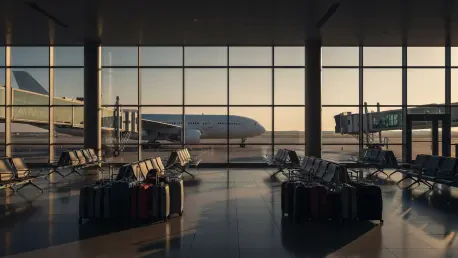

The unexpected collapse of the aerial corridor connecting the bustling holiday resorts of Türkiye with the major metropolitan centers of Russia has triggered an unprecedented travel emergency, leaving tens of thousands of passengers stranded and highlighting the fragile nature of international charter agreements. During the peak of the current summer season, the Turkish carrier Air Anka found itself at the center of a geopolitical and administrative storm after its essential flight authorizations were abruptly revoked by the Russian Federal Air Transport Agency. This decision effectively paralyzed the airline’s operations overnight, turning what should have been a seamless vacation window into a chaotic sequence of cancellations and missed connections. Travelers who had booked their stays months in advance found themselves caught in a bureaucratic limbo, as the carrier was legally prohibited from entering Russian airspace. The situation rapidly escalated beyond a simple logistical delay, evolving into a systemic failure that has tested the resilience of the tourism infrastructure in both nations. As terminals in Antalya and Moscow became congested with frustrated holidaymakers, the industry was forced to confront the harsh reality of relying on charter models that lack the robust secondary support systems typical of major flag carriers.
Regulatory Oversights: The Documentation Gap
The fundamental cause of this crisis stems from a catastrophic failure in the regulatory filing process, where Air Anka reportedly proceeded with commercial sales before securing final operational permits from the relevant Russian aviation authorities. Under international civil aviation standards, airlines must navigate a complex web of bilateral agreements and safety certifications that are often subject to intense scrutiny, especially in the current geopolitical climate. By scheduling a high-density flight calendar and collecting passenger fares without the confirmed right to land, the airline bypassed critical safeguards designed to protect consumers from exactly this type of sudden disruption. When the Russian regulators eventually issued their denial, citing non-compliance with specific technical or administrative requirements, the airline had no legal recourse but to ground its fleet. This move underscored the absolute authority that national regulators hold over their airspace and the severe consequences that follow when commercial ambitions outpace legal realities. The resulting ban was not merely a temporary setback but a total prohibition that effectively deleted Air Anka from the regional flight map for the duration of the critical summer period, leaving its schedule in a state of irreversible collapse.
Beyond the immediate denial of permits, the crisis revealed a deeper lack of transparency regarding the communications between the airline’s management and the civil aviation bureaus involved in the dispute. Experts in the field pointed out that the process of obtaining charter rights is typically a transparent negotiation, yet in this instance, there appeared to be a significant disconnect that prevented the airline from rectifying its paperwork in time to save the season. This administrative stalemate was exacerbated by the high volume of operations Air Anka had planned, which necessitated a level of coordination that the carrier’s infrastructure was seemingly unable to provide. The refusal by Russian authorities to grant even temporary or emergency landing rights further signaled a hardening of regulatory stances, suggesting that the era of lenient oversight for charter startups may be coming to an end. Consequently, the airline’s inability to satisfy the rigorous documentation demands of the Russian side served as a stark reminder that market access is a privilege contingent upon strict adherence to international law. This friction not only stalled the movement of tourists but also sent ripples of uncertainty throughout the aviation community, as other regional players scrambled to ensure their own permits were beyond reproach to avoid a similar fate in an increasingly scrutinized environment.
Logistical Gridlock: The Hub Crisis
The ripple effects of the Air Anka grounding were felt most acutely at Antalya Airport, which serves as the primary gateway for international visitors flocking to the southern coast of Türkiye. As the hub struggled to cope with the sudden disappearance of dozens of scheduled arrivals, the local transportation and transfer networks were thrown into total disarray, leading to massive backlogs in hotel shuttles and regional bus services. Thousands of passengers who were supposed to depart for Moscow or St. Petersburg found themselves lingering in terminal lounges for days, with little information regarding their eventual return. The airport’s infrastructure, though designed for high capacity, was not prepared for the long-term accommodation of such large groups of stranded travelers, resulting in overcrowded facilities and strained resources. Ground handling crews, who are responsible for the rapid turnaround of aircraft, saw their schedules collapse as the expected Air Anka jets never appeared on the radar. This vacuum in the flight schedule meant that the carefully balanced flow of tourists in and out of the region was shattered, leaving the airport in a state of perpetual emergency management as staff tried to provide basic necessities to those unable to secure alternative transport.
In the Russian metropolitan centers of Moscow and St. Petersburg, the crisis took on a different dimension as the loss of high-capacity widebody aircraft like the Airbus A330 created a significant supply deficit that could not be easily rectified. These large-scale jets are the workhorses of the Türkiye-Russia travel corridor, capable of transporting hundreds of passengers in a single trip, and their absence left a hole in the market that smaller, narrow-body alternatives were unable to fill. Because most other airlines operating in the region were already booked to their maximum capacity for the summer, there was virtually no surplus seating available to accommodate the displaced Air Anka passengers. This scarcity drove up the prices of remaining tickets to exorbitant levels, effectively pricing many families out of their planned vacations even if they were willing to pay for a second flight. The logistical nightmare was further complicated by the fact that many of the stranded travelers had pre-paid for all-inclusive resort packages, which were now being consumed day by day while the guests remained stuck thousands of miles away. This situation highlighted the extreme vulnerability of a travel market that relies heavily on a few high-capacity carriers, demonstrating how the failure of a single major operator can paralyze the entire movement of people across international borders.
Economic Hardship: The Tourism Deficit
The tourism industry in Antalya, which relies heavily on the steady influx of Russian visitors, faced a sudden and severe economic contraction as a direct result of the Air Anka flight cancellations. Hotels that had forecasted high occupancy rates for the peak summer months were instead met with a wave of last-minute cancellations and no-shows, leading to significant revenue losses that cannot be recovered later in the year. For many luxury resorts, the loss of these high-spending guests meant a sharp reduction in operational budgets, affecting everything from seasonal staffing levels to the procurement of local goods and services. Small business owners in the surrounding areas, including tour guides, restaurateurs, and souvenir vendors, also felt the impact as the foot traffic they depend on evaporated almost overnight. This economic shock serves as a painful reminder of the interdependence between the aviation and hospitality sectors, where a breakdown in the skies translates directly into empty rooms and quiet streets on the ground. The financial strain was not limited to individual businesses but extended to the broader local economy, as the reduced tax revenue and decreased consumer spending threatened to derail the regional growth targets that had been set at the beginning of the year.
Tour operators found themselves in a particularly precarious position, as they were legally and financially responsible for the thousands of travelers who had purchased comprehensive vacation packages. These companies often operate on thin margins and the cost of providing refunds or securing incredibly expensive replacement flights on other airlines posed a legitimate threat to their solvency. Since many of these packages were non-refundable at the hotel level, the operators were forced to absorb the losses themselves while simultaneously managing the public relations crisis of thousands of angry customers. The lack of available alternative airlift meant that even the most well-funded agencies were unable to fulfill their promises to clients, leading to a loss of consumer trust that may take years to rebuild. Furthermore, the insurance claims arising from this crisis are expected to be massive, potentially leading to higher premiums for the entire industry in the future. As these companies navigated the fallout, they were forced to reconsider their reliance on single-carrier charter agreements, seeking more diversified partnerships to mitigate the risk of a similar regulatory failure in the future. The crisis served as a harsh lesson in the importance of logistical redundancy and the need for more robust contingency planning in the global travel market.
Industry Recovery: The Path Forward
For Air Anka itself, the grounding of its fleet represents a potential existential threat to its business model, as the airline remains burdened by the high costs of aircraft leases and maintenance without any incoming revenue. A carrier that specializes in high-volume charter flights depends on a constant cycle of operations to cover its significant overhead, and a prolonged ban on its primary route can quickly lead to a liquidity crisis. Grounded aircraft are notorious for being more expensive to maintain than those in active service, as they require specialized storage and regular technical checks to remain airworthy. Furthermore, the airline’s inability to meet its contractual obligations with ground service providers and fuel suppliers has likely damaged its professional reputation, making it more difficult to secure favorable terms in the future. The competitive nature of the aviation industry means that other carriers are already moving in to capture the market share vacated by Air Anka, potentially making it impossible for the airline to reclaim its position even if its permits are eventually restored. This situation highlights the precarious nature of the airline business, where the difference between a profitable season and total financial ruin often rests on a few pages of regulatory paperwork and the shifting whims of international aviation authorities.
Aviation stakeholders eventually adopted more rigorous protocols to verify landing rights before any tickets reached the consumer market. These measures ensured that secondary carriers maintained enough liquidity to handle sudden groundings without collapsing the entire regional tourism network. Authorities also established a centralized database to track the real-time permit status of charter operations, providing much-needed clarity to tour operators and travelers alike. By mandating that airlines provide concrete evidence of operational clearance, the industry effectively reduced the risk of sudden cancellations during peak travel windows. These strategies were vital in restoring the integrity of the Türkiye-Russia travel corridor, ensuring that future seasons were not marred by similar administrative failures. The crisis ultimately demonstrated that the cost of legal diligence was far lower than the price of systemic logistical failure. Moving forward, the industry prioritized the establishment of more stringent pre-approval processes to ensure that all necessary permits were secured long before tickets were offered to the public. Airlines were encouraged to adopt more transparent communication strategies, providing travelers with real-time updates on the status of their flights and the regulatory hurdles being faced behind the scenes. This shift in approach helped to rebuild some of the trust that was lost during the summer disruptions, although the memory of the stranded thousands remained a cautionary tale for the entire sector.