
The traditional concept of opulence has shifted from gold-plated fixtures and marble lobbies toward an invisible yet pervasive layer of digital sophistication that anticipates a traveler’s every desire. In the current landscape of 2026, the luxury hospitality sector is witnessing a profound transformation where physical elegance alone no longer suffices to satisfy the modern global traveler. By partnering with elite properties such as The Apurva Kempinski Bali, Samsung is establishing a blueprint for how integrated hardware and sophisticated software can coalesce into a truly seamless digital journey. This evolution focuses on merging the innate warmth of traditional high-end service with a fluid, intuitive technology ecosystem that recognizes guest needs from the very moment they step onto the property. As guests seek experiences that reflect their high-tech daily lives, the challenge for luxury brands is to implement these tools without compromising the sense of refined human hospitality.
Elevating Personalization in the Modern Travel Market
With global spending on luxury leisure hospitality projected to climb toward $391 billion by 2028, the competitive stakes for providing a bespoke guest experience have reached unprecedented levels. Modern affluent travelers view personalization as a fundamental requirement rather than an optional perk, placing a much higher premium on customization than guests in standard accommodations. Research indicates that luxury guests value tailored interactions significantly more than those in lower-tier hotels, making the digital interface a primary touchpoint for a brand’s unique identity. This shift necessitates a level of technological sophistication that mirrors the property’s architectural beauty and service standards. Consequently, the digital journey must be treated with the same meticulous care as the interior design, ensuring that every on-screen interaction feels like a natural extension of the luxury brand’s promise of exclusivity and attention to detail.
Samsung’s strategy within the guest room environment effectively transforms the television from a simple display into a digital sanctuary that balances raw performance with aesthetic subtlety. The implementation of the HBU8000 Hospitality TV series brings high-fidelity 4K resolution and Dynamic Crystal Color to the bedside, ensuring that visual content matches the vibrancy of the surrounding resort. Perhaps most importantly, the AirSlim design of these units allows the hardware to blend into the room’s interior without creating a visual disruption or clutter. This emphasis on aesthetic discretion ensures that technology enhances the atmosphere rather than dominating it, which is crucial for maintaining the carefully curated decor of luxury suites and private villas. By prioritizing a slim profile and superior color accuracy, the technology becomes a silent partner in the luxury experience, providing entertainment and information while remaining physically unobtrusive.
Streamlining Operations: Why Cloud-Based Innovation Matters
Behind the scenes, the movement toward a fully connected guest journey is powered by robust centralized management tools like Samsung LYNK Cloud, which functions as the property’s digital brain. This platform allows hotel management to remotely push personalized welcome messages, update interactive service menus, and maintain absolute brand consistency across every digital touchpoint in the building. By integrating these management tools directly into the displays, properties can successfully eliminate the need for traditional set-top boxes, which reduces physical clutter in the guest rooms and lowers long-term maintenance costs for IT departments. This streamlined infrastructure not only improves the visual cleanliness of the room but also simplifies the hardware stack, making the system more reliable and easier to update as guest needs evolve. The result is a more agile operational model where the hotel can respond to new trends or guest feedback with immediate software adjustments.
Frictionless connectivity stands as another vital cornerstone of this digital redefinition, offering a home-away-from-home experience that removes the technological hurdles common in older hotel systems. Guests expect to access their own digital lives with ease, and through features like Google Cast and various OTT services, they can stream personal content directly from their own devices. This removes the necessity for external dongles or the frustration of navigating complex login procedures on a shared screen. To uphold the stringent standards of privacy expected by high-net-worth travelers, the system is engineered to automatically erase all paired-device data and streaming credentials upon checkout. This proactive approach to security ensures that sensitive personal information is never left behind, providing the peace of mind that is essential in a luxury setting. When technology works this smoothly, it ceases to be a utility and becomes a hallmark of premium service.
Leveraging Business Intelligence: Transforming the Guest Journey
The integration of smart technology also serves as a formidable engine for business intelligence, providing hotel operators with real-time insights that were previously difficult to capture. By analyzing how guests engage with various digital services, specific menu items, or amenity information through the LYNK Cloud platform, management can refine their offerings based on actual behavior. This data-driven feedback loop allows for proactive service adjustments that maximize both guest satisfaction and potential revenue growth, turning the digital ecosystem into a strategic asset. For instance, if a specific spa package or dining option receives high digital engagement but low conversion, management can investigate and adjust the offering accordingly. This level of insight allows luxury properties to move beyond reactive service models and toward a more predictive approach, where they can anticipate market shifts and guest desires before they are even explicitly expressed by the visitor.
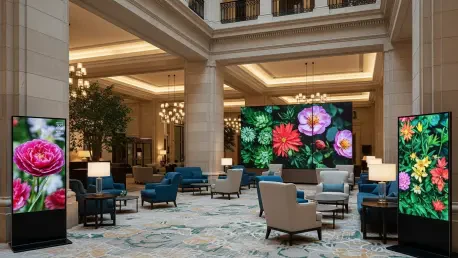
To ensure a cohesive narrative throughout the stay, this digital journey extends far beyond the confines of the guest room and into the resort’s public areas. Massive QMC Smart Signage installations are strategically placed in gyms, function rooms, and information centers to maintain a consistent visual language across the entire property. By linking every display through a single, harmonious solution, Samsung enables luxury resorts to bridge the gap between classic refinement and a modern, digitally empowered lifestyle. This property-wide connectivity ensures that guests never feel a disconnect between the high-tech experience of their room and the rest of the hotel. Whether they are checking fitness schedules or viewing event information in a lobby, the quality of the display and the intuitiveness of the interface remain uniform. This holistic approach sets a new benchmark for the industry, where technology is integrated so thoroughly that it becomes an inseparable part of the luxury brand.
The successful integration of these digital platforms demonstrated that the future of hospitality depended on the invisible harmony between high-tech tools and high-touch service. Properties that adopted centralized cloud management and slim, high-performance hardware found themselves better equipped to meet the soaring expectations of the luxury market. Industry leaders recognized that technology should never overshadow the human element but rather serve as a silent facilitator for more personalized interactions. Future considerations for developers involved prioritizing data privacy and seamless device integration from the early stages of property design rather than as an afterthought. It was essential for hospitality brands to invest in scalable ecosystems that could evolve alongside consumer electronics trends to avoid rapid obsolescence. Ultimately, the transition toward a more connected environment provided a blueprint for how luxury could remain relevant in an increasingly digital world.