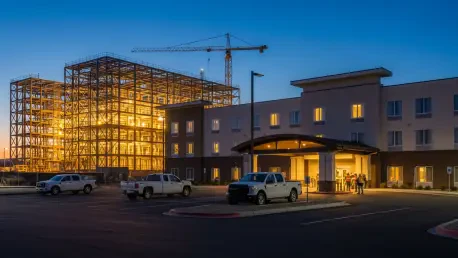

Katarina Railko brings a wealth of expertise to the hospitality sector, having spent years refining her understanding of travel trends and the intricate mechanics of the tourism industry. As a prominent voice in the entertainment and events space, her insights are frequently sought for major expos and conferences where the future of lodging is debated. Today, she joins us to discuss a massive shift in the extended-stay hotel market—one driven not by traditional tourism, but by the relentless expansion of data center infrastructure across the United States. We will explore how this “super cycle” of development is creating unprecedented demand for long-term accommodations, the geographical hotspots emerging from this trend, and the debate over whether this growth is a sustainable transformation or a temporary construction boom.
The following discussion examines the surge in data center investments and its ripple effects on the hospitality industry, particularly in markets like Texas, Virginia, and Georgia. We delve into the strategies that major hotel brands are employing to capture this demand, the distinction between short-term construction needs and long-term economic shifts, and how the profile of the “gray-collar” worker is redefining the midscale hotel segment.
With annual investment in data center infrastructure projected to more than double by 2027, how is this massive financial influx specifically translating into a “super cycle” for the extended-stay hotel segment?
The numbers we are seeing are truly staggering, with annual investments expected to skyrocket by 116%, jumping from $53.2 billion in 2024 to a massive $118.4 billion by 2027. This financial surge acts as a powerful fuel for the extended-stay category, which was already a top performer in the hotel industry. During the intensive construction phases of these massive data hubs, there is a specialized need to house hundreds of project workers who require more than just a standard room for a night or two. These workers need the comforts of home, like kitchens and laundry facilities, often for months at a time, creating a consistent and high-occupancy demand that hotel developers are eager to tap into. We are seeing a “super cycle” where the sheer volume of these projects ensures that as one facility nears completion, another is often breaking ground nearby, keeping those hotel beds filled.
Texas, Virginia, and Georgia have long been the pillars of this industry, but where exactly are we seeing the most aggressive new growth, and which regions are poised to become the next major hubs?
While Northern Virginia and the Atlanta metro area remain dominant forces, the Dallas-Fort Worth region is seeing such explosive growth that it is projected to potentially overtake Virginia as the world’s largest data center market by 2030. We are also watching places like Phoenix and Austin very closely, as they have quickly become hotspots for new construction over the last couple of years. Beyond these established players, new frontiers are opening up in states like Pennsylvania, Illinois, and Ohio, specifically around Columbus, where the infrastructure is being laid for massive new developments. These emerging markets are particularly attractive because they offer the three things data centers need most: available workforce, existing power infrastructure, and, perhaps most importantly, plenty of land to build on. It is a geographical shift that is forcing hotel brands to look beyond traditional urban centers and into the suburban peripheries where this land is available.
There seems to be a significant debate regarding the longevity of this demand, with some comparing it to an “oil boom and bust.” Is there a risk that once the data centers are built, the demand for local hotels will simply vanish?
This is a point of contention among industry leaders, as some worry that the “faucet” of demand might just shut off once the construction crews pack up and leave. Because a finished data center doesn’t actually require a massive permanent staff to operate, there is a valid concern that the local hotel demand could disappear forever. However, a counter-argument suggests that these projects actually trigger “suburban sprawl,” leading to a more permanent economic transformation of the surrounding area. The theory is that the initial infrastructure upgrades—like better power grids and cooling systems—eventually attract other high-tech manufacturers or even medical centers to the region. If this happens, it creates a “flywheel effect” where one data center leads to a cluster of related businesses, ensuring that the need for extended-stay lodging remains even after the initial build is finished.
How are hotel brands like Choice and Wyndham differentiating their strategies to capture these different segments of travelers, from the “gray-collar” worker to high-level expats?
The strategy is becoming very segmented because the people working on these projects have vastly different needs and budgets. For example, Choice Hotels is leaning heavily into its Everhome Suites brand, which is specifically designed for the “gray-collar” worker—someone whose job blends technical white-collar skills with hands-on blue-collar labor. These guests want a high-quality, modern product with in-room kitchens but at a midscale price point that makes sense for a long-term stay. On the other end of the spectrum, Wyndham is looking at the luxury and upscale market to accommodate international expats and high-level managers who expect a more residential, premium experience. By offering everything from affordable midscale rooms to upscale managed residences, these brands are ensuring they can house everyone from the person installing the HVAC systems to the executive overseeing the entire regional grid.
You mentioned the “second-order impact” of these projects; can you elaborate on how manufacturing hubs for cooling systems and turbines are creating their own unique demand in markets like the Carolinas?
This is one of the most fascinating parts of the story because the demand isn’t just happening where the data centers are physically located, but also in the cities that supply them. Markets like Charlotte and Raleigh, North Carolina, have become essential nodes in the supply chain, hosting the industrial conglomerates that manufacture the cooling systems, turbines, and electrical generation equipment these centers require. As these manufacturing plants expand to meet the needs of the data center boom, they generate their own wave of construction and specialized labor demand. This creates a “second-order” opportunity for hotel developers who were already building in these regions but now find their properties significantly more attractive. It’s a ripple effect where the growth of a data center in Virginia might actually be the primary driver for a hotel’s success in North Carolina.
When a developer is looking at a new market with a pending data center project, what specific indicators are they looking for to decide if a new hotel build is actually worth the risk?
Developers are becoming much more analytical, looking back three to five years to see if there is a real correlation between commerce growth, population increases, and the need for new housing. They aren’t just looking at the data center itself; they are looking for “cluster strength,” which is the economic gravity a project produces to pull in other businesses. They want to see if the local government is putting a regulatory framework in place that encourages more builds, or if the utility companies are making the multi-million dollar investments into the grid that suggest long-term stability. If they see that a data center is just a standalone project with no surrounding residential or commercial growth, they might opt for a “conversion” brand—a hotel that can be quickly rebranded—rather than a new construction that takes years to complete. It’s a careful balancing act between being bullish on a new tech trend and being cautious about the reality of local population growth.
What is your forecast for the intersection of data center expansion and the hospitality industry over the next decade?
I believe we are going to see a permanent shift where the extended-stay hotel becomes an essential piece of national infrastructure, much like the data centers themselves. Over the next decade, the successful brands will be those that can adapt to the “clustering” effect, moving away from isolated properties and instead building networks of hotels that service entire regional tech corridors. We will likely see Texas solidified as the primary global hub, but the real story will be the revitalization of midscale lodging in secondary markets that were previously overlooked. As long as the demand for data and digital storage continues to grow, the hospitality industry will find its most stable and lucrative returns in the shadows of these massive server farms, provided they can offer the right mix of comfort and utility for the people who build and maintain our digital world.