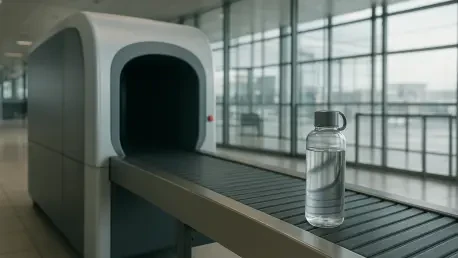

The modern airport experience is often defined by the ritualistic “bin shuffle,” a frantic dance at the security checkpoint where liquids are meticulously separated from carry-on luggage and water bottles are drained in a hurry before reaching the scanner. Special exceptions for medically necessary liquids and baby formula will continue to exist alongside the new rules for TSA PreCheck members. For nearly two decades, the 3-1-1 rule has served as a rigid reminder of the specific threats that once reshaped global aviation, forcing a generation of flyers to rethink their packing habits and navigate the terminal with carefully measured toiletries. However, as 2026 unfolds, the Transportation Security Administration is signaling a major pivot toward a more intelligent, risk-based screening process. This transition suggests that the era of blanket prohibitions may finally be giving way to a system that prioritizes the verified identity of the passenger and the sophistication of the hardware used to scan their belongings. By moving toward this model, the agency aims to restore a sense of efficiency to the travel experience without compromising the high standards of safety that remain the foundation of American flight.
The Origins and Future of Liquid Restrictions
A Security Mandate Born of Necessity
The genesis of the current liquid restrictions was not a matter of administrative whim but a direct response to a sophisticated and credible threat discovered in the summer of 2006. British authorities disrupted a terrorist plot intended to use liquid explosives on several transatlantic flights departing from London for the United States. The conspirators planned to use common components to create binary explosives mid-flight, a realization that sent shockwaves through the aviation industry. In the immediate aftermath, the TSA enacted an emergency total ban on all liquids in carry-on baggage. This total prohibition was eventually replaced by the 3-1-1 rule, which served as a calculated compromise. By limiting liquids to 3.4 ounces (100 milliliters) or less, the agency ensured that any single container would hold insufficient material to cause a catastrophic event. This logic has dictated security for twenty years, defining how every passenger approaches the checkpoint.
Beyond the immediate tactical response to the London plot, the 3-1-1 rule became a cornerstone of what experts call “security theater,” though its scientific basis remained sound for the era’s technology. The specific volume of 3.4 ounces was determined based on the physical requirements needed to trigger a high-yield explosion with the liquid chemical mixtures known to be in development at the time. Over the years, the inconvenience of this rule led to a massive shift in airport commerce, as passengers were forced to purchase beverages and personal care items at a premium once they passed through security. Despite its effectiveness as a deterrent, the rule has long been criticized for its lack of nuance, as it treats every passenger and every liquid as an equal threat. The persistence of the rule for two decades highlights both the gravity of the initial threat and the slow pace at which security infrastructure has historically evolved to meet new technological possibilities in detection.
The Proposed Exception for Trusted Travelers
Recent developments within the TSA indicate that the agency is on the verge of a historic policy shift that would specifically benefit members of the TSA PreCheck program. Internal reports suggest that an official announcement could come as early as mid-September 2026, granting these “trusted travelers” the ability to keep full water bottles in their carry-on bags. This move is part of a broader “multi-layered security” strategy that seeks to reward individuals who have undergone extensive background checks and provided biometric data. By identifying these passengers as lower risk, the TSA can focus its resources on more intensive screening for unknown or higher-risk travelers. The water bottle exception represents the first major rollback of the liquid ban since its inception, signaling a new era where the agency relies more on intelligence and advanced scanning capabilities than on broad prohibitions that affect every passenger regardless of their security profile.
The strategy of creating a tiered security experience is intended to incentivize more passengers to enroll in government-monitored programs. By offering the convenience of carrying water through security, the TSA effectively transforms a security protocol into a high-value benefit for PreCheck members. This approach reflects a fundamental change in how the agency views risk; it is no longer just about what is in the bag, but who owns the bag. For the traveler, this means the potential end of the forced disposal of expensive reusable bottles or the need to “chug” water before the line. While the agency has not yet confirmed a universal start date for every airport across the country, the framework for this policy change is being built on the assumption that a passenger’s verified identity provides a significant layer of security that traditional methods cannot match. This shift is expected to streamline the process for millions, significantly reducing the bottlenecks caused by liquid-related baggage searches.
The Technological Catalyst for Change
The Power of Computed Tomography
The catalyst for this significant policy shift is a leap in screening technology that has been steadily making its way into American airports. The TSA is increasingly replacing traditional 2D X-ray machines with high-tech computed tomography (CT) scanners at security checkpoints. Unlike the older technology, which produced flat images that often required manual inspection to clarify ambiguous objects, CT scanners use sophisticated algorithms to create detailed 3D images of a bag’s contents. These machines allow TSA officers to rotate the image 360 degrees on their screens, providing a comprehensive view of every item inside without requiring the passenger to remove electronics or liquids. This capability is vital because it allows the operator to see through visual clutter and identify specific items that might have been hidden in a 2D view. The high-resolution output of these scanners reduces the need for physical bag searches, which are one of the primary causes of delays.
The true strength of CT technology lies in its ability to analyze the molecular density of materials within a bag. Integrated automated detection software can now distinguish between benign substances, such as water, juice, or contact lens solution, and potentially hazardous chemicals or liquid explosives. This level of precision is what makes the proposed water bottle exception for PreCheck members a viable reality. When a full bottle of water passes through a CT scanner, the machine can verify that the liquid matches the density profile of water almost instantly. This removes the guesswork that once required a blanket ban on large containers. As this hardware becomes the standard across the country, the TSA’s reliance on volume-based restrictions is expected to diminish. The technology effectively does the work that used to require a manual search, providing a higher level of security while simultaneously accelerating the speed at which passengers move through the checkpoint.
A Fragmented and Gradual Rollout
While the technological potential is clear, the implementation of this new policy faces significant logistical hurdles that will lead to a fragmented traveler experience. Currently, only about two-thirds of U.S. airports have been equipped with the latest CT scanners, and the high cost of the hardware means that outfitting every security lane nationwide is a multi-year project. Because the ability to safely allow full water bottles depends entirely on the presence of these advanced machines, the water bottle exception will be strictly location-dependent for the foreseeable future. Travelers at major hubs like Atlanta, Los Angeles, or Orlando may enjoy this new convenience, while those flying out of smaller regional airports will still be bound by the original 3-1-1 guidelines. This disparity is expected to persist as the federal procurement process and equipment installation schedules vary significantly from one jurisdiction to another.
Aviation experts suggest that it could take another decade before every airport in the country operates with a unified, liquid-friendly security system. This creates a challenging environment for passenger education, as the rules may change from one leg of a trip to the next. The TSA has been clear that even for PreCheck members, the 3-1-1 rule remains the enforceable standard at any checkpoint not yet modernized with CT technology. Consequently, travelers must remain vigilant and check the specific capabilities of their departure terminals to avoid having their belongings confiscated. This gradual rollout highlights the immense scale of the American aviation infrastructure and the difficulties of updating security protocols in a decentralized system. For the next several years, the “end” of the liquid rule will be a patchwork reality, where the convenience of a modern checkpoint is a luxury available only at select, technologically advanced terminals across the United States.
Public Perception and Implementation Challenges
Navigating Privacy Concerns and New Standards
The news of the potential liquid rule relaxation has generated a complex mixture of public enthusiasm and skepticism. Many frequent flyers have expressed a sense of relief, viewing the change as a long-overdue modernization that addresses one of the most frustrating aspects of air travel. There is a strong hope that if water bottles are successfully permitted, the exception will eventually be extended to other common liquids such as high-end perfumes, sunscreens, and larger containers of liquid toiletries. For these travelers, the convenience of maintaining their belongings outweighs the complexities of the screening process. However, a vocal segment of the public remains wary of the “trade-off” that makes this possible. To access these new benefits, passengers must often participate in programs that utilize facial recognition and biometric data, leading to concerns that the TSA is using the water bottle exception as an incentive to drive participation in government surveillance programs.
Critics of the tiered security model argue that the agency is creating a system of rights based on a subscription model, where basic conveniences are locked behind a paywall and a requirement for data sharing. This perspective views the move toward PreCheck-exclusive benefits as a marketing tactic to increase enrollment revenue rather than a purely security-driven decision. There are also ongoing debates regarding the ethical implications of digital surveillance in public spaces, with some passengers feeling that their privacy is being eroded in exchange for a slightly faster security line. Despite these concerns, the TSA maintains that biometric integration is essential for the future of secure and efficient travel. The agency is tasked with balancing the demand for a smoother experience with the necessity of maintaining a robust security perimeter. As the transition continues, the dialogue between the government and the public regarding the ethics of data collection and the definition of a “trusted traveler” will likely become a central theme in aviation policy.
Modernizing Security through Incremental Progress
The path toward a unified and modernized security system remained a complex endeavor that required significant coordination between federal agencies and local airport authorities. Travelers who adapted to the changing rules found that the transition was often marked by a period of adjustment where communication at the checkpoint was vital. The TSA focused on clear signage and improved staff training to ensure that the distinctions between PreCheck and standard lanes were understood, minimizing confusion as the new CT scanners were deployed. Special exceptions for medically necessary liquids and baby formula were preserved as a standard practice, ensuring that the most vulnerable travelers were not lost in the move toward automated detection. This multi-year transition served as a practical case study in how large-scale government organizations could implement technological change without compromising the safety of millions of passengers who relied on the aviation network every day.
The evolution of the 3-1-1 rule eventually illustrated a broader trend toward the automation of risk assessment in the travel industry. By the end of the rollout phase, the integration of 3D imaging and molecular analysis had successfully shifted the burden of detection from the passenger to the machine. This allowed security officers to focus on more complex tasks, such as behavior detection and intelligence-led screening, while the hardware handled the routine identification of common liquids. For the average passenger, the most important takeaway was the need for flexibility and the realization that the security environment would continue to evolve as new threats and technologies emerged. The era of dumping water bottles at the security threshold began to fade, replaced by a system that was more efficient and better equipped to handle the realities of modern travel. Ultimately, the TSA’s move toward a more nuanced liquid policy represented a successful balancing act between the requirements of national security and the desire for a better passenger experience.