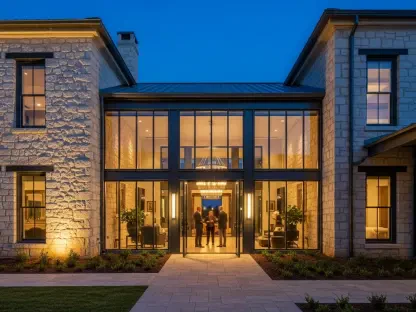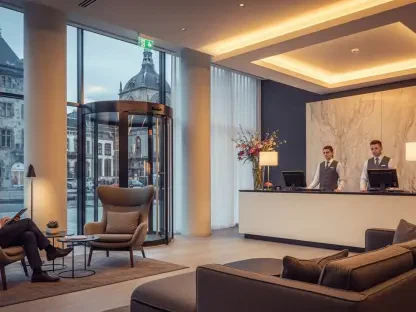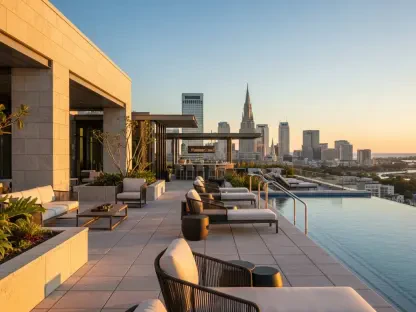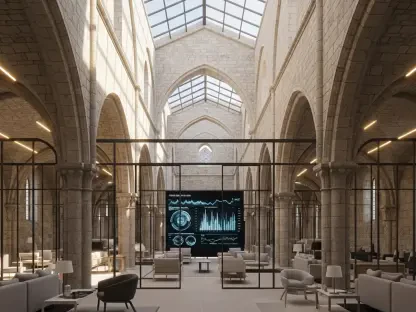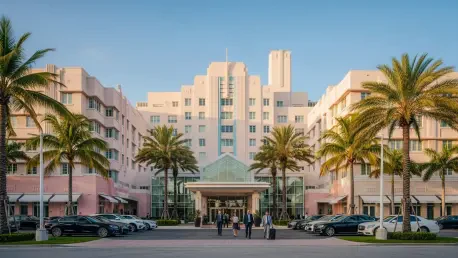

The impending arrival of the Hilton Miami Beach Convention Center Hotel marks a monumental turning point for a city that has long balanced its colorful Art Deco heritage with the relentless demands of a modern global financial hub. This property represents a pivotal shift in the South Beach landscape, serving as a cornerstone for the revitalization of the historic Collins Park area. By integrating seven landmark buildings into a single luxury asset, the development addresses a critical need for high-capacity accommodations to support the city’s rapidly expanding convention business and luxury tourism sector.
Reimagining the Historic Collins Park District
This upcoming debut represents a sophisticated redevelopment bridging Miami’s storied past and its ambitious future. The project transforms seven distinct historic structures into a unified 289-key property, ensuring that the district can accommodate the influx of high-end business travelers. This strategic positioning solidifies the status of Miami as a premier global hub for both international commerce and leisure.
1930s to 1940s: The Architectural Foundations of Collins Park
Renowned architects L. Murray Dixon and Albert Anis designed the seven historic buildings that now form the backbone of the Hilton project. During this era, their Art Deco and Streamline Moderne styles defined the aesthetic of Miami Beach, creating a unique urban identity that prioritized symmetry and tropical motifs. These protected landmarks eventually required a delicate approach to modern redevelopment to survive and thrive during the city’s next tourism boom.
2018 to 2023: Expanding the Infrastructure for Global Events
A $640 million renovation and expansion of the Miami Beach Convention Center catalyzed this project. While the facility attracted massive international trade shows and Art Basel, it highlighted a significant infrastructure gap: a shortage of immediate, high-volume luxury rooms. This period established the Hilton as a strategic necessity to maximize the city’s return on its massive infrastructure investment.
Early 2026: Securing the Final Financial Milestone
The Atlanta-based Peachtree Group provided a $103 million bridge loan during early 2026 for the final construction phases. This capital injection was essential for the complex historic preservation effort. The funding ensured that merging seven distinct historic footprints into a unified modern hotel could proceed without delay, supported by the status of Miami as a leading market for Average Daily Rate growth.
May 2026: The Scheduled Debut of a New Landmark
The timeline culminates in May 2026 with the scheduled opening of the hotel. This milestone marks the transition from a decade-long vision of preservation to operational reality. Upon its opening, the hotel immediately expands the capacity of the district to host large-scale groups, offering a seamless blend of historic charm and the modern amenities expected by elite travelers.
Turning Points in Miami’s Hospitality Evolution
The most significant turning point in this development is the successful fusion of historic preservation with modern commercial utility. The project proves that landmark architecture can be adapted to meet the rigorous demands of the 21st-century hospitality industry. This project reflects a shift where “authentic luxury” is preferred over generic modern towers. Furthermore, the collaboration between private investors and local boards highlights a successful model for urban renewal that balances growth with cultural heritage, finally filling the long-standing local hotel shortage.
Competitive Factors and the Future of South Florida Tourism
The arrival of the Hilton occurred alongside a broader, hyper-competitive expansion of the South Florida luxury market. As the Hilton entered the fray, it joined other developments such as the arrival of Hyatt’s Andaz brand, the reopening of the iconic Delano, and the upcoming Grand Hyatt slated for 2027. This influx of inventory created a new regional dynamic where hotels differentiated themselves through specialized services. Stakeholders observed that the status of Miami as a global hub provided a resilient floor for demand. Innovations in structured lending ensured that the region remained a magnet for global capital and high-spending travelers alike.