
Katarina Railko has spent her career mastering the intricacies of the hospitality and travel industries, becoming a prominent voice in the world of high-stakes entertainment and professional expos. Her perspective is shaped by a deep appreciation for regional identity and the strategic mechanics that turn a simple stay into a cultural experience. In this conversation, we explore the evolving landscape of tertiary markets, specifically through the development of The Lawrence, a 120-room boutique hotel in Lawrenceville, Georgia. Our discussion covers the strength of the “GEM” economic model—relying on government, education, and medical sectors—as well as the strategic value of soft-branding with major players like Hilton. We also examine the importance of high barriers to entry and why the future of American hospitality might just be found in the walkable, historic hearts of its smaller towns.
Tertiary markets often rely on a “GEM” model involving government, education, and medical sectors to sustain growth. How does this framework provide a more stable foundation for a boutique hotel compared to traditional tourist hubs?
The beauty of a GEM market lies in its built-in, recession-resistant demand, which provides a level of consistency that purely leisure-driven markets often lack. When you have a town like Lawrenceville with a population of a little more than 30,000 people, the local government offices, schools, and medical facilities create a steady stream of professional travelers who need high-quality lodging year-round. This foundation allows a property like The Lawrence to thrive even during economic dips, as these institutions don’t just disappear. By combining that stability with robust leisure activity, the hotel captures a diverse demographic that enjoys the Southern hospitality and charm of a historic downtown. It is a far more sustainable ecosystem than a highway intersection hotel that relies solely on transient traffic or seasonal tourism.
With 120 guestrooms and specialized dining concepts like Bellfire, The Lawrence is positioning itself as a high-end destination in a small town. What specific sensory or local elements help a property like this capture “Southern charm” without feeling like a generic chain?
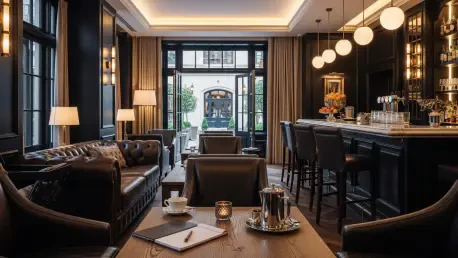
Creating a sense of place requires more than just high-end linens; it’s about weaving the local narrative into the physical space, such as the more than 6,000 square feet of indoor and outdoor event areas we’ve designed. At The Lawrence, guests can expect to feel the “love of a small town” through an open-air courtyard and dining experiences that reflect the region’s soul. Our signature restaurant, Bellfire, specifically serves a blend of Mediterranean and Southern fare, creating a unique flavor profile that honors the local palate while offering something sophisticated. Even the name of the property, inspired by naval war hero Captain James Lawrence, adds a regal, dignified layer to the guest experience. When visitors step into Old Nick’s Bar and Lounge, they aren’t just in a hotel bar; they are immersed in a space that feels like a rebirth for the entire city.
The journey to bring this hotel to life spanned eight years, including navigating the complexities of the 2020 pandemic. Why is local investment and city partnership so critical when facing such long-term development hurdles?
When you are dealing with an eight-year timeline, institutional money often gets cold feet, but local money is an investment in the community’s own future. This project saw its initial design concepts back in 2018, and despite the financing issues that arose during the COVID pandemic, the commitment never wavered because the stakeholders were local. The city showed its dedication early on by completing an adjacent parking deck in 2020, and the transfer of leasehold ownership to the city was a pivotal move to ensure construction could finally move forward. Having the Downtown Development Authority and city officials perfectly aligned means the project isn’t just a business venture; it’s a shared mission. That level of local support is the only reason a ground-up project of this scale can survive the “long road” of development.
You mentioned that the hotel aims for a rate of roughly $200 a night and benefits from high barriers to entry. How does a developer ensure these market conditions remain favorable over the long term?
High barriers to entry are actually a developer’s best friend because they prevent the market from becoming oversaturated with generic supply. We intentionally look for locations where it is near impossible, if not completely impossible, to build another hotel right next door, which protects our room rates and our brand equity. By positioning The Lawrence as the only boutique hotel in this specific Atlanta suburb of Gwinnett County, we create a level of exclusivity that justifies a $200 nightly rate. This “long road” strategy involves picking sites that require complex partnerships or unique land use, which naturally keeps competitors at bay. It ensures that our 120 rooms remain the premier choice for anyone seeking a sophisticated, walkable experience in the heart of the town.
The Lawrence is part of Hilton’s Tapestry Collection, a “soft brand” that has grown to over 200 hotels. What is the strategic advantage of pairing a local, “small-town” identity with the global reach of a major brand like Hilton?
Soft branding is a game-changer for boutique properties because it provides the best of both worlds: a unique, independent personality backed by a global powerhouse’s distribution system. When Northpointe Hospitality first got involved with Tapestry, there were only a handful of properties in the collection, but we saw the potential to boost the bottom line through Hilton’s massive loyalty network. We saw a similar success story with the Partridge Inn in Augusta, where a 100-plus-year-old building was revitalized under the Curio Collection. This strategy allows the hotel to maintain its “local story” and historic dignity while ensuring that travelers from across the world can find and trust the property. It gives us the marketing muscle of a giant while letting us keep the authentic, small-town spirit that makes the hotel special.
What is your forecast for the future of “Small-Town America” in the context of boutique hospitality?
I believe we are entering a golden age for tertiary markets, as travelers increasingly move away from congested metropolitan hubs in search of authenticity and walkable, historic charm. My forecast is that more investors will shift their focus toward these “hidden gem” cities, recognizing that the true spirit of the country is found in places like Lawrenceville rather than just off the U.S. Interstate system. We are going to see a significant “rebirth” of downtown areas where local money and boutique brands collaborate to create high-value destinations that honor their heritage. This isn’t just a trend; it’s a return to the roots of hospitality, where the hotel serves as the heartbeat of the community and offers a rate of return that rivals any major city project. Owners who don’t give up on small-town America today will be the ones leading the industry tomorrow.