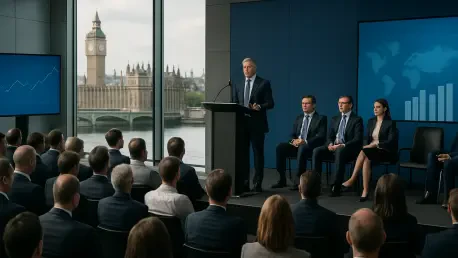

The United Kingdom’s business events sector currently operates at a sophisticated intersection of global commerce and regional development, contributing more than £33 billion annually to the national economy while facilitating the exchange of specialized knowledge across diverse industries. While these gatherings were once relegated to the periphery of the broader leisure tourism market, they have emerged as vital catalysts for high-level innovation and substantial foreign direct investment. This evolution is underscored by a recent parliamentary inquiry from the Culture, Media and Sport Select Committee, which highlights the necessity of moving beyond traditional recovery models to embrace a strategy of aggressive growth and structural refinement. By repositioning conferences and trade shows as primary drivers of industrial policy, the nation aims to solidify its standing as a premier destination for international professional assemblies. This transition requires a fundamental shift in how government bodies and private stakeholders perceive the long-term economic dividends generated by these high-profile corporate gatherings.
Elevating the Industry Through Strategic Government Policy
A central pillar of the current discourse involves the urgent implementation of a National Business Events Strategy, a framework designed to replace fragmented local initiatives with a cohesive and unified policy direction. The core of this initiative is the establishment of a National Business Events Council, which serves as a dedicated liaison between industry veterans and high-ranking government officials to ensure that the sector’s specific logistical and financial requirements are prioritized. This formal structure allows for a more nuanced approach to economic planning, preventing the unique needs of business events from being overshadowed by the seasonal demands of the general tourism industry. By providing a permanent seat at the legislative table, the council aims to create a stable environment where long-term investments in venue infrastructure and technology can flourish without the unpredictability of shifting political priorities. Such strategic alignment is intended to foster a more resilient ecosystem.
Beyond the creation of a central council, the success of a national strategy hinges on deep-seated coordination among several key government departments, including international trade, healthcare, and higher education. Business events frequently act as the primary stage for monumental trade agreements and the unveiling of scientific breakthroughs, making them indispensable to the nation’s broader industrial goals. A synchronized approach ensures that when a major medical conference or tech summit arrives, it is met with a support system that spans multiple ministries, thereby maximizing the potential for knowledge transfer and professional networking. This departmental synergy allows the government to leverage specific gatherings to promote domestic expertise on the global stage, essentially using each event as a tool for soft power and economic diplomacy. By integrating the business events sector into the wider strategic objectives of the Department for Business and Trade, the country can ensure that every delegation contributes to a narrative of national growth.
Balancing Global Competitiveness with Social and Operational Excellence
While the headline figure of £33 billion provides a strong economic justification for the sector, there is an increasing push to redefine the industry’s value through the lens of social impact and regional revitalization. Policymakers are being challenged to evaluate social worth by observing how major events foster local career development and catalyze the modernization of urban infrastructure in host cities. This shift toward a more qualitative assessment highlights the role of business gatherings in supporting small-to-medium enterprises and creating high-skilled job opportunities within the hospitality and technical services sectors. Furthermore, data from the Global Destination Report 2026 indicates that rival hubs are aggressively expanding their capacities and offering significant incentives to lure high-value business away from European centers. To counter this, the nation must commit to a robust program of international promotion that aligns its hosting capabilities with its overarching trade and investment objectives.
The operational landscape is also being transformed through the integration of heightened security standards, most notably the implementation of Martyn’s Law into venue management protocols. This legislation mandates a rigorous approach to public safety and emergency preparedness, ensuring that security is a foundational element of the event planning process. Alongside this focus on safety, the industry is moving toward a philosophy of intentional inclusion, where accessibility is integrated into the design phase of every gathering rather than being treated as an afterthought. Creating experiences that are fully accessible to a diverse global audience, accounting for physical and cognitive needs, is now recognized as a vital component of long-term success. By leading the way in providing barrier-free environments, the UK can expand its reach to untapped segments of the professional community. This dual focus on safety and accessibility reinforces the role of British venues as forward-thinking leaders dedicated to a universal business environment.
The path toward a fully transformed business events sector required a decisive transition from theoretical policy toward practical, high-impact execution across all administrative levels. Stakeholders successfully moved beyond simple economic metrics to prioritize long-term legacies that benefited regional communities and fostered industrial innovation through targeted knowledge exchange. It became clear that the integration of advanced safety protocols and inclusive design frameworks acted as a major differentiator, attracting high-value international contracts that sought reliable and ethical hosting environments. The establishment of a unified national voice allowed for a more agile response to global market shifts, ensuring that the country’s infrastructure remained at the cutting edge of technological and logistical standards. By aligning event hosting with broader national trade objectives, the industry secured a position as an essential component of the economic landscape. These actions established a blueprint for sustainable growth and long-term global relevance.