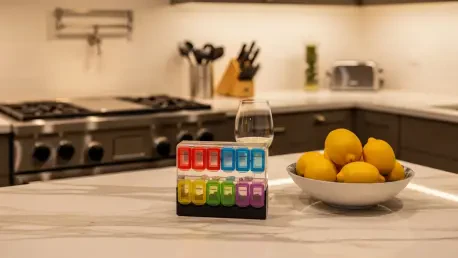

Traveling to a remote destination often promises the luxury of a private kitchen, yet the reality of “fully equipped” facilities frequently ends at the presence of a rusted burner and a few scratched pans. For those intending to prepare fresh local ingredients, the absence of basic seasoning transforms a culinary opportunity into a logistical hurdle. It is common for guests to arrive at a beautiful seaside villa or a mountain cabin only to find that even the most fundamental flavor agents, like salt or cracked pepper, are missing from the pantry. This recurring oversight by rental owners creates a significant dilemma for the modern traveler: whether to purchase full-sized containers that will eventually be discarded or to endure bland, uninspired meals throughout the duration of the trip. The friction between the desire for home-cooked quality and the scarcity of necessary supplies remains a persistent challenge in the global short-term rental market, demanding a more strategic approach to travel preparation.
The Cost of Culinary Inefficiency in Short-term Rentals
Financial and Environmental Waste: Local Market Challenges
The traditional solution of purchasing necessary ingredients upon arrival at a destination often leads to a cycle of significant financial and environmental waste. Travelers frequently find themselves standing in a local market, forced to pay premium prices for oversized jars of oregano, paprika, or garlic powder, only a fraction of which will be used during a week-long stay. This scenario is particularly prevalent in tourist-heavy regions where grocery prices are inflated to capitalize on transient populations. By the time the vacation concludes, these nearly full containers are usually left behind in the hope that the next guest might utilize them, though more often than not, cleaning staff discard them for hygiene reasons. This practice contributes to a cumulative environmental impact that is often overlooked in the broader discussion of sustainable travel. The repetitive acquisition and disposal of plastic or glass spice jars represents an inefficiency that modern travelers are increasingly eager to resolve through minimalist intervention.
Maintaining a focus on sustainability involves recognizing that the burden of waste should not be a prerequisite for a quality meal. When travelers buy full containers for only a few days of use, the carbon footprint of the product—from manufacturing to transportation—is vastly disproportionate to its utility. Furthermore, many rental platforms do not have standardized policies regarding leftover food, meaning that even unopened spices are frequently tossed into landfills to prepare the property for the next occupant. This systemic waste can be avoided by carrying small, measured amounts of seasonings that are guaranteed to be consumed or easily transported back home. By shifting away from the “buy and abandon” cycle, the conscious traveler can significantly reduce their environmental footprint while also saving money that would otherwise be spent on redundant supplies. This shift in behavior aligns with the broader movement toward responsible tourism, where every small action contributes to the preservation of local resources and the reduction of global plastic pollution.
Language Barriers: The Risk of Gastronomic Errors
Navigating unfamiliar grocery aisles in foreign countries introduces an additional layer of complexity, often resulting in costly culinary mistakes. Without a reliable internet connection for instant translation or a deep knowledge of the local language, identifying the correct seasonings becomes a high-stakes guessing game. For instance, the visual similarity between cumin and cinnamon or between cornstarch and baking powder can lead to ruined dishes and wasted resources. These errors do not merely affect the flavor of a single meal; they can disrupt the overall rhythm of a vacation, turning a scheduled evening of relaxation into a frantic search for alternatives. Furthermore, the lack of standardized labeling across different cultures means that potency and salt content can vary wildly, making it difficult to achieve consistent results with unfamiliar products. This unpredictability underscores the inherent risk of relying solely on local procurement, reinforcing the argument for carrying a curated selection of known, high-quality spices from home.
In addition to the practical difficulties of translation, the cultural differences in spice blends can lead to unexpected results in familiar recipes. A traveler might purchase what appears to be a standard herb mix, only to discover that it contains high levels of heat or unusual floral notes that clash with the intended flavor profile. This uncertainty can drain the joy from the cooking process, turning an act of creativity into one of anxiety. In many international locations, specialized seasonings like taco mix or specific dried chilies may not be available at all, forcing the cook to adapt on the fly with subpar substitutes. By bringing a personal spice kit, the traveler eliminates the “lost in translation” factor entirely, ensuring that every meal tastes exactly as intended. This level of consistency is particularly important for those with dietary restrictions or sensitivities, as pre-packed spices from a known source provide a guarantee of safety and quality that foreign grocery stores cannot always provide in the heat of a transition.
Redefining Portable Organization for the Modern Traveler
Repurposing Medical Tools: The Pill Organizer Innovation
Addressing the inadequacies of rental pantries requires a creative leap, and the repurposing of a weekly pill organizer provides an elegant, compact solution for the mobile chef. These devices, traditionally designed for medication management, feature individual, secure compartments that are ideally suited for small quantities of essential spices. Unlike plastic sandwich bags, which are prone to leaks and can appear suspicious during security screenings, pill organizers offer a rigid structure that protects the integrity of dried herbs and ground powders. They are also superior to alternatives such as contact lens cases, which, while watertight, often contain chemical residues from manufacturing that can leach into food items. The segmented design allows for a logical grouping of ingredients, such as a specialized “taco night” section or a collection of Italian herbs. This level of organization ensures that the traveler has exactly what is needed without the bulk of traditional packaging, fitting easily into any carry-on bag or backpack without adding significant weight.
The durability of these organizers makes them an ideal companion for the rigors of travel, whether one is staying in a high-end apartment or a remote campsite. The snap-tight lids are designed to prevent accidental opening, ensuring that pungent aromas like garlic or curry powder do not permeate the rest of the luggage. For longer trips, travelers can even use multiple organizers, color-coding them for different types of cuisine or meal times. This approach also allows for a more precise inventory management; one can clearly see when a specific seasoning is running low and adjust accordingly. Beyond the physical benefits, using a pill organizer for spices is a conversation starter and a testament to the ingenuity of the minimalist traveler. It represents a shift toward intentional packing, where every item serves multiple purposes and maximizes space efficiency. This simple household object, once restricted to the medicine cabinet, has effectively been rebranded as an essential piece of culinary equipment for the global nomad.
Strategic Planning: Optimizing the Arrival Experience
The shift toward pre-packed seasoning kits significantly enhances the arrival experience by allowing for immediate meal preparation without the need for an initial grocery run. After a long flight or an exhausting drive, the ability to sear a piece of local fish or sauté fresh vegetables with familiar seasonings provides a sense of comfort and control. This proactive strategy eliminates the stress of scouting a store in an unfamiliar neighborhood after dark, preserving the first evening of a trip for genuine rest. Moreover, using a pill organizer encourages a minimalist mindset, forcing the cook to consider which flavors are truly indispensable for the planned itinerary. This focused preparation results in a streamlined cooking process where every pinch of spice is intentional, reducing the clutter of the workspace in often cramped rental kitchens. By centralizing these ingredients, the traveler transforms a chaotic “battleground” environment into a functional culinary station, ensuring that the joys of vacation cooking are not overshadowed by the frustrations of a poorly stocked pantry.
Psychologically, the presence of a personalized spice kit creates a bridge between the familiarity of home and the novelty of a new destination. It allows for the exploration of local produce while maintaining a consistent baseline of flavor that meets the cook’s personal standards. This balance is crucial for maintaining a healthy diet while traveling, as it reduces the temptation to rely on processed restaurant food or expensive takeout options. The small ritual of opening the organizer and selecting the perfect blend of herbs can make a temporary kitchen feel more permanent and welcoming. Ultimately, this level of preparedness fosters a deeper connection with the local environment, as the traveler can confidently purchase raw ingredients from farmers’ markets knowing they have the tools to prepare them properly. By removing the logistical friction associated with rental kitchens, the pill organizer hack empowers individuals to reclaim their culinary autonomy, ensuring that every meal prepared on the road is a highlight of the journey rather than a compromise born of necessity.
The transition from frustration to efficiency in the kitchen began when travelers recognized the limitations of the “fully equipped” rental model. This shift in perspective prompted the adoption of portable, multi-compartment organizers as a standard component of the travel kit. By pre-packing controlled portions of spices, individuals effectively bypassed the financial and environmental costs associated with impulse purchases at local markets. This method mitigated the risks of language barriers and ensured that high-quality meals could be prepared immediately upon arrival. Ultimately, the use of a simple pill organizer proved to be a transformative strategy for maintaining culinary standards while on the move. The lessons learned from these experiences suggested that self-reliance and strategic planning were the most effective ways to preserve the pleasure of cooking in temporary living spaces. Future travelers were encouraged to look beyond traditional packing lists and embrace these small-scale innovations to foster a more seamless and sustainable global travel experience.