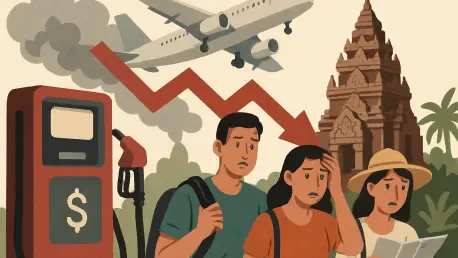

The dream of an affordable escape to the turquoise waters of Phuket or the bustling night markets of Ho Chi Minh City is currently colliding with a harsh economic reality that few travelers anticipated when planning their seasonal getaways. Across Southeast Asia, the once-reliable formula of low-cost flights and high-end luxury is being dismantled by a volatile energy market that has sent jet fuel prices soaring to nearly $200 per barrel. What was once a minor line item in a vacation budget has transformed into a formidable barrier, as geopolitical instability thousands of miles away in the Middle East dictates the feasibility of a tropical retreat. This sudden shift is not merely a temporary fluctuation; it represents a fundamental restructuring of the regional travel economy that forces every stakeholder, from the pilot in the cockpit to the backpacker on the street, to rethink their financial priorities.
The current crisis serves as a stark reminder of how deeply the global tourism industry is tethered to the fluctuations of the energy sector. For years, Southeast Asia thrived as a global powerhouse by offering a price-to-quality ratio that was virtually unmatched, but the current surge in overhead costs is testing the limits of that value proposition. As airlines grapple with unsustainable fuel expenses and hotels face dwindling international arrivals, the industry is entering a period of forced innovation. The stakes are high, as the region’s economic recovery depends on its ability to remain attractive to a global audience that is increasingly sensitive to the “total trip cost” in an era of high inflation and expensive logistics.
The $200 Surcharge: How Geopolitical Tensions Are Rewriting Your Vacation Budget
The era of the “cheap flight” to the Orient is facing its most significant challenge yet as regional instability in the Middle East continues to ripple through the global aviation supply chain. Travelers heading to the heart of Southeast Asia are finding that the price of paradise now includes a steep entry fee, often manifesting as a mandatory fuel surcharge that can exceed $200 for long-haul journeys. This financial burden is the direct result of jet fuel hitting record highs, a spike that has caught many vacationers off guard and forced a total recalibration of how families and solo adventurers allocate their limited resources. The allure of the sun and sand remains, but the logistical hurdles to reach them have become a defining feature of the modern travel experience.
This surge in costs is not just a numbers game for the airlines; it is a psychological barrier for the consumer. When a ticket price jumps by a third due to factors beyond the traveler’s control, the “spontaneous” nature of tourism begins to evaporate. Industry observers note that the current environment is weeding out the casual visitor, leaving behind a market composed primarily of high-net-worth individuals or those willing to make significant trade-offs in other areas of their lives to afford the journey. The geopolitical landscape has effectively turned a standard vacation into a luxury investment, shifting the demographic profile of the average tourist in real-time.
Why the Current Energy Volatility Threatens a Global Tourism Powerhouse
The stability of Southeast Asian tourism has long relied on the delicate balance of affordable long-haul connectivity and competitive local pricing. However, with jet fuel prices hovering near $197 per barrel, the economic foundation of this recovery is being severely tested. Major regional hubs that once served as the gateway for millions of Western tourists are now seeing a thinning of flight frequencies as carriers struggle to maintain profitability on routes that were once high-margin staples. This volatility creates a sense of uncertainty that discourages long-term planning, as both travelers and tour operators fear that prices could escalate further before a trip even begins.
Furthermore, the impact of this energy crisis extends far beyond the airport tarmac. Because the cost of transporting goods and providing services is also tied to fuel, the internal inflation within these destination countries is beginning to erode the purchasing power of the tourist dollar. While the exchange rate might still favor the visitor, the local cost of a guided tour, a private car, or a boat excursion has risen to compensate for the higher cost of diesel and gasoline. This double-hit—expensive flights followed by rising local costs—threatens to displace Southeast Asia from its long-held position as the world’s most accessible high-value destination.
The Economic Ripple Effect: From Cockpits to Concierges
Aviation remains the most visible casualty of this energy-driven shift, with major carriers like Singapore Airlines and Cathay Pacific implementing aggressive fuel surcharges to offset their massive overhead. Ticket prices have climbed by an average of 34% across the board, a necessary move for survival that has nonetheless alienated a large segment of the traditional market. In contrast to this upward trend, the hospitality sector is experiencing a “luxury paradox.” In cities like Bangkok and Ho Chi Minh City, five-star establishments have been forced to slash room rates by as much as 30% to maintain occupancy. The logic is simple: if people cannot afford the flight, they certainly won’t be booking the suite, so hotels are absorbing the economic blow to keep their doors open.
To survive this squeeze, the industry is turning toward value innovation and service bundling. Malaysian resorts, for instance, are increasingly moving away from “room-only” rates and toward all-inclusive models that incorporate spa treatments and fine dining. This strategy aims to give the traveler a sense of fixed-cost security, essentially promising that once the expensive flight is paid for, the rest of the trip is predictable. Simultaneously, there is a visible migration toward “second-tier” cities like Chiang Mai in Thailand or Da Nang in Vietnam. These destinations offer the same cultural richness as their capital counterparts but at a fraction of the cost, providing a much-needed pressure valve for budget-conscious travelers.
The role of low-cost carriers (LCCs) has also been elevated from a secondary option to a primary lifeline. Airlines such as AirAsia and Scoot are utilizing leaner operating models to undercut legacy carriers that are weighed down by larger fleets and higher staffing costs. By focusing on point-to-point regional travel rather than long-haul transit, these budget airlines are keeping the regional economy moving. They have become the preferred choice for a new generation of travelers who prioritize the destination over the in-flight experience, proving that even in a high-cost environment, efficiency remains the ultimate competitive advantage.
Industry Expert Insights on the Shifting Traveler Demographic
Data from the United Nations World Tourism Organization (UNWTO) suggests a concerning 12% decline in long-haul visitors coming from North America and Europe. This retreat of the traditional “bucket list” traveler is being partially offset by a surge in “near-neighbor” travel. Analysts point out that visitors from India and Indonesia are now the vital lifeblood of the Southeast Asian market. These regional travelers are less impacted by the extreme surcharges of transcontinental flights and are more likely to visit multiple times a year, albeit with a shorter duration of stay and a different spending pattern that favors local experiences over westernized luxury.
There is also a growing movement toward eco-friendly and cost-effective overland travel. As regional flight prices climb, the network of trains and buses connecting Cambodia, Laos, and Vietnam has seen a significant uptick in usage. This shift is not just about saving money; it reflects a broader change in traveler values, where the “slow travel” movement is gaining traction as a viable alternative to the high-speed, high-cost aviation model. Experts believe this trend could lead to a more sustainable form of tourism that benefits smaller, rural communities situated along these overland routes, rather than concentrating all wealth in major aviation hubs.
Strategies for Navigating the High-Cost Travel Landscape
Navigating this expensive terrain requires a more tactical approach to booking than in previous years. Financial experts and travel consultants now recommend a minimum six-month booking window to hedge against the volatility of fuel surcharges. By locking in prices early, travelers can avoid the “surge pricing” that often occurs closer to peak seasons when airlines adjust their fees to match the latest oil market data. Additionally, the use of hotel aggregators like Agoda or Booking.com has become essential for finding “flash sales.” Since luxury hotels are desperate to fill rooms left empty by the decline in long-haul visitors, savvy travelers can often find five-star accommodations at three-star prices if they are willing to be flexible with their dates.
Another critical strategy involves rethinking the “baggage” of travel, both literally and figuratively. With budget carriers dominating the market, the “pack light” philosophy has transitioned from a lifestyle choice to a primary financial strategy. Avoiding checked baggage fees and utilizing secondary hubs instead of primary international airports can save hundreds of dollars over the course of a multi-city trip. Opting for a destination like Penang instead of Kuala Lumpur, for example, allows for a significantly lower daily spend without compromising the quality of the culinary or cultural experience. These small adjustments, when aggregated, allow the modern traveler to maintain a sensible budget in an otherwise expensive climate.
The landscape of Southeast Asian travel was permanently altered by the intersection of energy dependency and shifting consumer behavior. The hospitality industry attempted to mitigate the impact of rising airfares through aggressive discounting and the creation of value-added packages that catered to a more regional audience. This period of transition highlighted the vulnerability of long-haul tourism models and accelerated the adoption of overland travel as a primary mode of exploration for the budget-conscious. Moving forward, the industry sought to diversify its energy sources and invest in more fuel-efficient infrastructure to prevent future shocks. Travelers, in turn, became more strategic, prioritizing regional destinations and planning with a longer lead time to secure their place in a market that no longer guaranteed the low costs of the past.