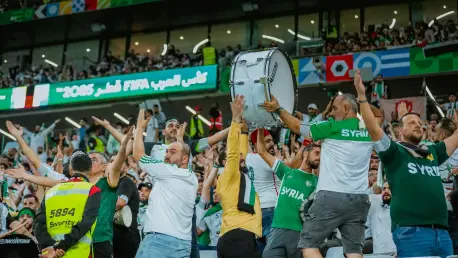

The return of the FIFA World Cup to North America represents a massive shift in how global sports marketing initiatives engage with a highly diverse and tech-savvy audience across three different nations. Marriott Bonvoy and Visa have capitalized on this momentum by launching the “For Fans, Everywhere” campaign, a global marketing effort designed to prioritize deep experiential rewards over standard advertising visibility. By utilizing the star power of world-class football icons like Erling Haaland and Vinicius Júnior, the initiative focuses on providing cardholders and loyalty members with unprecedented access to the tournament. This partnership signals a broader industry trend where major corporations move away from static logo placement toward active participation in the fan journey. The strategy leverages the extensive hospitality network of Marriott alongside the ubiquitous payment infrastructure of Visa to create a seamless ecosystem. This integration allows the brands to capture consumer attention in a crowded media landscape while offering tangible benefits that resonate on a personal level with supporters globally.
Digital Loyalty Integration: The Mechanics of Modern Fandom
The core of this transformation lies in the Marriott Bonvoy Moments platform, which serves as the primary vehicle for distributing over 600 match tickets and curated tournament experiences. This activation represents the largest single-event undertaking in the history of the loyalty program, demonstrating the immense scale required to satisfy the demand for a tournament hosted across the United States, Canada, and Mexico. Starting in mid-April, members began participating in a multi-tiered access system that includes fixed-price packages, competitive auctions, and the highly anticipated “1-Point Drops.” These drops occur every Friday, with a concentrated burst of activity scheduled for early May, allowing fans to secure entry to high-stakes matches, including the Final, for just a single loyalty point. This approach effectively democratizes luxury sports travel, making elite experiences accessible to a broader demographic of travelers who utilize Visa cards for their daily transactions and hotel stays.
Moreover, the collaboration illustrates a sophisticated use of data-driven marketing to synchronize payment behavior with hospitality preferences. By requiring the use of a Visa card to unlock specific Marriott Bonvoy rewards, the partners create a closed-loop ecosystem that tracks and rewards consumer loyalty across various touchpoints. This strategy ensures that the brands remain relevant throughout the entire fan journey, from the initial flight booking to the final whistle of the tournament. The implementation of these digital tools reflects a shift toward hyper-personalization in the sports industry, where fans are no longer treated as a monolithic group but as individual participants with unique interests. Furthermore, the campaign utilizes a diverse multi-channel content strategy, including high-production brand films and social media integrations, to maintain high engagement levels throughout the summer. By focusing on these digital interactions, the partnership builds a lasting connection that extends far beyond the duration of the tournament itself.
Redefining Stadium Boundaries: The Sleepover Suite Concept
Perhaps the most innovative aspect of this collaboration is the “Sleepover Suite” sweepstakes, which offers a literal hotel-in-a-stadium experience at the New York New Jersey Stadium. Winners from select global regions are granted the opportunity to spend the night in a luxury hospitality suite that has been transformed into a fully functional Marriott Bonvoy guest room on the eve of the World Cup Final. This concept provides a rare, field-side perspective that blends the high-end comforts of a world-class hotel with the raw intensity of the most-watched sporting event on the planet. By physically placing the hospitality brand inside the venue, the partnership breaks down the traditional barriers between the stadium and the accommodation. This physical integration serves as a powerful metaphor for the modern fan experience, where the lines between travel, entertainment, and technology are increasingly blurred. Such activations demonstrate how brands can create permanent memories by offering perspectives that are impossible to purchase through standard retail channels, thereby securing long-term brand affinity.
The execution of this partnership demonstrated that the future of sports sponsorship resided in the ability to offer genuine utility and exclusive access rather than simple brand recognition. Organizations that successfully mirrored this model by integrating payment systems with loyalty rewards found that they could drive significant user acquisition while maintaining high retention rates during peak global events. The initiative proved that fans valued physical presence and unique access more than digital advertisements, suggesting that future marketing strategies should prioritize local, on-the-ground activations that offer high emotional impact. Moving forward, companies should consider how their existing infrastructure can be repurposed to create “impossible” experiences, much like the stadium suite concept. For brands looking to replicate this success, the focus must remain on simplifying the user journey through technological integration and ensuring that the most valuable rewards are reachable through various engagement tiers. These developments established a new benchmark for global collaborations, proving that hospitality and finance can work together to redefine the nature of international spectator sports.