
Katarina Railko, a seasoned veteran of the luxury hospitality and entertainment sectors, joins us to dissect the strategic brilliance behind one of the industry’s longest-running brand identities. With a background deeply rooted in high-end events and international tourism, she provides unique insights into how Mandarin Oriental’s “Fan Campaign” has evolved to meet the needs of the modern, high-performance guest. This discussion explores the brand’s focus on professional mastery, the launch of celebrity-curated wellness and dining experiences across 29 countries, and the growing importance of personal connection in an increasingly digital world.
Maintaining a specific brand campaign for over twenty-five years requires a delicate balance between tradition and innovation. How does a brand keep such a legacy fresh while staying true to its core identity?
For more than 25 years, the group has successfully navigated the changing tides of luxury by focusing on the timeless concept of mastery rather than chasing fleeting digital trends. By consistently aligning with individuals from the worlds of culture, sport, and entertainment who exemplify “craft,” they ensure the brand remains aspirational yet deeply grounded in human achievement. Today, as they manage an impressive portfolio of 46 hotels and 15 residences, the focus has shifted from mere visual recognition of the iconic fan logo to the emotional resonance of a shared personal journey. They successfully blend their longstanding visual identity with modern storytelling, ensuring that the brand’s presence across 29 countries feels as authentic and relevant today as it did at its inception. It is about proving that true luxury is found in the time and care invested in a performance, whether that performance is on a stage or within a hotel suite.
The recent inclusion of a Grammy-winning classical pianist and a techno DJ highlights a very broad spectrum of culture. What does this contrast say about the way luxury hospitality is identifying its modern audience?
This pairing reflects a sophisticated understanding that today’s luxury traveler is far from a monolith; the same individual might appreciate the intricate, disciplined world of Yuja Wang’s piano artistry one day and the high-energy, electronic atmosphere of Charlotte de Witte’s KNTXT label the next. Both artists represent the “highest standards” of their respective professions, which serves as the essential unifying thread that ties back to the hotel’s mission of uncompromising commitment. By filming the campaign at diverse locations like the historic Hyde Park in London and the serene, sun-drenched coast of Bodrum, the brand acknowledges that luxury is found in both the quiet focus of preparation and the vibrant energy of a post-performance recovery. It suggests that the modern guest seeks an environment that supports their professional intensity while simultaneously offering a sanctuary for restorative connection.
Translating a celebrity’s personal routine into a tangible guest experience is a unique challenge. How do the specific offerings like the “At Full Volume” wellness treatments and dining menus bridge the gap between performer and guest?
These initiatives turn a passive hotel stay into a sensory immersion by allowing guests to adopt the actual recovery and preparation routines utilized by world-class performers. The “Intelligent Movement” wellness treatment is particularly impressive because it addresses the specific physical demands of a professional pianist, focusing intensely on the hands, wrists, forearms, shoulders, and spine to support mobility and circulation. Conversely, the “In-Room Dining: At Full Volume” experience, developed with Charlotte de Witte, acknowledges the practical reality of performers and international travelers who require substantial, high-quality food long after traditional dining rooms have closed. By implementing these programs in global hubs like Dubai, Paris, Tokyo, and New York, the brand provides a visceral sense of care that feels both functionally necessary and deeply indulgent. It allows a guest returning from a late flight or a high-pressure meeting to feel the same level of personalized support that a headlining DJ receives after an extended set.
With 46 hotels and 39 private homes globally, how does the brand manage to make a massive international campaign feel intimate and locally relevant at the same time?
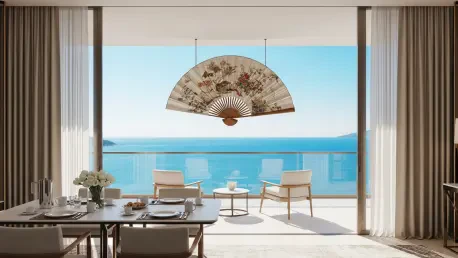
The brilliance lies in the decentralized nature of their visual identity, where individual hotels have their own unique fans created to reflect their specific destinations while remaining part of the wider global campaign. This approach allows a guest in the Mandarin Oriental Conservatorium in Amsterdam to feel a completely different sense of place than a guest at the Mandarin Oriental, Milan, even though both are participating in the same “At Full Volume” dining experience. The expansion into 39 private homes further deepens this intimacy, moving the brand’s philosophy out of the lobby and into the permanent, everyday lives of their most loyal guests. By launching this latest chapter globally across digital channels and social media on 4 August 2026, they are creating a unified global conversation that still leaves room for the “personalized care” that defines local hospitality. It is a masterful way of scaling intimacy, ensuring that whether a guest is in Hong Kong or Bodrum, the experience feels tailored to their specific needs at that exact moment.
What is your forecast for the future of personalization in the luxury hospitality sector?
I believe we are entering an era where “invisible service”—the meticulous preparation and recovery that happens behind the scenes—will become the ultimate luxury commodity. We will see more brands moving away from generic amenities and toward biologically and professionally specific interventions, such as treatments that incorporate specialized facial techniques and spinal mobility work for the modern “corporate athlete.” This campaign proves that high-end guests are no longer satisfied with just a beautiful room; they want the specific tools and routines that allow them to perform at their best in their own lives. In the coming years, the hotels that dominate the market will be those that treat every guest like a performer on a global stage, offering a level of “personal connection” that sustains them through their unique and demanding journeys. The focus will shift entirely toward wellness that supports the physical and mental demands of a high-stakes lifestyle, making the hotel an essential partner in a guest’s long-term success.