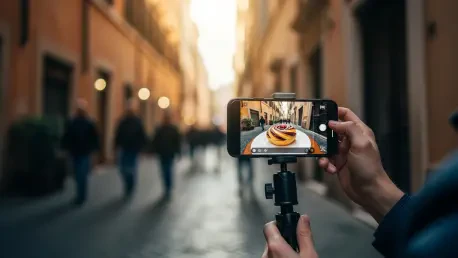

The traditional travel brochure, once the primary architect of European dreams, has been effectively dismantled by a relentless tide of authentic, creator-led digital storytelling. This transformation marks a fundamental shift from institutional authority toward a model where individual influence dictates global movement. By 2026, the European travel landscape has moved away from government-funded billboards and toward short-form narrative videos that emphasize raw, unfiltered perspectives. Viral content on platforms like TikTok and Instagram Reels now acts as the primary driver for regional exploration, ending an era where professional glossy photography held a monopoly on destination appeal. Modern travelers are no longer content with passive observation; they demand a curated narrative that resonates with their personal values and aesthetic preferences. Consequently, the industry is seeing a revolution in how destinations are discovered and perceived by a global audience.
Digital Influence: The Shift From Institutional Authority to Peer Authenticity
Official tourism websites and high-budget television commercials are increasingly viewed as sterile, biased, and disconnected from the reality of travel. This perception has led to a collapse in traditional marketing models as consumers pivot toward raw, honest reviews sourced from digital peers on community platforms. Instead of trusting a polished advertisement for a Parisian hotel, travelers are scrolling through Reddit threads or following the unscripted daily journeys of independent creators who highlight both the beauty and the inconveniences of a trip. This transition represents a major disruption for marketing departments, forcing them to acknowledge that a relatable “behind-the-scenes” video shot on a smartphone builds significantly more trust than a million-dollar professional production. The erosion of institutional credibility has empowered a new class of digital guides who offer a level of transparency that was previously impossible in the travel sector.
European tourism boards have responded to this shift by moving from passive observers to active participants within the creator economy. Countries such as Italy and Spain have pioneered sophisticated partnership programs that integrate individual creators into the national marketing infrastructure. These data-driven operations focus on “familiarization trips” designed to produce organic-looking content that populates social media feeds without the obvious markers of an advertisement. By treating creators as professional consultants rather than just media outlets, these agencies ensure a steady stream of visibility for regional activities and secondary cities. This strategic evolution ensures that local heritage remains visible in an increasingly crowded digital landscape, where the noise of generic promotion is often ignored. The goal is to create a seamless blend of official support and creative independence, maintaining a constant presence in the digital consciousness.
Algorithmic Discovery: Short-Form Video and the New Psychology of Travel
Short-form video has emerged as the most powerful decision-making tool for the 18-35 demographic, who largely ignore traditional travel agents in favor of algorithmically curated feeds. Discovery now occurs within “micro-moments,” where a single fifteen-second clip of a hidden coastline in Greece or a specialty bakery in Vienna can trigger an immediate surge in search queries and booking inquiries. This rapid conversion from interest to action is a hallmark of the current era, characterized by a preference for visual storytelling that feels personal and immediate. The speed at which a location can transition from obscurity to a global must-see destination has compressed the traditional marketing funnel into a matter of hours. Travelers are effectively crowdsourcing their itineraries, relying on the collective eyes of a global community to filter through thousands of options to find the most visually and culturally compelling experiences available in Europe today.
The viral velocity inherent in these platforms creates a high-reward environment for any destination that successfully captures the attention of the algorithm. Unlike traditional media, which requires long lead times and predictable scheduling, the digital creator space thrives on spontaneity and trend-driven engagement. This has led to a situation where demand can be generated almost instantaneously, often catching local infrastructure by surprise. For smaller municipalities, this means that a single successful video from a high-engagement creator can lead to a literal overnight influx of visitors, providing a significant economic boost but also requiring a new level of operational agility. The relationship between content and consumption has become direct and frictionless, as links and booking buttons are often integrated directly into the viewing experience. This shift has fundamentally altered the economics of travel, making digital visibility the most valuable asset a region can possess.
Beyond Landmarks: Redefining Value Through Immersive Narrative Travel
Traveler expectations have undergone a radical evolution, shifting from simple sightseeing at major landmarks to a deep desire for immersive storytelling and personal growth. Instead of merely standing in front of the Colosseum for a photograph, today’s tourists are seeking out experiences that allow them to participate in the local culture, such as regional cooking classes or private visits to family-owned vineyards. This transition has forced the hospitality and tour sector to redesign their offerings to cater to those who want their journey to provide a compelling and unique personal narrative. The focus has moved from the “where” of travel to the “how” and “why,” with an emphasis on activities that offer a sense of genuine connection to the place being visited. Hotels and tour operators are increasingly functioning as curators of these experiences, building packages that prioritize engagement over observation to satisfy the modern traveler’s hunger for authenticity.
Interestingly, the push for “Instagrammable” moments has paradoxically encouraged more sustainable and culturally respectful travel habits among a significant portion of the population. Because authentic local experiences often perform significantly better on social media than staged tourist traps, there is a new alignment between economic incentives and cultural preservation. Travelers are learning that respecting local traditions and supporting small-scale artisans results in more compelling content, leading to a shift away from mass-market tourism. This trend has encouraged many operators to prioritize heritage-focused products that showcase the genuine character of a region, rather than catering to the lowest common denominator. Consequently, the search for the perfect digital story is increasingly overlapping with the goals of conservation and community support. By rewarding authenticity with digital engagement, the creator economy is helping to protect the very cultural assets that make Europe attractive.
Economic Accountability: Tracking ROI and the Management of Overtourism
The economic landscape of tourism has moved toward a model of direct attribution, enabling tourism boards to measure the exact return on investment for their creator-led campaigns. Unlike the vague and often unmeasurable metrics of billboards or magazine ads, modern digital platforms offer precise tracking of every click, share, and subsequent booking in real time. This level of transparency has sparked a competitive race among destinations to secure the most influential and trusted voices to drive reliable revenue streams and high-quality leads. Marketing budgets are being reallocated toward these direct-to-consumer channels, where the cost per acquisition can be monitored with surgical precision. This focus on data allows regional authorities to refine their messaging constantly, ensuring that their limited resources are spent on creators who actually deliver tangible results. The shift from broad awareness to specific conversion has made travel marketing more efficient and accountable than ever before.
Despite the economic benefits, the rise of creator-led tourism has also fueled a significant crisis of overtourism in certain sensitive European regions. When a specific location goes viral, the sudden and massive influx of visitors can place an unsustainable strain on local infrastructure and the environment. This often leads to resentment among local residents who feel that their daily lives are being disrupted by a constant stream of travelers looking for a specific photo opportunity. To combat this, some areas have been forced to implement strict visitor caps, entry fees, and even photography restrictions to protect the very authenticity that drew people there initially. This tension highlights the double-edged nature of digital influence, where popularity can quickly become a destructive force if not managed with care. Balancing the economic desires of the tourism industry with the lived reality of local communities has become one of the most pressing challenges for European policymakers.
Data Stewardship: Leveraging Digital Infrastructure for Future Sustainability
To manage the unpredictability of viral trends and the resulting spikes in visitor numbers, many European destinations are turning to advanced digital infrastructure and AI-powered dashboards. These technological tools allow authorities to monitor social media mentions and engagement levels in real time, predicting surges in foot traffic before they actually occur on the ground. By analyzing this data, governments can proactively reallocate resources, such as increasing public transportation frequency or deploying additional staff to popular sites. Furthermore, this information enables tourism boards to adjust their digital marketing strategies on the fly, steering travelers toward lesser-known areas to help balance the visitor load across a wider geography. This data-driven approach to destination management is essential for maintaining the quality of the visitor experience while protecting the integrity of the site. It represents a shift from reactive problem-solving to a model of proactive stewardship.
Successful destinations fostered creator-friendly environments while they simultaneously maintained strict guidelines for responsible content creation and environmental protection. These authorities moved away from traditional promotion and instead embraced authentic digital storytelling as their primary tool for engagement. By implementing these technological safeguards, European nations ensured that their cultural heritage remained preserved for the next generation of travelers. Regional planners focused on building partnerships that rewarded creators who showcased off-the-beaten-path locations, effectively distributing the economic benefits of tourism more evenly. This strategy helped mitigate the effects of overcrowding while it supported the growth of local businesses in previously overlooked areas. In the end, the industry proved that a balance between digital visibility and physical sustainability was possible through careful planning and the integration of smart data. The most resilient regions were those that treated digital influence as a tool for managed growth.