
The global hospitality landscape has undergone a radical transformation as affluent travelers increasingly reject traditional opulence in favor of secluded, off-grid experiences that prioritize environmental stewardship without sacrificing comfort. This shift is not merely a passing trend but a fundamental realignment of what constitutes a premium getaway in the current market. Modern adventurers are seeking a “guilt-free” escape where high-tech solar arrays and sophisticated battery storage systems replace noisy diesel generators and inefficient grid connections. By integrating renewable energy into the very fabric of the stay, operators have managed to provide essential luxuries like precision climate control, high-speed connectivity, and gourmet induction cooking in some of the most remote corners of the planet. This evolution has effectively dismantled the old binary choice between enjoying high-end amenities and protecting the delicate ecosystems that guests travel thousands of miles to witness. Every aspect of the guest journey is now evaluated through the lens of ecological impact and personal renewal.
Evolution of Sustainability: From Backend Utility to Brand Identity
Sustainability is no longer a hidden operational detail but a visible hallmark of prestige that differentiates elite resorts from standard accommodations. Leading hospitality groups have recognized that renewable energy serves as a powerful value-add for a growing demographic of conscious consumers who demand transparency and ecological integrity. These travelers view a resort’s commitment to carbon neutrality as a primary justification for premium pricing, seeking out destinations where the carbon footprint is minimized through advanced photovoltaic technologies. This movement has pushed architects and developers to design structures that are not just low-impact but regenerative in nature, contributing to the local power grid or restoring native flora. Consequently, the presence of a solar farm or a series of discreet, high-efficiency panels has become as significant a status symbol as a five-star dining room, signaling that the establishment respects the natural world. This transition marks a new era where luxury is defined by one’s relationship with the earth.
Biological Reconnection: Aligning Luxury with Natural Rhythms
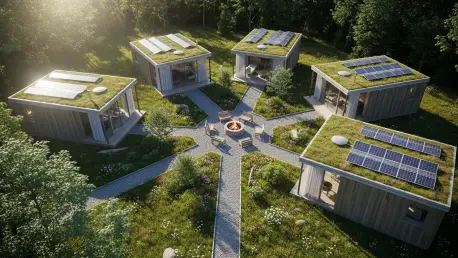
This philosophical shift encourages guests to realign their internal clocks with the natural cycles of the sun and the moon, fostering a deeper biological reconnection with the environment. By eliminating the constant hum of industrial power and the invasive glare of artificial city lights, solar glamping sites offer a sensory experience that is impossible to replicate in urban centers. Operators are meticulously selecting energy solutions that match the specific ecological needs of their locations, whether that involves portable solar kits for transient camps or fixed installations designed to cause zero disruption to local wildlife migration patterns. This careful balance ensures that the physical presence of luxury does not erode the very wilderness that provides its value. The result is a travel experience where guests feel physically and mentally restored, knowing their stay supports a broader initiative of conservation and responsible resource management. It is a harmonious approach that places the guest within the ecosystem rather than above it.
Scaling Solutions: From Corporate Resorts to Minimalist Outposts
The current market displays a fascinating spectrum of operational models ranging from sprawling corporate-backed retreats to highly specialized minimalist outposts. Some flagship destinations prove that full-scale resorts, complete with heated infinity pools and industrial-grade kitchens, can function entirely on harvested sunlight and lithium-ion storage. These engineering marvels demonstrate the viability of large-scale green energy in hospitality, proving that size does not have to dictate a heavy carbon footprint. Conversely, other providers emphasize a more restrained approach by intentionally limiting electricity in individual guest tents or domes. By focusing power usage on shared communal spaces and high-quality portable devices, these sites encourage a sense of shared purpose and environmental mindfulness. This diversity in the glamping sector ensures that whether a traveler seeks the comforts of a digital office or the silence of a primitive retreat, there is a sustainable option available. It reflects the adaptability of solar technology across different scales of luxury and guest expectation.
Historical Necessity: Sustainability in Rugged and Remote Landscapes
In rugged and historically significant environments, such as high-altitude mountain ranges or vast desert plains, sustainability often emerges from a blend of historical necessity and modern innovation. Many of these sites utilize solar-powered battery systems to maintain the authentic atmosphere of a remote ranch or a traditional nomad camp while offering modern safety and communication features. This “digital detox” model has become particularly popular among high-stress professionals who wish to unplug from the constant stream of notifications and rediscover the art of conversation. By removing the distraction of ubiquitous WiFi and television, these destinations transform the lack of traditional connectivity into a premium feature of the stay. Guests are invited to engage with the landscape through guided nature walks, communal dining, and old-fashioned storytelling, proving that the most profound luxuries are often those that require the least amount of electricity to maintain. This approach revitalizes ancestral knowledge while employing cutting-edge renewable power.
Celestial Amenities: The Growing Influence of Astro-Tourism
A significant catalyst for the expansion of solar-powered glamping is the burgeoning interest in astro-tourism, where the quality of the night sky is treated as a core amenity. Travelers are now specifically searching for destinations that carry “Dark Sky” certifications, a designation that guarantees an absence of light pollution and provides the clearest possible views of the cosmos. To maintain these standards, glamping operators have adopted specialized lighting designs, such as downward-facing low-intensity LEDs and motion-activated solar paths, which ensure safety without compromising visibility. This focus on celestial observation has led to the creation of unique architectural structures like transparent geodesic domes and cabins with retractable roofs that allow guests to sleep directly under the stars. By positioning the preservation of the darkness as a luxury offering, the industry has turned an environmental challenge into a lucrative and spiritually fulfilling component of the travel experience. It creates a powerful incentive for resorts to maintain large swaths of undeveloped land.
Economic Viability: Merging Environmental Stewardship with Growth
The financial success of solar-powered glamping has proven that environmental responsibility is a viable and profitable business strategy in the modern economy. By reducing long-term energy costs and attracting a high-spending demographic, these resorts have established a resilient model that can weather economic fluctuations. Moreover, the integration of local sourcing for materials and food has strengthened the relationship between luxury resorts and their surrounding communities, creating a circular economy that benefits all stakeholders. This economic stability allowed for further investment in emerging technologies, such as atmospheric water generators and carbon-sequestering building materials, which further pushed the boundaries of what a sustainable resort could achieve. As the market matured, the data collected from these off-grid sites provided invaluable insights for urban developers looking to implement similar micro-grid solutions in metropolitan areas. The glamping sector thus served as a high-end testing ground for innovations that eventually transitioned into broader societal applications.
Strategic Industry Integration: The Road Toward Regenerative Travel
The long-term viability of high-end tourism eventually depended on the ability of operators to integrate seamlessly into the natural world without causing irreversible damage. Industry leaders moved beyond the experimental phase of solar power, establishing robust standards that included comprehensive waste management and water recycling alongside renewable energy production. These practices showed that the “experience economy” could flourish when aligned with ecological preservation, setting a new benchmark for the entire hospitality sector. Moving forward, the most successful brands were those that invited guests to participate in the sustainability journey, offering educational workshops on renewable energy and local conservation efforts. As these destinations became the gold standard for luxury travel, they provided a blueprint for a future where the boundaries between high-end comfort and wild nature were effectively dissolved. The focus shifted toward creating long-term positive impacts on local communities and ecosystems, ensuring that travel remained a force for global good.