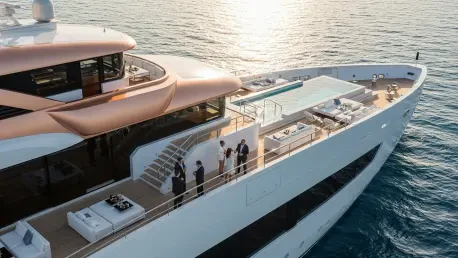

The transition from private yacht ownership toward curated, brand-led community experiences marks a significant evolution in how the global elite interact with maritime assets. This market analysis examines the strategic collaboration between Mercedes-Maybach and Lloyd Werft Bremerhaven, focusing on the construction of Beyond Horizons, a 155-meter superyacht designed as a private members’ club. As the luxury landscape shifts from solitary possession toward shared, experiential residency, the project serves as a critical benchmark for future high-end maritime ventures. This exploration details the technical, social, and economic factors driving this transformation within the superyacht industry, where prestige is increasingly measured by access rather than title.
Redefining the High-End Maritime Experience
The luxury sector is currently navigating a profound transformation, moving away from traditional patterns of solitary asset ownership toward curated, community-driven models. At the forefront of this shift is the Maybach Ocean Club, a venture that recently transitioned from a conceptual dream to a manufacturing reality with the selection of Lloyd Werft Bremerhaven as its shipyard partner. The centerpiece of this initiative is Beyond Horizons, an ambitious 155-meter superyacht designed to serve as a floating “private members’ club.” Rather than following the traditional charter model, this project seeks to blend the prestige of the Mercedes-Maybach brand with a novel hospitality structure that prioritizes shared access over individual burden.
From Automotive Excellence to Maritime Mastery
To understand the significance of the Maybach Ocean Club, one must look at the heritage of its primary collaborators. Mercedes-Maybach has long been a benchmark for German engineering and sophisticated design, and its entry into the nautical world signals a strategic expansion of the lifestyle brand into the maritime sphere. By partnering with Lloyd Werft—the shipyard responsible for legendary explorer vessels like Luna and Solaris—the project gains the technical pedigree necessary to execute a vessel of this scale. Historically, the superyacht industry has been dominated by ultra-high-net-worth individuals who own their vessels outright. However, rising operational costs and a desire for more fluid lifestyle options have created a market vacuum that this project intends to fill by applying automotive precision to a maritime context.
Deconstructing the Shared Ownership Ecosystem
The Fractional Revolution: Community-Based Ownership
The most disruptive element of the Beyond Horizons project is its community-based ownership structure. Instead of a single owner, the vessel will be owned by a circle of 300 members globally. This fractional model grants each member approximately four weeks of annual access, effectively eliminating the logistical headaches, staffing requirements, and maintenance concerns typically associated with sole yacht ownership. By capping the number of guests at 72 at any given time, the club ensures an intimate atmosphere where members can network and socialize with like-minded peers. This shift reflects a broader trend in the luxury sector where community concepts are becoming as valuable as the physical assets themselves, offering a sense of belonging alongside world-class amenities.
Design Synergy: Automotive Aesthetics Meets Naval Architecture
Visually, the yacht is a direct extension of Maybach’s design philosophy, translated for the open sea by specialists Splendid Sea and naval architects Dölker + Voges. The 155-meter vessel features the sculpted surfaces and elongated proportions characteristic of Maybach’s luxury sedans, finished with a signature rose-gold material palette. Unlike traditional yachts that vary wildly in cabin quality, Beyond Horizons offers thirty identical 74-square-meter suites. This standardization ensures that every member enjoys the same level of luxury, featuring private balconies and panoramic ocean views. The interior layout prioritizes social wellness, incorporating split-level infinity pools, fine-dining venues, and extensive spa facilities that mirror the comforts of a five-star land-based resort.
Technical Precision: The Logistics of Global Mobility
Building a 155-meter residential vessel requires more than just aesthetic flair; it demands rigorous engineering and high-level manufacturing. The choice of Lloyd Werft Bremerhaven ensures that the yacht will be a high-performance icon capable of navigating the world’s most exclusive waters. The operational plan is designed around a luxury travel calendar, with seasonal itineraries that transition between the Mediterranean in the summer and the Caribbean in the winter. To maintain the seamless experience expected by its members, a dedicated support vessel will handle tenders and operational logistics, keeping the main yacht focused on hospitality. This dual-vessel approach allows the club to maintain a pristine environment for its guests while ensuring that the complex machinery of global travel remains hidden behind the scenes.
The Evolution of Ultra-Luxury Assets and Social Circles
As the industry looks toward the 2029 delivery of Beyond Horizons, it is clear that the project is tapping into a wider shift in consumer behavior. Modern luxury consumers are increasingly looking for ways to maximize their “time-wealth,” seeking experiences that provide the prestige of ownership without the time-consuming responsibilities. Furthermore, the integration of technological innovations in naval architecture—such as improved fuel efficiency and advanced stabilization systems—will likely make these shared residential models more sustainable and attractive to a younger generation of investors. The future of the industry may very well lie in these branded residences at sea, where the reputation of an established luxury mark provides a guarantee of quality and social standing.
Strategic Insights: The Modern Luxury Investor
For professionals and consumers navigating the high-end market, the Maybach Ocean Club offers a blueprint for the future. The primary takeaway is the value of the “hassle-free” luxury experience; by offloading management to a professional shipyard and hospitality team, members can focus entirely on the experience. Businesses should take note of how Maybach has leveraged its brand equity to enter a completely different sector, suggesting that cross-industry collaborations are a potent tool for growth. For those considering fractional ownership, it is essential to evaluate the community’s social fabric and the technical reliability of the partners involved, as these factors will ultimately define the long-term value of the investment and the quality of the shared experience.
A New Horizon: The Future of Luxury Lifestyle
The project demonstrated that the integration of automotive prestige into the maritime sector successfully addressed the needs of a more mobile, time-conscious demographic. Investors recognized the value of offloading operational burdens to specialized shipyards and hospitality teams, which preserved the emotional benefits of luxury ownership. The transition prioritized collective intelligence and asset fluidity, allowing participants to navigate global waters without the traditional constraints of sole vessel management. Businesses utilized these cross-sector partnerships to mitigate the volatility of luxury asset ownership. Ultimately, the Maybach Ocean Club redefined the standard for high-end residency by proving that shared horizons offered a more sustainable and socially enriched future for the luxury market, suggesting that the ultimate asset was no longer a vessel, but a curated community.