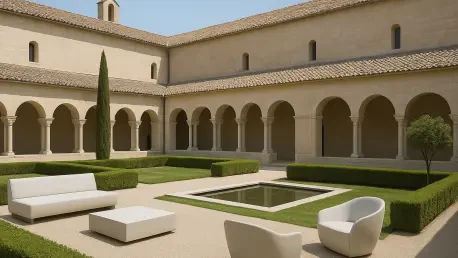

The hotel’s public spheres are being redesigned as the ‘living room of the city,’ featuring a collaborative art installation known as the Living City Ceiling. This shift in design philosophy occurs following the Kempinski Group’s acquisition of the site in 2026, setting the stage for a reopening in early 2027. The project involves the meticulous restoration of the Augustinian Monastery of St. Thomas, a sprawling complex in Prague’s Malá Strana district that includes seven historic buildings. Designers face the unique task of respecting eight centuries of architectural history while providing the high-tech comforts expected by the modern luxury demographic. By focusing on a concept of “lived duality,” the renovation bridges the gap between the quiet, contemplative atmosphere of a 13th-century monastery and the vibrant, artistic energy that defines contemporary Prague. This approach positions the property as a cultural anchor rather than just a place of lodging.
Preserving Architectural Heritage Through Design
LDS Design Studio spearheads the physical transformation, prioritizing the preservation of original Gothic and Baroque elements that make the structure unique. Architects have worked to integrate massive stone walls, vaulted ceilings, and original wooden beams into the new layout, ensuring that the monks’ former living quarters remain a central part of the guest experience. This preservation effort does not merely serve an aesthetic purpose but acts as a functional bridge to the past, allowing visitors to feel the weight of history in every corridor. The design team, led by Massimo Severo Barbera, maintains an emphasis on “extraordinary contrasts” where ancient textures meet sleek, modern finishes. This method ensures that the historical integrity of the monastery is not lost during the upgrade to 21st-century standards. By focusing on these contrasts, the hotel creates a space that encourages both private introspection and active social connection within its walls.
The accommodation strategy includes 101 guest rooms, with 20 specialized suites that serve as narrative anchors for the property’s historical identity. Each room features bespoke canopy beds and rich tapestries, with color palettes carefully selected to mirror the architectural hues of Prague’s famous spires and lush gardens. Among these, the signature suites pay tribute to the city’s intellectual and political titans. The Presidential Suite draws inspiration from Václav Havel, the playwright and former president, reflecting themes of leadership and artistic integrity. Meanwhile, the three-level Tower Suite is themed after the astronomer Johannes Kepler, providing a unique architectural experience that connects guests to the scientific heritage of the region. These themed spaces move beyond traditional luxury by offering a curated journey through time, allowing guests to immerse themselves in the stories of the philosophers and leaders who once walked these very streets centuries ago.
Reimagining Social Spaces and Community Connection
Public spaces are undergoing a total reimagining to serve as the “living room of the city,” a concept that aims to blur the lines between international travelers and the local Prague community. A centerpiece of this initiative is “The Collector’s Table,” a dedicated space that showcases the intricate work of local Czech artisans and master craftspeople. This area facilitates a tangible connection to the region’s contemporary creative scene, moving away from the isolated nature of many luxury hotels. Furthermore, the inclusion of residential-style gathering areas fosters a sense of informal belonging, encouraging guests to linger and interact. By opening these spaces to the public, the hotel transforms into a social hub where cultural exchange occurs naturally. This focus on local integration ensures that the property remains relevant to the residents of Malá Strana while providing guests with an authentic sense of place that is often missing from standardized global brands.
The culinary and mixology program, developed in partnership with Gorgeous Group and Russell Sage Studio, emphasizes storytelling through sensory experiences. The main dining venue operates as a salon-style neighborhood brasserie, focusing on tableside service and high-quality local ingredients to attract a steady local clientele. Perhaps the most evocative space is the bar located within the historic Refectory, which features a “12-gate cocktail menu” inspired by alchemical steps and seasonal botanicals. In a direct nod to the monastery’s brewing heritage, the bar continues to serve St. Thomas dark lager, a beverage traditionally associated with the resident monks. A daily “Transformation Hour” at sunset marks the shift from the quietude of the day to the vibrant energy of the evening, further reinforcing the theme of duality. These innovative food and beverage concepts turn dining into a performance, where the history of the site is literally served to guests through modern craft.
Engaging With Living History and Industry Trends
The Augustine serves as a flagship for the Kempinski E.R.A.s (Experience Real Access) program, which provides guests with curated, direct access to the “living history” of the location. Because the property remains an active part of a working monastery, visitors have the rare opportunity to engage with resident monks, local curators, and artists. This initiative reflects a broader movement in the hospitality industry away from passive consumption toward active, meaningful engagement with the surrounding environment. It caters to a growing demographic of high-end travelers who seek authentic cultural immersion rather than sequestered luxury. By revitalizing heritage properties through such deep cultural narratives, the brand capitalizes on the high demand for “slow luxury” and a genuine sense of place. This strategy aligns the hotel with other European icons that have successfully repurposed historic assets to create modern benchmarks for experiential travel and local community integration.
The renovation of the Kempinski Augustine Prague established a comprehensive blueprint for how historical preservation and modern luxury could coexist effectively. Stakeholders successfully transitioned the property into a multifaceted cultural destination that prioritized narrative depth over simple opulence. To maintain this momentum, future hospitality leaders should focus on creating similar bridge-building initiatives that connect guests directly with local heritage through interactive programming. The project demonstrated that the successful integration of a site’s monastic history into its daily operations provided a unique value proposition that appealed to modern, globally-minded travelers. By focusing on the “lived duality” of the space, the development team ensured the hotel’s long-term relevance in a competitive market. Ultimately, the transformation offered a sustainable model for heritage revitalization, proving that the most successful luxury experiences are those that offer a profound, tangible connection to the past.