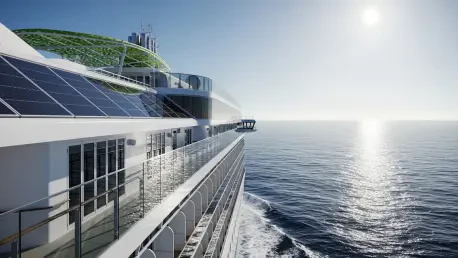

The delivery of the Mein Schiff Flow to TUI Cruises on June 14, 2026, represents a fundamental shift in how the maritime industry approaches the delicate balance between high-end tourism and environmental stewardship. Built by the prestigious Italian shipbuilder Fincantieri at their Monfalcone shipyard, this vessel is far more than a simple expansion of an existing fleet; it is a profound declaration of intent regarding the future of the oceans. The ship emerges at a time when the cruise sector faces unprecedented scrutiny regarding its carbon footprint, offering a tangible response through advanced engineering and architectural innovation. By moving away from conventional maritime design philosophies, the vessel integrates sophisticated systems that align directly with modern climate objectives and the evolving demands of a more conscious traveling public. This milestone signifies the arrival of a new generation of vessels designed specifically to push boundaries in both luxury and sustainability through integrated technical excellence.
Next-Generation Propulsion and Emissions Control
Dual-Fuel Technology and Compliance
The primary driver of this vessel’s environmental performance is its sophisticated dual-fuel propulsion system, which prioritizes the use of Liquefied Natural Gas while maintaining operational flexibility with marine gas oil. This technological choice allows the ship to navigate the world’s most strictly regulated emission control areas without compromising on speed or reliability. By utilizing natural gas as its main energy source, the ship achieves a near-total elimination of sulfur oxide emissions and a dramatic reduction in nitrogen oxides and particulate matter. This transition represents a critical bridge in the maritime industry’s journey toward decarbonization, proving that large-scale passenger ships can operate with significantly less impact on air quality. Engineers have optimized these engines to ensure that combustion is as complete as possible, minimizing methane slip—a common challenge in earlier gas-powered designs—and setting a new benchmark for efficiency.
Beyond immediate emission reductions, the dual-fuel configuration provides a level of future-proofing that is essential for long-term investments in the maritime sector. As the infrastructure for synthetic fuels and bio-LNG continues to expand across major global ports, the ship is already equipped to transition to these even greener alternatives without requiring extensive overhauls. This adaptability ensures that the vessel remains compliant with the tightening regulations of the International Maritime Organization through the end of the decade and beyond. Furthermore, the integration of these power systems required a complete redesign of the ship’s internal layout to accommodate specialized fuel storage tanks and advanced safety monitoring equipment. This architectural ingenuity maximizes passenger space while housing some of the most complex machinery ever installed on a cruise ship, demonstrating that technical complexity does not have to come at the expense of guest comfort or aesthetic appeal.
Shore Power and Energy Efficiency
One of the most impactful features of the vessel’s design is its ability to eliminate local emissions entirely through the use of advanced shore power connectivity. When docked in major international ports, the ship can draw its electrical requirements directly from the local land-based power grid, allowing the main engines to be completely deactivated. This capability is vital for improving air quality in port cities, which have historically borne the brunt of maritime pollution from idling vessels. To support this, the ship is equipped with sophisticated transformers and frequency converters that can adapt to various electrical standards found in different regions around the world. This infrastructure enables a seamless transition from sea to port power, ensuring that all onboard services continue without interruption while the ship maintains a zero-emission profile at the pier. Such systems are becoming a prerequisite for entry into many European and North American ports.
Complementing the shore power system is an innovative waste-heat recovery architecture that captures thermal energy from the vessel’s mechanical operations and repurposes it for other functions. Instead of allowing heat from the engine cooling systems and exhaust gases to dissipate into the atmosphere, it is channeled through steam turbines to generate additional electricity. This recovered energy is then used to power various onboard utilities, ranging from the extensive laundry facilities to the temperature control systems of the swimming pools. By effectively recycling heat, the ship significantly reduces its overall fuel consumption and enhances its thermodynamic efficiency compared to previous generations of cruise liners. This holistic approach to energy management reflects a shift from viewing waste as a byproduct to seeing it as a valuable resource, which is a hallmark of modern sustainable engineering that seeks to extract maximum utility from every gram of fuel burned.
Sustainability Through Circularity and Intelligence
Closed-Loop Resource Management
The management of resources onboard the vessel follows a strict circular logic, treating the ship as a self-sustaining ecosystem that minimizes its reliance on external waste disposal. At the heart of this system is an advanced thermal processing plant that manages the waste generated by the thousands of passengers and crew members. Unlike traditional disposal methods, this technology converts organic waste into bio-char or thermal energy, significantly reducing the volume of material that must be offloaded at port. This closed-loop approach is essential for maintaining the pristine condition of the marine environments the ship visits, ensuring that no harmful residues are discharged into the open ocean. By implementing such rigorous waste-processing protocols, the vessel sets a new standard for corporate responsibility, demonstrating that large-scale hospitality operations can function with a minimal environmental footprint while still providing a premium experience.
In addition to waste processing, the ship utilizes sophisticated artificial intelligence to optimize energy consumption across every department, from navigation to the galley. These digital systems analyze real-time data from thousands of sensors to make micro-adjustments in power distribution, ensuring that no energy is wasted on unused lighting or climate control in vacant areas. For instance, the AI can adjust the ship’s speed and route in response to weather patterns and current conditions to maintain the most fuel-efficient trajectory possible. This data-driven approach allows for a level of transparency and accountability that was previously unattainable in the maritime industry. Travelers who are concerned about their ecological impact can now see the tangible results of these optimizations, as the vessel provides a clear record of its performance. This marriage of digital intelligence and environmental science is the defining characteristic of the ship’s operational philosophy.
Strategic Innovation and Industry Evolution
The strategic partnership between TUI Cruises and Fincantieri that produced this vessel highlights the continued leadership of European engineering in the high-tech maritime market. By investing in the InTUItion class, these organizations have committed to a long-term vision of sustainable growth that anticipates the future needs of the global travel industry. This collaboration has successfully integrated complex Italian shipbuilding expertise with a clear understanding of the evolving luxury market, where sustainability is no longer a niche preference but a core requirement for many high-end consumers. As the industry moves toward a future defined by hydrogen fuel cells and even cleaner synthetic alternatives, the lessons learned from the construction and operation of this ship will provide invaluable data for subsequent projects. The success of this vessel proves that large-scale capital investments in green technology are not only environmentally necessary but also economically viable for long-term competitiveness.
The completion of this project provided a definitive answer to the challenges facing the cruise sector, offering a viable path forward that combined luxury with accountability. Industry stakeholders recognized that the integration of LNG and shore power established a new baseline for what a modern passenger ship should achieve in terms of environmental performance. Looking ahead, the focus shifted toward the mass production of carbon-neutral fuels and the expansion of green corridors that could support these advanced vessels globally. The technological foundations laid by this ship encouraged further investments in port infrastructure and renewable energy grids, creating a ripple effect throughout the entire maritime supply chain. By prioritizing circular resource management and digital optimization, the vessel successfully transitioned from being a polluter to a proactive participant in the global energy transition. This shift ensured that the cruise experience remained relevant and responsible for the next generation of global travelers.