
Katarina Railko is a distinguished expert in the hospitality and commercial real estate sectors, specializing in high-end developments and large-scale event venues. With a career rooted in the intricacies of travel, tourism, and entertainment, she has become a leading voice on how historical preservation intersects with modern luxury. Her insights are particularly valuable as global brands navigate the complexities of adaptive reuse in storied urban centers. In this discussion, she explores the strategic growth of luxury portfolios and the meticulous planning required to bring a landmark property to life.
Developing a luxury property within a historic skyscraper requires navigating complex preservation standards and extended approval timelines. How do you balance maintaining architectural heritage with modern guest requirements, and what specific challenges arise when repurposing a landmark building to accommodate 168 luxury rooms?
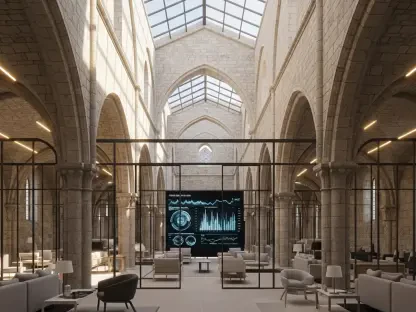
Repurposing a landmark like the Savannah Skyscraper is a delicate exercise in patience and precision, evidenced by the two-year approval process with the Savannah Historic District Board of Review. To balance heritage with modern needs, we focus on preserving the soul of the building—its facade and structural rhythm—while completely re-engineering the interior to fit 168 luxury rooms that meet contemporary standards for space and technology. The primary challenge lies in the rigid footprint of a historic skyscraper; you cannot simply move load-bearing walls to create open-concept suites. Every square inch is a negotiation between the existing masonry and the high-end plumbing, acoustics, and climate control systems that Ritz-Carlton guests expect. It feels like a high-stakes puzzle where the goal is to make the guest feel the building’s history without sacrificing the seamless comfort of a new build.
Savannah is seeing a surge in demand for immersive travel experiences that blend business and leisure. Beyond the signature restaurant and rooftop pool, how do you curate amenities like a 5,000-square-foot spa to differentiate a property from existing local options while satisfying high-end consumer expectations?
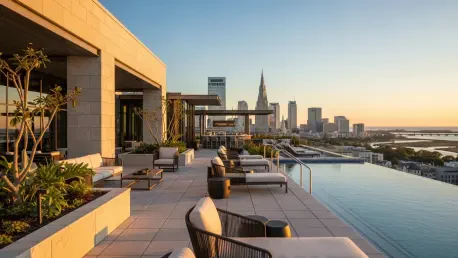
To stand out in a market like Savannah, which is increasingly becoming a hub for “bleisure” travelers, an amenity like a 5,000-square-foot spa must be more than just a place for treatments; it must be a sanctuary that reflects the city’s unique atmosphere. We differentiate by integrating wellness into the very fabric of the stay, moving beyond standard massage menus to offer immersive experiences that might include local botanicals or quiet indoor-outdoor transitions. This scale allows us to offer specialized wellness zones that cater to high-end consumers who view self-care as a non-negotiable part of their travel itinerary. By pairing these services with a rooftop bar and pool, we create a social ecosystem where a business traveler can transition from a morning of meetings to an afternoon of recovery and an evening of networking without ever leaving the property.
Luxury segments currently make up about 10% of global hospitality development pipelines as high-end consumers prioritize travel spending over physical goods. What operational shifts are necessary to support this aggressive growth, and how do brand partnerships in the wellness sector influence the design of these new properties?
As luxury expands to 10% of the global pipeline, the biggest operational shift is the move toward hyper-personalization and specialized service standards that can scale across diverse geographies. We are seeing a significant shift where brands are no longer just hotel operators but lifestyle curators, necessitating partnerships like the recent joint venture with Italian wellness brand Lefay. These partnerships fundamentally change property design; we are now designing “wellness-first” layouts where fitness and recovery spaces are central to the floor plan rather than tucked away in a basement. Operationally, this requires staff who are trained not just in hospitality, but in specific wellness philosophies, ensuring that the brand promise is delivered through every sensory touchpoint of the guest journey.
The design process for new high-end hotels often aims to merge local heritage with modern elegance to create a distinct sense of place. Could you walk through the step-by-step process of executing this vision and explain how specific interior elements can evoke a local atmosphere for international travelers?
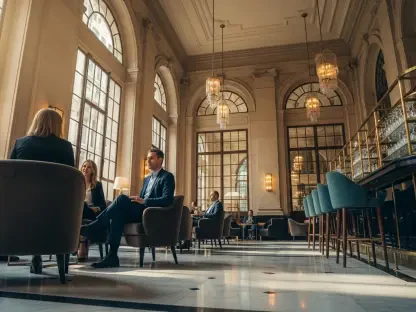
The process begins with deep immersion into the local culture, which is why working with a firm like Martin Brudnizki Design Studio is so vital for the Savannah project. We start by identifying “heritage anchors”—architectural motifs, local materials, or historical narratives—and then layer them with modern, elevated finishes to avoid a “museum” feel. For international travelers, we evoke the local atmosphere through sensory details like the weight of a custom brass fixture or the specific hue of a velvet upholstery that mirrors the coastal Georgia landscape. It’s a step-by-step layering of the lobby lounge’s warmth, the signature restaurant’s intimacy, and the guest rooms’ refined elegance to ensure the property feels “distinctly Savannah” rather than a generic luxury box.
With a scheduled opening for 2028, there is a significant lead time for construction and market positioning. What metrics or trends do you track during these multi-year developments to ensure that 5,000 square feet of meeting space and other facilities remain competitive by the time doors finally open?
Tracking a development that won’t open until 2028 requires us to look far beyond current occupancy rates and focus on evolving work-life patterns and technological integration. We closely monitor the demand for high-tech, flexible meeting spaces, ensuring that our 5,000 square feet of event facilities are equipped for hybrid digital experiences that will likely be the standard in four years. We also track the “resilience” of the high-end consumer, as mentioned by leadership during recent earnings calls, to ensure our service model stays ahead of shifting luxury preferences. By monitoring long-term urban development trends in Savannah, we ensure that our rooftop and wellness offerings will still be perceived as cutting-edge by the time the first guest checks in.
What is your forecast for the luxury hospitality market in the American South?
I predict a significant “sophistication surge” for the American South, where cities like Savannah will transition from charming regional stops to primary international luxury destinations. As major players like Marriott aggressively expand their Luxury Group portfolio here, we will see a shift toward more adaptive reuse projects that celebrate Southern history while providing ultra-premium amenities. The resilient spending of high-end travelers on experiences over goods will drive a more competitive landscape, forcing developers to integrate wellness and local heritage even more deeply into their brands. By 2028, the South will likely be the domestic benchmark for how historic preservation and modern luxury can coexist to drive sustainable economic growth.