
Professional analysis suggests that the commercial yield of beach tourism increases significantly when lodging, transit, and the shoreline are connected through a unified mobility grid. The coastal hospitality sector transitioned toward this integrated model to address long-standing gaps in physical accessibility that previously isolated significant portions of the traveling public. Modern municipal planning now treats the beach as a high-tech extension of the urban environment rather than a wild, disconnected zone. By prioritizing seamless transitions from public transportation hubs to the water’s edge, cities like Huntington Beach and Miami have seen a notable uptick in multi-generational travel and extended stays. This evolution relies on a combination of durable hardware and data-driven logistics to ensure that terrain variability does not become a barrier. Strategic investments in permanent ramps and shoreline decking have become the benchmark for economic resilience today.
Engineering the New Waterfront
Implementation of Specialized Surface Technologies
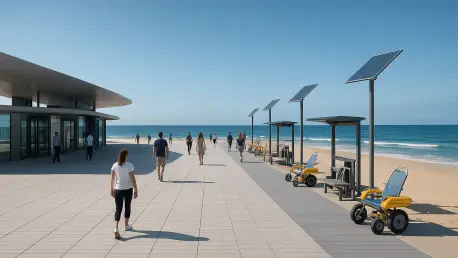
Transitioning to a truly accessible coastline required a departure from temporary solutions toward high-durability infrastructure. Municipalities have moved beyond the seasonal rollout of flexible mats, favoring semi-permanent installations made from recycled high-density polyethylene and carbon-fiber-reinforced composites. In Virginia Beach, engineers deployed a series of interlocking modular boardwalks that resist saltwater corrosion and withstand intense ultraviolet exposure. These systems are designed with a low-profile aesthetic that blends with the natural landscape while providing a stable, non-slip surface for manual and powered wheelchairs. Furthermore, the integration of heavy-duty, all-terrain mobility lanes has transformed the transition zones between parking structures and the wet sand. These lanes are often equipped with heat-resistant materials to prevent the excessive surface temperatures that typically characterize traditional asphalt or dark wood surfaces today.
Maintenance Protocols and Environmental Impact
Sustaining these physical improvements involves a sophisticated maintenance cycle supported by automated sensor networks. In 2026, coastal engineers began embedding pressure and moisture sensors within accessible pathways to monitor sand accumulation and structural stress in real-time. This proactive data collection allows city maintenance crews to deploy localized cleaning robots or manual teams before a path becomes obstructed or hazardous. Beyond the paths themselves, the deployment of amphibious wheelchair kiosks has become a standard feature at major public access points. These stations utilize RFID-enabled lockers where visitors can exchange their standard mobility devices for chairs equipped with balloon tires and floatation supports. This hardware shift is complemented by the installation of solar-powered hydraulic lifts at public piers and tidal pools, ensuring that the water remains reachable. The environmental impact is mitigated by using permeable materials.
Integrating Digital Accessibility Solutions
Navigation and Real-Time Resource Mapping
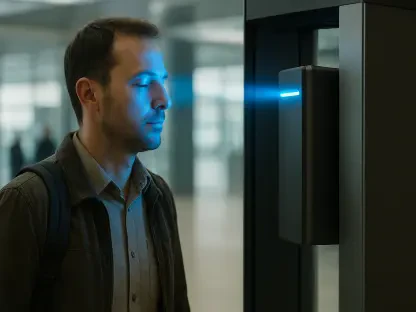
The physical infrastructure is now being layered with a digital transparency that removes the uncertainty often associated with travel for people with disabilities. Advanced mapping applications now provide granular details about shoreline conditions, including current ramp gradients, the availability of accessible restrooms, and the specific locations of beach wheelchairs. In coastal hubs like San Diego, the implementation of Bluetooth Low Energy beacons at entry points has enabled turn-by-turn haptic feedback for visually impaired visitors, guiding them safely from transit drops to designated seating areas. These digital tools utilize live data feeds to update users on temporary closures or high-traffic periods that might impede mobility. Furthermore, the integration of smart parking systems specifically for accessible vans has reduced the logistical friction of arriving at the coast. By providing real-time availability of extra-wide stalls, municipalities optimized the first-mile experience.
Strategic Outcomes and Future Expansion
The completion of these major infrastructure upgrades provided a definitive blueprint for future urban coastal development. Stakeholders evaluated the performance of these integrated systems and determined that the combination of physical modifications and digital overlays resulted in a thirty percent increase in visitor satisfaction scores. Strategic planners focused on the implementation of long-term maintenance contracts that utilized local vocational programs to ensure the longevity of the new mobility grids. The industry moved toward a model where accessibility was no longer viewed as a compliance requirement but as a fundamental driver of regional economic stability. Municipalities established cross-departmental task forces to oversee the continued expansion of these networks, ensuring that every new pier project adhered to the strictest universal design standards. These efforts successfully demonstrated that inclusive engineering could be harmonized with environmental protection for a better future.