
With the global shift toward more intentional, self-guided exploration, Northern Ireland has emerged as a premier destination for those seeking a blend of raw wilderness and sophisticated hospitality. Katarina Railko, an expert in tourism economics and hospitality, has spent years analyzing how independent travel patterns reshape regional economies. Her insights into Northern Ireland’s unique transit infrastructure, sustainable development, and cultural heritage provide a comprehensive look at why this corner of the world is currently experiencing a massive independent travel boom. In this conversation, we explore the logistical tools that empower solo explorers, the economic vitality driven by decentralized tourism, and the sensory experiences that define the region’s coastal and inland escapes.
How should solo travelers utilize tools like the iLink Smartcard and the Antrim Coaster to navigate the rugged landscapes of Northern Ireland?
The iLink Smartcard is the operational heartbeat for any independent explorer, providing a seamless, cost-effective way to traverse the nation without the burden of a rental car. It grants unlimited daily or weekly access across the entire Translink network, including Metro, Ulsterbus, Glider, and NI Railways, which is essential for those who want to transition from the urban energy of Belfast to a quiet, misty coastal trail on a whim. For a truly immersive experience, I always recommend the Ulsterbus Service 252, famously known as the Antrim Coaster, which hugs the North Atlantic oceanfront and connects picturesque settlements with unmatched views. The ease of tapping a card and watching the dramatic basalt cliffs roll by allows a traveler to focus on the scenery rather than the stress of navigation. This integrated system, complemented by the Enterprise Rail Service connecting Dublin and Belfast, ensures that solo adventurers can move between international hubs and remote rural hamlets with absolute confidence.
In what ways does the current safety and public transit framework empower solo travelers to explore beyond the traditional tourist hubs?
Safety is the foundation upon which Northern Ireland’s solo travel boom is built, consistently earning high marks for its welcoming atmosphere and low crime rates. This sense of security, combined with a transit framework that prioritizes connectivity, allows travelers to step off a train into a landscape where they can finally hear themselves think. The compact geography means that minimal travel time is required to reach wild coastal paths or ancient glens, maximizing the hours spent in nature rather than in transit. Because the local culture naturally encourages spontaneous interactions in cozy pubs or along rugged paths, a visitor never feels truly isolated even when traveling alone. This infrastructure doesn’t just move people; it creates a safety net that encourages the kind of slow, sustainable exploration that modern independent travelers crave.
What makes the Causeway Coast and Glens an unrivaled haven for those seeking a mix of solitude and structured adventure?
The Causeway Coast is a geological masterpiece where solo hikers can find deep solitude at the Giant’s Causeway by traversing the cliff path from Dunseverick Castle. This route allows you to approach the 40,000 interlocking basalt columns away from the peak crowds, offering a moment of quiet reflection against the backdrop of the crashing Atlantic. For those who prefer a more structured thrill, the Gobbins Cliff Path on Islandmagee provides rock-carved staircases and suspension bridges that feel incredibly raw yet remain safe under expert guidance. If you head inland to Glenariff Forest Park, the “Queen of the Glens,” the timber boardwalks guide you past dramatic river gorges and waterfalls with a sense of tranquil greenery that is hard to find elsewhere. It’s this balance of accessible wildness—from the heights of the Carrick-a-Rede Rope Bridge to the quiet of Ballintoy Harbour—that makes County Antrim so magnetic.
Why have the Fermanagh Lakelands become such a significant sanctuary for travelers interested in mindful, water-based solitude?
County Fermanagh is a world of its own, with over 300 islands scattered across interconnected lakelands that offer a profound sense of aquatic peace. Enniskillen serves as a strategic island town between Upper and Lower Lough Erne, where a solo traveler can easily hire a hydrobike or kayak to reach the medieval monastic ruins on Devenish Island. The experience of gliding over the water toward ancient stone structures provides a level of mindfulness that urban environments simply cannot replicate. For those who prefer to stay on land, the Cuilcagh Boardwalk Trail, known as the “Stairway to Heaven,” offers a protected path across blanket bogs to a summit with breathtaking views of the UNESCO Global Geopark. Even beneath the surface, the Marble Arch Caves offer guided boat tours through limestone chambers, showcasing the delicate beauty of subterranean rivers in a way that feels both adventurous and deeply serene.
How do the Sperrin Mountains and the Mid-Ulster region redefine the concept of astrotourism for the modern independent explorer?
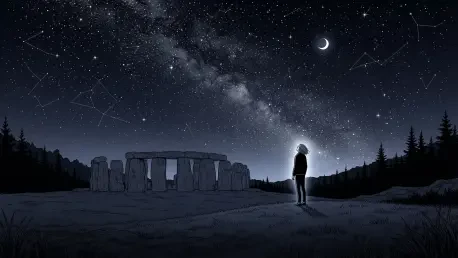
The Sperrin Mountains are one of the most pristine and uncrowded landscapes in the country, providing an undulating range of wild moorland that is perfect for those looking to disconnect. Deep within Davagh Forest, the OM Dark Sky Park and Observatory serves as a beacon for sustainable tourism, holding a Bortle Class 2 sky quality rating that guarantees near-zero light pollution. Walking these night-sky trails allows solo trekkers to experience the cosmos with a clarity that is becoming increasingly rare in our modern world. Nearby, the ancient Beaghmore Stone Circles offer a reflective connection to Bronze Age history, especially at dawn or dusk when the crowds are non-existent. This focus on dark-sky preservation and ancient heritage allows travelers to immerse themselves in a wilderness that feels both timeless and restorative.
What unique urban and cultural experiences can solo travelers find in the cities of Belfast and Derry-Londonderry?
Belfast and Derry-Londonderry offer rich, walkable escapes that are perfectly tailored for the curious individual. In Belfast, you can spend hours lost in the maritime heritage at Titanic Belfast or find a quiet corner in the historic Linen Hall Library, which has been a staple of local literature since 1788. For a perspective shift, a solo hike up Cave Hill leads to McArt’s Fort, offering a panoramic view of the Belfast Lough that helps you map out the city’s history from above. In Derry-Londonderry, the experience is centered on the 17th-century fortification walls, which are completely intact and provide a self-guided circuit of the city’s living history. Crossing the Peace Bridge over the River Foyle connects you to vibrant cultural quarters and the Museum of Free Derry, ensuring that your urban exploration is as educational as it is visually compelling.
How does the rise of independent travel contribute to the socio-economic preservation of local communities across the region?
The economic impact of solo travel is profound because these visitors tend to spread their spending more evenly across rural and coastal communities. Unlike mass tours that keep revenue within a few hands, independent travelers support family-run guesthouses, local cafes, and regional transport operators. Current data indicates that overnight tourism trips reached 5.1 million, generating over £1.2 billion in direct expenditure, with a significant 70% of that spending occurring outside of Belfast. This decentralized spending supports rural infrastructure and regional employment, ensuring that the benefits of tourism are felt in every corner of the country. By choosing a boutique farm stay or an artisanal bakery, solo travelers are directly funding the preservation of the very landscapes and cultures they come to see.
What essential safety protocols should solo hikers keep in mind when exploring remote locations like the Mourne Mountains?
Safety in the wild is paramount, particularly in areas like Slieve Donard or the open moorlands of the Sperrins where weather can shift rapidly. I always advise travelers to consult WalkNI and the Met Office before setting out, as these are the most reliable resources for real-time conditions. It is also a smart practice to register your planned route with a trusted contact or local mountain rescue services, especially if you are venturing onto more isolated trails. Choosing accommodation accredited by Tourism NI adds another layer of safety, as these hosts often provide invaluable local insights and ensure high standards for solo guests. While the border crossings between Northern Ireland and the Republic are physically seamless, staying aware of currency differences—Pounds Sterling versus Euros—and visa compliance is essential for a stress-free journey.
How is the hospitality sector evolving with boutique micro-stays and independent accommodations to better serve solo explorers?
We are seeing a major shift away from large hotel chains toward immersive, authentic stays like eco-pods, rural farm stays, and historic B&Bs. These small service providers have achieved an extraordinary Global Review Score of 89.4%, which speaks to the high level of personal attention and quality they offer. Many of these accommodations now provide single-occupancy pricing and self-catering facilities, which are highly attractive to the modern solo traveler who values flexibility. With 15 million total nights stayed recorded recently, it’s clear that these smaller, high-quality lodgings are driving demand in regional districts. This evolution in the hospitality landscape ensures that solo travelers have a secure and atmospheric home base from which to explore the surrounding wilderness.
What impact does the organic spending of solo travelers have on the resilience of rural economies?
Solo travelers are a financial lifeline for regional communities because their spending is organic and decentralized. They are the ones patronizing the village pub, the local guide service, and the artisanal craft shop, which keeps money circulating within the local supply chain. We’ve seen overseas visitors spend an average of £317 million in non-metropolitan districts like Fermanagh and Tyrone, representing a 31% increase in rural economic impact. Furthermore, independent food and beverage establishments have seen a 30% growth in transaction volumes from this demographic. This proves that the independent traveler is a powerful force in sustaining regional jobs and ensuring that community businesses can thrive alongside the tourism industry.
How do managed hiking trails and emergency protocols specifically protect those trekking alone in wild terrain?
Northern Ireland has invested heavily in trail engineering, creating world-class infrastructure that allows solo hikers to navigate dramatic landscapes with confidence. With over 500 miles of accredited and signposted trails maintained by organizations like the National Trust and WalkNI, the risk of orientation hazards is significantly reduced. These trails often feature durable timber boardwalks and clear waymarking, which are essential for those traveling without a group. Behind the scenes, the integration of 100% cellular and satellite mapping across major ranges like the Mourne Mountains ensures that rescue services can deploy rapidly if needed. This robust safety system is a major reason why outdoor hiking is a primary activity for 52% of overseas leisure visitors.
How are international transit gateways and cross-border corridors making Northern Ireland more accessible for global solo travelers?
Accessibility is a key driver for independent travel, and the current infrastructure makes it easier than ever to reach even the most remote areas. Total air passenger throughput has reached 9.3 million, with the City of Derry Airport seeing a 23% increase in flow, which opens up the historic northwest to more visitors. The expansion of scheduled air seat capacity, particularly from North America and Great Britain, allows for more spontaneous and flexible travel planning. Once on the ground, the smooth transit links between international hubs and rural destinations mean that a traveler can transition from a flight to a tranquil lakeside in a matter of hours. This friction-less arrival process is vital for encouraging global explorers to choose Northern Ireland for their next self-guided adventure.
Why is dark-sky astrotourism considered a benchmark for sustainable and eco-conscious travel in Mid-Ulster?
Astrotourism represents a perfect alignment of environmental preservation and high-quality visitor experiences. By mitigating light pollution and protecting night-sky sanctuaries, Mid-Ulster has created a space where travelers can disconnect from urban noise and reconnect with the natural world. The OM Dark Sky Park and Observatory is at the center of this, contributing to a 13% year-on-year growth in eco-tourism focused on natural heritage. This type of travel is inherently sustainable, as it requires the protection of the environment to remain viable. For the solo traveler, it offers a unique form of peaceful immersion that supports the conservation of the Sperrin Mountains for future generations.
In what way are the inland waterways of County Fermanagh being transformed to offer better aquatic solitude?
The water transport infrastructure in Fermanagh is designed for safety and ease, allowing even novice paddlers to enjoy the 26,000 hectares of water surface. With the introduction of self-drive electric boats and stable hydrobikes, solo explorers can navigate the quiet channels of Lough Erne at their own pace. Safety is a top priority, with mandatory briefings and GPS tracking provided by certified hire facilities, which maintain an impressive 93% attraction review score. This allows a traveler to visit uninhabited islands or historic ruins with the peace of mind that they are supported by a professional framework. It is this combination of managed safety and vast, open water that makes Fermanagh the ultimate sanctuary for aquatic solitude.
What role does living history and heritage preservation play in creating a compelling urban experience for solo visitors?
Heritage preservation is the soul of Northern Ireland’s urban centers, offering a deep sense of place that resonates with independent travelers. In Derry-Londonderry, the fully intact 17th-century walls are not just a monument but a path that leads you through the city’s evolving story. This commitment to maintaining historical integrity has resulted in an average Global Review Score of 93.0% for cultural attractions statewide. We’ve also seen a 15% increase in cross-border visitors from the Republic of Ireland, many of whom come to explore these restored heritage quarters and traditional music venues. For a solo traveler, these sites provide a structured yet flexible way to engage with the past while enjoying the vibrant life of a modern city.
How has the evolution of farm-to-table dining and local produce sourcing changed the experience for single diners?
The culinary scene has become much more inclusive for solo diners, with many regional restaurants and seafood bars now offering bar seating and open-kitchen formats. This shift toward farm-to-table dining means that you are not just eating a meal; you are tasting the landscape of the Causeway Coast or the artisanal cheeses of Mid-Ulster. Consumer spending at independent eateries has grown by 30% in key tourism categories, reflecting a strong preference for high-quality, local food. In fact, over 66% of overnight visitors list sampling local seafood and produce as a high priority for their trip. This focus on authenticity makes dining alone an engaging experience rather than a self-conscious one, as you connect directly with the region’s flavors and the people who produce them.
How are screen tourism trails in County Down and County Antrim allowing solo travelers to explore at their own pace?
Screen tourism has revolutionized how fans of film and television engage with the landscape, moving away from rigid coach tours toward self-guided exploration. Independent travelers use digital mapping to find iconic locations like Castle Ward or the Dark Hedges, allowing them to spend as much time as they want capturing the perfect photo or hiking nearby trails. This trend is a major driver of international visits, accounting for about 11% of overseas holiday decisions. By integrating these legendary locations into their own itineraries, solo travelers can combine their love of pop culture with a genuine appreciation for the natural beauty of County Down and Antrim. It turns a standard sightseeing trip into a personal journey through both fictional worlds and real-world history.
What impact is high-speed digital connectivity having on the growth of solo “workations” in regional towns?
The rollout of full-fiber broadband has made Northern Ireland an ideal destination for digital nomads who want to balance work with wilderness. We are seeing a 13% increase in holiday-specific overnight trips in regional districts, driven largely by remote professionals who appreciate the 78% of small accommodations that now offer dedicated workspaces and high-speed Wi-Fi. The average stay for these independent solo travelers has reached 5.8 nights, showing that they are staying longer and immersing themselves more deeply in the local community. This trend supports regional economies year-round, as these “workationers” utilize local services and amenities during what might otherwise be slow tourism seasons. It’s a win-win for the traveler seeking a fresh perspective and the local guesthouse looking for sustainable growth.
Why are forest bathing and lake saunas becoming so popular among mindful solo travelers in the Sperrins and Fermanagh?
Nature-based wellness is a growing cornerstone of the solo travel experience, offering a way to reset and rejuvenate in pristine environments. Guided forest bathing in the Sperrins and wood-fired saunas along the Lough Erne shoreline have achieved a 91.5% Global Review Score, reflecting how much solo travelers value these quiet, restorative activities. Over 38% of independent overseas visitors now prioritize health and nature walks in their itineraries, seeking out spaces that offer a break from high-density tourist spots. These experiences contribute to a 30% increase in expenditure within regional wellness and retail sectors, proving that there is a strong economic case for preserving these quiet, natural sanctuaries. It’s about more than just a holiday; it’s about a mindful connection to the earth and oneself.
How is the expansion of greenways and e-bike networks revolutionizing low-carbon travel for individuals?
The development of over 250 miles of traffic-free greenways has made active travel a viable and enjoyable option for solo explorers. Routes like the Comber Greenway and coastal e-bike loops allow people to see the country from a different perspective, all while reducing their carbon footprint. Regional e-bike rental hubs have reported a 24% increase in hires by solo travelers, who appreciate the flexibility of combining cycling with bike-friendly public transit. This infrastructure supports the 70% of overnight visitors who choose to stay outside metropolitan areas, allowing them to explore rural villages and coastal points in a sustainable way. It is a key part of the nation’s goal to distribute tourism benefits widely while protecting the delicate ecosystems that draw people here in the first place.
What role do artisan markets and craft workshops play in fostering community connections for those traveling alone?
Artisan markets and hands-on workshops are the perfect venues for solo travelers to break the ice and engage with the local culture. Whether it’s a soda bread baking class in Mid-Ulster or a pottery masterclass in County Down, these intimate settings foster the kind of warm, spontaneous chats that make you feel instantly at home. Over 60% of solo travelers report that participating in these small-group activities makes them feel significantly more connected to the host communities. This cultural exchange is also a major economic driver, contributing to the £1.2 billion in total visitor expenditure as travelers from Great Britain and the Republic of Ireland seek out these authentic experiences. It turns a solo journey into a shared story, grounded in the traditions and hospitality of the region.
What is your forecast for the future of independent travel in Northern Ireland?
In the coming years through 2028 and beyond, I expect to see Northern Ireland solidify its reputation as the global gold standard for sustainable, solo-friendly exploration. We are moving toward a model where high-tech connectivity and raw wilderness coexist perfectly, allowing travelers to be as “plugged in” or “off the grid” as they desire. The ongoing investment in greenways, dark-sky preservation, and boutique accommodations will continue to draw a mindful demographic that prioritizes quality and authenticity over mass-market convenience. As more people discover that wandering these green edges alone actually makes them feel more “whole,” the demand for decentralized, community-focused tourism will only grow. Northern Ireland isn’t just a destination; it’s a blueprint for how modern travel can be both deeply personal and economically restorative.