
In a travel landscape often dominated by high-speed chases for the “Big Five,” the Zambian walking safari stands as a masterclass in mindfulness and conservation. Katarina Railko, an expert in hospitality and tourism with a deep affinity for immersive travel models, joins us to discuss how this intimate approach to the bush is redefining the African safari. By stripping away the metal barrier of the vehicle, Zambia invites visitors to engage with the ecosystem through a sensory and spiritual lens, fostering a unique connection that benefits both the traveler and the local environment. Our conversation explores the rigorous training of guides, the miraculous recovery of rhino populations, and the historical shift from hunting to observational ecology that has preserved Zambia’s wild heart.
Transitioning from a vehicle to a walking safari changes the visitor’s relationship with the environment. How does tracking on foot alter a person’s sensory awareness of the bush, and what specific “small things” like insects, tracks, or scents often go unnoticed from the seat of a car?
Stepping out of a vehicle and onto the sun-baked earth of a park like Mosi-oa-Tunya completely recalibrates the human nervous system to match the rhythm of the savannah. Without the rumble of an engine, you begin to notice the dry rustle of leaves underfoot and the sharp, turpentine-like scent of the mopane trees that perfumes the air. Your focus shifts from scanning the horizon for distant shapes to observing the intricate architecture of a dung beetle rolling its ball or the minute movements of ants and geckos. I recall the way the heat radiates through the soles of your shoes, making you feel the literal pulse of the landscape. It is a world where you aren’t just a spectator looking through a windshield; you are a participant, close enough to see the craggy, crepey folds of a rhino’s skin, which looks like a map of dry riverbeds etched across its massive frame.
Zambia’s white and black rhino populations have faced significant recovery challenges over the last few decades. What specific community-based conservation strategies are currently being funded by walking safaris, and how do these programs help protect near-threatened species from the threat of poaching?
The history of rhinos in Zambia is a heartbreaking one, with southern white rhinos declared extinct here in 1989 and black rhinos following in 1998 due to the devastating illegal horn trade. Today, however, we see the fruits of a determined comeback, with 60 black and 54 white rhinos now roaming the wild thanks to slow tourism and international partnerships. Walking safaris are a vital financial engine for this recovery, directly funding the anti-poaching patrols that monitor individuals like the patriarch Louis II and his companion Jackie. By integrating local communities into the tourism model, these programs ensure that the wildlife is seen as a living asset worth far more than a one-time trophy. The presence of tourists on foot provides a constant, non-invasive “eyes-on-the-ground” presence that deters poachers while fostering a deep-seated pride among the people who share this land.
Tracking unpredictable wildlife like Cape buffalo or hippos on foot requires extreme precision and expertise. What does the multi-year certification process look like for a lead guide, and how do they coordinate with armed scouts to ensure guest safety while maintaining a respectful distance?
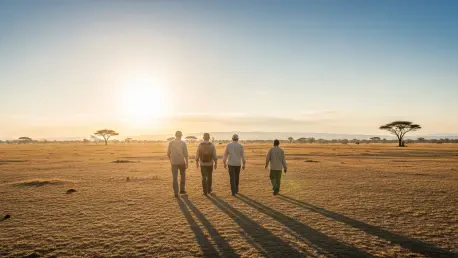
Zambia’s guiding culture is arguably the most rigorous in Africa, rooted in a tradition where many guides grow up reading the spoor and seasonal shifts of the land long before they ever sit for an exam. To become a lead guide, one must undergo years of formal training that covers everything from advanced species identification to the psychology of animal behavior. On a walk, the guide works in a seamless, silent partnership with armed wildlife scouts, who often bracket the group in a single-file formation to provide a 360-degree safety net. This coordination is about anticipation rather than reaction; they watch for the twitch of a baboon’s ear or the sudden silence of insects to detect a hidden buffalo or a hippo in the tall grass. The goal is always a respectful distance, ensuring that the animals remain undisturbed while the guests gain an immersive understanding of the wild’s delicate social cues.
Shifting from trophy hunting to observational ecology was a radical move for conservation in the mid-20th century. How did this historical transition shape the current low-volume tourism model in parks like South Luangwa, and what long-term benefits has this restraint provided for the local ecosystem?
In the 1950s, the pioneering conservationist Norman Carr made the then-radical argument that a living animal was worth significantly more to the economy and the earth than a dead one. By moving away from the hunting-centric models of the era, he laid the foundation for the low-volume, high-quality experience that defines parks like South Luangwa today. This restraint has prevented the kind of vehicle congestion seen in more famous African reserves, where convoys often jostle for position around a single predator sighting. Because only about 2 to 3% of safari-goers currently opt for walking-based journeys, the impact on the soil and vegetation is minimal, allowing the ecosystem to thrive without the stress of mass tourism. This niche approach has successfully preserved the “wildness” of Zambia, ensuring that the animals do not become desensitized to humans and that the habitat remains pristine for future generations.
Selecting between parks like Kafue, Lower Zambezi, or Mosi-oa-Tunya involves distinct trade-offs regarding wildlife variety and terrain. For someone planning a multi-day trek, how should they evaluate different bush camp itineraries, and what physical or mental preparation is necessary for such an immersive journey?
Choosing the right park is a matter of matching your personal goals with the unique personality of each landscape. If you are seeking abundance and varied scenery, South Luangwa is the gold standard, while Kafue and the Lower Zambezi offer a much wilder, more remote feel for those who want to truly disappear into the bush. For travelers visiting Victoria Falls, Mosi-oa-Tunya is an excellent choice for tracking rhinos, though it is important to note that it lacks the big cats found in the larger parks. Preparation for a multi-day trek is less about athletic prowess and more about mental openness and the ability to remain quiet and observant for long periods. You must be ready for a “spiritual connection,” as some travelers describe it—the feeling of being a guest in the animal’s home rather than a customer at a spectacle, which requires a willingness to leave behind phones and checklists in favor of presence.
What is your forecast for walking safaris in Zambia?
I believe we are entering an era where Zambia’s “under-the-radar” status will become its greatest competitive advantage as global travelers increasingly reject the crowds of mass-market tourism. My forecast is that we will see a steady rise in the demand for “observational ecology,” where the value of the trip is measured by the depth of the connection rather than the number of photographs taken. While walking safaris may never capture a massive market share, that very restraint is what will ensure their longevity and prestige in the high-end travel sector. As more people realize that the scouts’ rifles are there to protect the wild from us rather than us from the wild, the ethical and emotional appeal of the Zambian model will likely set a new global standard for sustainable wildlife tourism. We will see a shift where the “small things”—the scent of the mopane and the track of the rhino—become the most sought-after luxuries in the travel world.