
The sight of a flight attendant calmly navigating a cabin filled with frustrated travelers has become a hallmark of professional resilience in an era where air travel demands more than just technical safety. As the aviation industry navigates the complexities of 2026, a fundamental shift is occurring in how personnel are prepared for the unpredictable nature of human emotion at thirty thousand feet. Traditionally, training protocols focused almost exclusively on emergency evacuations and medical emergencies, but today’s reality requires a much broader set of psychological tools. The emergence of a dual passenger crisis, characterized by a volatile mix of outward aggression and internal panic, has forced major carriers to rethink their human capital investments. By integrating behavioral science into the standard curriculum, airlines are attempting to stabilize an environment that has grown increasingly fragile due to various external and internal pressures. This evolution ensures that crews are not only safety officers but also mediators and mental health first responders who can maintain order.
Understanding the New Landscape of Passenger Behavior
The Dual Crisis: Hostility and Anxiety
Modern flight crews are increasingly caught between two opposing emotional extremes that require vastly different intervention strategies during a single flight. On one side of the aisle, attendants encounter overt aggression from passengers who feel disenfranchised by the logistical hurdles of modern travel, often manifesting in verbal abuse or physical defiance. On the other side, there is a rising tide of heightened psychological fragility, where routine operational occurrences, such as minor atmospheric turbulence or standard gate holds, trigger severe panic attacks. This polarized environment forces crew members to master the difficult art of emotional compartmentalization, switching instantly between roles. They must project a firm, authoritative presence to de-escalate a potential security threat while simultaneously offering soft, empathetic support to a traveler in the throes of a mental health crisis. Mastering these conflicting personas is now a core requirement for any frontline aviation professional working today.
The necessity for this dual-approach training stems from the realization that emotional contagion can quickly turn a localized incident into a cabin-wide disruption. When a passenger exhibits hostile behavior, the resulting tension often spikes the anxiety levels of everyone within earshot, creating a secondary wave of distress that the crew must manage. Consequently, training programs now emphasize the identification of early behavioral cues before they escalate into full-blown emergencies. Attendants are taught to read body language and verbal tone with the precision of a psychological profiler, allowing them to intervene with the appropriate level of intensity. By addressing the root emotional state rather than just the outward symptom, crews can prevent a cycle of escalation that would otherwise compromise the safety of the flight. This sophisticated level of human interaction marks a departure from the rigid, instruction-based communication styles of the past, moving toward a more fluid and responsive form of cabin management.
Systemic Stressors: The Pressure Cooker Environment
While statistical data suggests a decline in the total number of reported unruly incidents since 2021, the nature and intensity of these disruptions have evolved into something far more complex. The industry has largely moved past the era of disputes over specific health mandates, yet those frustrations have been replaced by a deep-seated resentment toward the structural realities of modern aviation. Reduced seat pitch, increasingly congested airport terminals, and the unrelenting pressure of tight flight schedules have transformed the aircraft cabin into a metaphorical pressure cooker. Passengers arrive at their seats already burdened by the stresses of the security checkpoint and the logistical grind of the terminal, leaving them with very little emotional bandwidth to handle even minor inconveniences. These systemic factors mean that when a disruption does occur, it is often more volatile and harder to manage than in previous years, requiring a higher standard of intervention.
Airlines are now acknowledging that the physical environment of the aircraft plays a significant role in dictating passenger behavior and the subsequent workload of the cabin crew. To address this, behavioral management strategies are being integrated with service protocols to mitigate frustration before it reaches a breaking point. For instance, communication regarding delays is being handled with greater transparency and frequency to reduce the uncertainty that often fuels aggression. Additionally, crew members are being trained to recognize how environmental triggers, such as overhead bin congestion or seat assignments, can serve as catalysts for conflict. By understanding the “why” behind passenger outbursts, the industry is moving toward a more proactive model of safety that prioritizes de-escalation over physical restraint. This shift recognizes that while the industry cannot immediately change the physical layout of every plane, it can change how the human element responds to the inherent stresses of the journey.
Implementing Strategic Training and Safety Standards
Scenario-Based Simulations: Resource Management
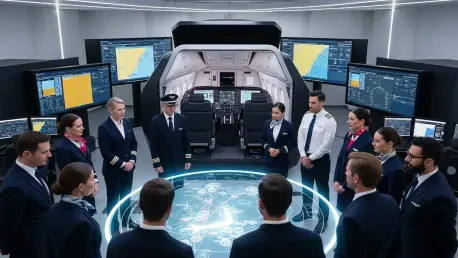
To prepare for these evolving threats, the aviation sector has transitioned away from static classroom lectures toward immersive, scenario-based training modules that mimic the chaos of real-world flying. These high-fidelity simulations force trainees to manage competing passenger needs under intense time pressure, testing their ability to prioritize tasks when resources are limited. A typical module might involve a flight attendant having to neutralize a shouting passenger in the middle of a cabin while simultaneously providing oxygen or reassurance to a nearby traveler experiencing an acute panic episode. These exercises are designed to push crew members to their cognitive limits, ensuring that their responses become instinctive rather than calculated. The focus is on differentiated de-escalation, where crews learn that the verbal tactics used to calm a fearful flyer are fundamentally incompatible with the techniques required to suppress an aggressive individual.
These simulations also emphasize the critical importance of crew resource management and team coordination during multi-faceted emergencies. In a dual-crisis scenario, the lead flight attendant must effectively delegate tasks, ensuring that no single passenger occupies the entire team’s attention while other safety risks go unmonitored. This involves clear, concise communication and a shared mental model of the situation, allowing the crew to act as a unified front. Trainers use these sessions to evaluate how well attendants can switch between high-intensity enforcement and low-intensity care without losing their professional composure. By practicing these transitions in a controlled environment, airlines are building a workforce that is far more resilient to the psychological toll of the job. The ultimate goal is to create an atmosphere where the crew feels empowered to make split-second decisions that protect both the physical safety and the psychological well-being of everyone on board.
The Evolution: Psychological Safety as Standard
The wholesale overhaul of training protocols signals a broader industry trend toward prioritizing psychological safety as a fundamental pillar of the modern aviation sector. Airlines are no longer viewing behavioral management as a peripheral security function; instead, it is now considered an essential component of the overall passenger experience and brand reputation. Major global stakeholders, including international aviation associations and leading aircraft manufacturers, have reached a consensus that the human element remains the most critical factor in the future of travel. As flight frequencies continue to climb and airspaces become more crowded, this investment in comprehensive crew development has transitioned from a competitive advantage to a long-term operational necessity. The focus is now on creating a sustainable environment where compassion and authority are balanced, ensuring that the aircraft remains a controlled space despite the persistent external pressures.
Building on this foundation, the industry has begun to integrate mental health support systems for the crew members themselves, recognizing that managing passenger stress requires a high degree of personal resilience. Professional development now includes workshops on stress recovery and peer support, acknowledging that the emotional labor involved in modern flight can lead to burnout if not properly managed. This holistic approach ensures that flight attendants remain capable of delivering high-quality care throughout their careers. As airlines continue to refine these standards, the role of the cabin crew is being redefined from simple service providers to highly skilled behavioral specialists. This professionalization of the role reflects the reality that the challenges of 2026 require a more sophisticated, human-centric approach to aviation safety. By fostering a culture of psychological awareness, the industry is setting a new benchmark for excellence that will likely dictate training priorities for the remainder of the decade.
The aviation industry successfully transitioned toward a more empathetic and strategically sound model of cabin management. To maintain this momentum, carriers implemented ongoing mental health monitoring for both passengers and staff, ensuring that the training protocols remained responsive to new behavioral trends. Stakeholders coordinated with international regulators to standardize these behavioral management techniques across all regions, creating a unified global safety net. Future efforts were directed toward enhancing cabin design to reduce environmental stressors, complementing the advancements made in personnel training. By prioritizing the human element, airlines effectively stabilized the cabin environment and secured the long-term viability of the travel experience. This proactive restructuring of human capital served as a definitive solution to the complexities of the modern dual passenger crisis.