
Maximizing the revenue potential of a luxury hotel often requires looking past the grand lobby and into the forgotten corners of the architecture where luggage is stored or guestrooms remain vacant. This article explores the innovative business model of Sushi by Bou, a brand that has successfully turned underutilized real estate into some of the most profitable dining venues in the hospitality industry. By examining their unique approach to space and finance, one can understand how a tiny footprint can generate significant returns.
The objective here is to answer key questions regarding the operational strategy and growth of this omakase brand. Readers will learn about the shift from traditional restaurant leases to symbiotic hotel partnerships and how bespoke design fosters deep brand loyalty. The scope covers everything from the brand’s humble beginnings in a 300-square-foot closet to its current expansion into major global markets and diverse sister concepts.
Key Questions or Key Topics Section
Why Does Repurposing Underutilized Spaces Drive Such High Profitability?
Traditional restaurant development usually demands massive storefronts and significant square footage to accommodate large seating areas and extensive kitchens. However, Sushi by Bou challenges this norm by focusing on spaces that most developers would consider unusable or “weird,” such as hidden corridors and converted guestrooms. By operating within a footprint of 1,000 square feet or less, the brand drastically reduces the overhead costs associated with construction, utilities, and maintenance while maintaining a premium price point for its intimate dining experiences.
This strategy capitalizes on the exclusivity of small-scale dining, where a counter seating only eight to sixteen people creates a high-demand environment. The limited capacity ensures that every seat is a high-value asset, allowing the venue to focus on quality and efficiency rather than volume. Because these locations are often tucked away within existing hotels, they benefit from an organic flow of guests who are already seeking high-end amenities, effectively turning dead space into a vibrant profit center with minimal waste.
How Do Strategic Partnerships Redefine Traditional Restaurant Leases?
The relationship between a restaurant and its landlord typically involves a fixed monthly rent that places the financial risk solely on the operator. In contrast, Sushi by Bou utilizes a more collaborative financial structure that often includes profit-sharing or gross revenue percentage agreements. This model aligns the interests of the restaurant with those of the hotel, as both parties are incentivized to drive traffic and maintain high standards of service.
Furthermore, these partnerships allow the restaurant to serve as a high-end amenity for the hotel, enhancing the property’s overall brand value without the hotel needing to manage a complex food and beverage program itself. By integrating into the hotel’s ecosystem, the brand reduces its marketing spend since the host property provides a built-in audience. This symbiotic arrangement provides the restaurant with long-term stability and the hotel with a curated experience that attracts both travelers and local food enthusiasts.
What Role Does Custom Aesthetic Design Play in Brand Loyalty?
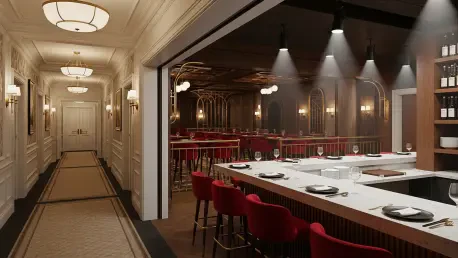
While many restaurant chains rely on a uniform appearance to create familiarity, this brand takes a bespoke approach to every location to reflect the specific culture of the host hotel. For instance, a location in a historic building might adopt a 1920s speakeasy vibe, while another in a modern urban setting might feature a 1990s hip-hop theme. This variety transforms the dining experience into a collectible event, where customers are encouraged to visit multiple outposts to see how the concept has been reimagined.
This emphasis on unique environments helps the brand stand out in a crowded market where consumers increasingly value authenticity and storytelling. By tailoring the design to the local context, the brand builds a deeper connection with the community and the hotel’s identity. The aesthetic choices do not just serve as a backdrop but act as a primary driver of the guest’s emotional engagement, ensuring that the experience remains memorable long after the meal has concluded.
Summary or Recap
The success of this omakase brand highlights a significant shift in the hospitality landscape where creative space utilization meets high-end culinary craft. By prioritizing flexibility and partnership over traditional expansion methods, the company has scaled to dozens of locations and is now being integrated into the early stages of major hotel developments. The model demonstrates that even the smallest area can be transformed into a destination with the right combination of design, exclusivity, and financial collaboration. This approach sets a new standard for how luxury brands can grow within the constraints of existing urban infrastructure.
Conclusion or Final Thoughts
The evolution of these hidden dining rooms proved that innovation often flourished within the tightest constraints. This business journey showed that looking at a storage closet and seeing a high-revenue restaurant required a fundamental shift in how professionals viewed commercial real estate. It served as a reminder that the value of a space was determined not by its size, but by the creativity applied to its purpose. As the industry moved toward more experiential offerings, the lessons learned from these tiny sushi counters offered a blueprint for future growth that balanced luxury with operational efficiency.