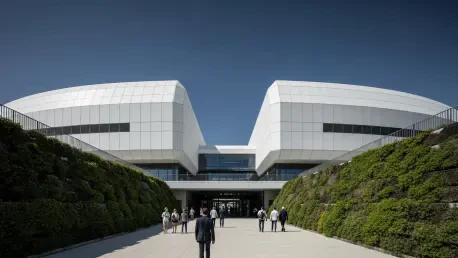

The transformation of massive concrete structures from mere tourist hubs into beating hearts of social equity represents the most significant shift in the global hospitality landscape today. While many cities view stadiums and convention centers strictly as tools for tourism revenue, the Liverpool Experience Campus (LEX) is proving they can function as primary drivers of social equity. This shift indicates a move toward a model where the success of a venue is judged by its contribution to the local population rather than just its balance sheet.
In just one year, this venue complex generated over £11 million in social value, signaling a departure from traditional business models that prioritize profit over people. By treating social impact as a core commercial objective rather than a secondary perk, Liverpool is challenging the global event industry to reconsider how it measures success. This approach transforms the facility from a static asset into an active participant in the city’s economic and social health.
Turning Major Venues into Engines for Local Community Growth
The traditional view of large-scale event venues often focuses on “leakage,” where profits flow out of the local economy and into the hands of distant corporations. In contrast, the Liverpool model emphasizes the “sticky” nature of wealth, ensuring that every event held at the convention center or arena leaves a lasting footprint within the surrounding neighborhoods. This is achieved by prioritizing local procurement and ensuring that the supply chain is rooted in the region.
The LEX 2026/27 Social Value Impact Plan highlights how these spaces act as catalysts for regenerative growth. By aligning the venue’s operations with the specific needs of the Liverpool City Region, the campus creates a symbiotic relationship between international events and local residents. This strategy ensures that the presence of high-profile gatherings directly translates into improved services and opportunities for the people who live in the shadow of these grand structures.
The Growing Demand for Measurable Social Impact in the Event Sector
The UK events industry is undergoing a significant transformation, moving toward a framework where venues must demonstrate tangible benefits to their host cities. This shift is driven by increasing pressure from stakeholders, local governments, and the public for large-scale operations to address regional challenges like unemployment and climate change. As economic contributions become the baseline expectation, measurable societal influence has emerged as the new benchmark for industry leadership.
Moreover, clients and event organizers are increasingly selective, seeking partners that reflect their own corporate social responsibility goals. A venue that can provide detailed data on its social and environmental impact gains a competitive edge in a crowded market. This demand has turned social value from an ethical consideration into a vital commercial necessity, forcing the sector to innovate or risk obsolescence.
A Holistic Strategy: Integrating Talent, Environment, and Community Support
The Liverpool model operates through a structured four-pillar approach—people, environment, industry influence, and community—to ensure comprehensive regional development. On the human capital front, the campus addresses regional labor gaps through the Power of Events Schools Engagement Program and specific outreach for young people not in employment or education. These initiatives provide a bridge between the classroom and the workplace, offering a clear career path in the visitor economy.
Simultaneously, the LEX Liverpool Foundation provides a mechanism for grassroots financial support, awarding grants to local projects that foster community resilience and growth. By funding local charities and neighborhood initiatives, the campus ensures that the benefits of major events reach far beyond the venue walls. This grassroots focus builds a foundation of trust and support, making the venue an indispensable part of the local social fabric.
Quantifying Success: Leveraging Data and Leadership to Drive Change
The commitment to social value is backed by rigorous data, with the LEX recording more than £28 million in social impact since 2022. According to CEO Faye Dyer, this success stems from integrating responsibility directly into the commercial roadmap rather than treating it as an optional initiative. Key environmental milestones, such as a 75% site-wide recycling rate and the transition to fully electric operational equipment, serve as empirical proof that large-scale event spaces can successfully align corporate targets with the long-term health of the planet.
Furthermore, the organization has achieved ISO 50001 certification, illustrating a disciplined approach to energy management. By utilizing carbon measurement tools, the campus offers clients transparent reporting on the environmental cost of their events. This transparency allows for collaborative efforts to reduce waste and emissions, demonstrating that leadership in the events sector is now defined by accountability and data-driven progress.
Actionable Frameworks for Building Socially Responsible Event Spaces
To replicate the Liverpool standard, venues can adopt specific strategies that bridge the gap between operations and community needs. Implementing carbon measurement tools allowed for transparent reporting to clients, while integrating event ticketing with public transport networks reduced the environmental footprint of visitor travel. These practical steps ensured that sustainability was not just a concept but a functional part of the visitor experience.
Furthermore, establishing employee-led foundations and inclusive hiring pathways ensured that the economic benefits of major events were distributed equitably among the local workforce and grassroots organizations. The focus on regional talent pools and marginalized groups helped mitigate the labor shortages that plagued other parts of the industry. This strategy fostered a sense of ownership among employees, who saw their work as part of a larger mission to improve their own communities.
The shift toward social equity demonstrated that venues functioned best when they acted as community anchors. This transition proved that commercial success and regional health were inseparable. The successful integration of these strategies provided a blueprint for global peers to follow, cementing the idea that a venue’s legacy was measured by the lives it improved rather than just the tickets it sold. By the end of this period, the industry recognized that the true power of events lay in their ability to leave a city better than they found it.