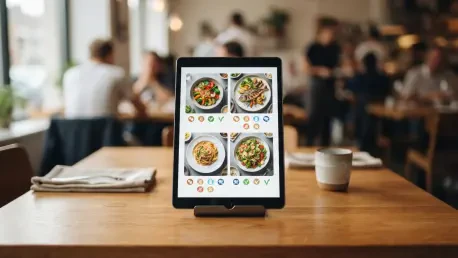

Modernizing allergen management is no longer just a safety precaution but a strategic move to capture a loyal market segment of millions of allergic diners. For decades, individuals with severe food sensitivities have navigated the dining landscape with a sense of trepidation, effectively placing their lives in the hands of manual communication systems that are inherently flawed. This shift toward digital precision is a direct response to what industry experts call the “whisper game,” a phenomenon where critical ingredient information is passed verbally from the guest to the server, then to the kitchen, and finally back to the table. In this fragmented chain, the reliance on human memory and outdated physical binders creates an environment where a single lapse in concentration can lead to a medical emergency. As kitchens become increasingly complex and fast-paced, the industry is realizing that traditional methods are no longer sufficient to guarantee guest safety or operational security in a competitive market.
The historical reliance on laminated folders and handwritten spreadsheets has long been the primary point of failure in allergen safety. These static documents are often tucked away in a corner of the kitchen or at the host stand, gathering dust while the menu they describe undergoes constant evolution. Because a modern professional kitchen is a dynamic environment, ingredients are frequently swapped based on seasonal availability, supplier shortages, or spontaneous recipe improvements. A manual system requires a labor-intensive cycle of cross-referencing, retyping, and reprinting every time a single component of a dish changes. This administrative burden often leads to a dangerous lag where the information available to the staff does not match the actual contents of the plate, leaving both the restaurant and the diner in a position of high risk.
The Inefficiency: Moving Beyond Manual Tracking
The operational breakdown of manual allergen management becomes most apparent during the peak hours of service when the pressure on the staff is at its highest. Servers, tasked with managing multiple tables and maintaining a high speed of service, may feel a natural hesitation to interrupt a busy executive chef during a rush to verify a specific ingredient in a complex sauce. Conversely, chefs working at the “pass” may find it highly disruptive to step away from the heat to consult a bulky physical binder that may not have been updated in several months. This vacuum of verified data often forces staff members to rely on their memory or make educated guesses, a practice that introduces a significant margin for human error into what should be a rigorous safety protocol. The resulting atmosphere of uncertainty is not only dangerous for the guest but also creates a stressful environment for employees who are aware of the high stakes involved.
Furthermore, the physical nature of traditional allergen matrices makes them incredibly difficult to scale across multiple locations or even across different shifts within a single site. If a specific ingredient substitution occurs in the morning, there is no guarantee that the evening shift will be briefed or that the physical records will reflect the change by dinner service. This lack of a “single source of truth” means that the level of safety a guest receives can vary wildly depending on which staff member they happen to encounter. In a modern hospitality landscape where consistency is a hallmark of brand quality, these fragmented systems represent a significant liability. The push for technological intervention is not merely about replacing paper with screens; it is about establishing a synchronized, real-time data stream that ensures every person in the building is operating from the exact same set of facts.
The Digital Solution: Real-Time Accuracy
To address these systemic vulnerabilities, innovative platforms such as “Served” have introduced a centralized digital hub that acts as the ultimate authority for ingredient data. These systems move beyond the limitations of static lists by offering live, branded menus that can be updated instantly from any connected device. When a kitchen manager updates a recipe in the central portal, that change is immediately propagated to every guest-facing QR code, every staff-facing tablet, and every website menu simultaneously. This eliminates the need for manual data entry and ensures that the information provided to a diner is always accurate to the minute. By removing the “whisper game” from the equation, these platforms provide a layer of digital protection that human memory simply cannot match, allowing the kitchen to adapt to ingredient changes without compromising the safety of their clientele.
Beyond simple updates, these digital solutions empower the guest through dynamic filtering capabilities that personalize the dining experience. Instead of forcing a diner to cross-reference a complex grid of symbols and text, these interfaces allow users to select their specific allergens and see only the dishes that are safe for them to consume. This technological shift also includes robust audit trails, which provide a detailed record of exactly when and by whom allergen information was modified. This level of transparency is invaluable for compliance and liability management, offering a digital footprint that manual binders lack entirely. As restaurants expand their footprint into international markets, the ability to offer multilingual support through these digital interfaces ensures that safety information remains accessible and accurate regardless of language barriers, further reducing the risk of miscommunication during the ordering process.
Strategic Benefits: Loyalty and Market Share
While safety is the primary objective, the financial implications of adopting advanced allergen technology are equally significant for the modern operator. Millions of adults currently live with clinically confirmed food allergies, and these individuals rarely dine alone. In the context of group dining, the person with the most restrictive dietary requirements often acts as the “veto vote” for the entire party. If a restaurant cannot provide transparent, reliable, and easily accessible allergen information, the entire group will choose a competitor that can. This means that a failure in allergen communication is not just a risk to one person but a lost revenue opportunity for an entire table of potential customers. By investing in digital transparency, restaurants can capture this loyal market segment that prioritizes safety and trust above all other factors when choosing where to eat.
The loyalty generated by a safe and transparent dining experience is one of the most powerful marketing tools available to a brand. Research consistently shows that diners with allergies are among the most repeat-oriented customers in the hospitality industry. Once a guest finds a venue where they feel their health is a priority and where the information is clearly presented through reliable technology, they are highly likely to become vocal advocates for that brand. This creates a cycle of trust that benefits the restaurant’s bottom line through long-term customer retention and positive word-of-mouth within the allergy community. In an era where customer acquisition costs are rising, providing a secure and digitally supported environment for allergic diners is a cost-effective strategy for building a sustainable and dedicated customer base that values the precision of modern food safety standards.
Operational Harmony: Empowering the Restaurant Team
The implementation of digital allergen platforms fundamentally changes the daily workflow for both front-of-house and back-of-house staff, leading to a more harmonious and efficient service environment. High-end restaurant groups have reported that moving away from manual systems gives back hours of productive time to their teams every week. Instead of spending time searching for binders or running back and forth to the kitchen to verify ingredients, servers can answer complex guest queries instantly at the table using mobile devices. This immediate access to data reduces the cognitive load on employees and allows them to focus on the hospitality aspects of their role rather than the stress of data verification. When the friction of allergen management is removed, the overall flow of service becomes much smoother, particularly during high-volume periods.
This shift also significantly improves the relationship between the dining room and the kitchen staff. The tension that often arises when a server interrupts a busy chef to check an ingredient list is virtually eliminated when both parties have access to the same live information portal. The digital system provides a professional safety net that empowers staff members to speak with confidence and authority. Instead of an interaction based on “guessing” or “hoping” for accuracy, the conversation becomes an informed and hospitable discussion about the guest’s needs. By providing the team with the right digital tools, management fosters a culture of excellence and accountability where safety is seen as a shared responsibility supported by technology, rather than a burdensome manual task that interrupts the creative process of cooking.
Regulatory Landscape: Navigating Global Legal Compliance
The global regulatory environment is shifting toward much stricter requirements for allergen disclosure, making the transition to digital systems a necessity for legal compliance. In the United Kingdom, legislation like “Natasha’s Law” has already set a precedent for full ingredient labeling on prepacked foods, and ongoing campaigns for “Owen’s Law” are pushing for similar written transparency in all restaurant settings. Many European nations have already adopted standards that require allergen information to be available in writing before any purchase is made, without the guest needing to prompt the staff for details. These changes reflect a growing consensus among lawmakers that verbal communication is no longer a sufficient standard for food safety in the modern age, and that businesses must provide accessible, documented proof of their ingredient management.
In the United States, the legal framework is following a similar trajectory of increased accountability. State-level mandates, such as California’s recent allergen disclosure acts, require larger chains to provide detailed written disclosures for major allergens across their entire menus. For international restaurant groups, the challenge of maintaining compliance across these varying jurisdictions is nearly impossible to manage with manual records. Digital platforms offer a scalable and uniform solution that allows operators to adhere to regional laws while maintaining a global standard of safety. By adopting these technologies, restaurant groups can future-proof their operations against tightening regulations, ensuring that they are always prepared for new legal requirements without having to overhaul their entire internal processes for every different market they enter.
Strategic Action: Moving Toward Modern Safety Standards
To successfully transition into this new era of digital safety, restaurant operators should focus on establishing a proactive and data-driven culture. This begins with maintaining rigorous and up-to-date recipe records that involve checking every single supplier specification for hidden allergens. It is no longer enough to rely on general product knowledge; the modern kitchen must verify the origin of every sauce, spice blend, and base ingredient. Once this data is established, it must be integrated into a central digital platform that allows for immediate updates. Any change in a supplier or a seasonal substitution must be reflected in the guest-facing information within seconds. This level of agility is the new benchmark for excellence in the hospitality industry, ensuring that safety information is treated with the same precision as the culinary techniques used to create the food.
The integration of these tools also requires a shift in how staff are trained to interact with guests. Management should encourage the use of technology as a supportive tool for conversation, teaching servers to use the digital interface as a “shared source of truth” with the guest. Providing proactive transparency through QR codes or online menus allows diners to plan their visits and assess their safety before they even arrive, which builds confidence before the first interaction. As the hospitality industry moved through 2026, the adoption of real-time digital allergen management evolved from a niche innovation into a fundamental requirement for successful operation. By prioritizing these systems, restaurants effectively moved away from the high-risk “whisper game” and embraced a future where safety and transparency are the cornerstones of the dining experience. This technological evolution successfully reduced the occurrence of human error and established a new standard for hospitality excellence.