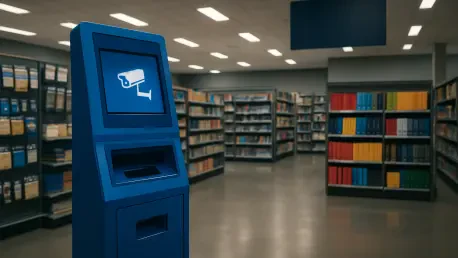

The streamlined enrollment workflow encourages applicants to submit personal data online before visiting a participating store for fingerprints and a high-quality digital photograph. For many years, the process of securing a spot in the Department of Homeland Security’s trusted traveler program felt like a bureaucratic odyssey, requiring visits to secure airport zones or distant government offices that often lacked convenient parking or flexible hours. However, the recent integration of these services into the familiar aisles of office supply retailers represents a tectonic shift in how federal identity verification is delivered to the American public. This evolution is not merely about convenience; it signifies a maturing public-private partnership model that treats security as a seamless service rather than a hurdle. By utilizing the existing infrastructure of major retail brands, the TSA and CLEAR have effectively decentralized the enrollment process, bringing it closer to where people live and work.
Geographic Expansion: Bringing Security to the Neighborhood
The rapid acceleration of this nationwide enrollment network has been one of the most visible success stories in the travel industry over the last two years. From a relatively modest footprint of just 22 Staples locations in late 2024, the program experienced a surge that brought the number of participating stores to over 190 by August 2025. This momentum continued into the current year, and as of June 30, 2026, the retail enrollment network has successfully expanded to 280 locations. This broader network now encompasses not only Staples but also other major office supply retailers such as Office Max and Office Depot, ensuring that specialized identity verification services are available in more than 190 different U.S. cities and towns. This scaling effort was designed to accommodate the rising demand for expedited travel as international and domestic flight volumes reached record highs, necessitating a more robust and accessible infrastructure for vetting low-risk passengers.
The geographic diversity of these locations ensures that travelers in both high-traffic urban centers and mid-sized communities have nearby access to enrollment services. Participating stores are distributed nationwide, covering major metropolitan areas such as Boston, New York City, Chicago, Dallas, and Nashville, while also extending into secondary markets like San Diego, Raleigh, Pittsburgh, Boise, and Spokane. This wide-reaching availability significantly reduces the need for long-distance travel just to complete a security application, which was previously a major deterrent for residents of suburban and rural areas. By situating these centers in familiar retail environments, the TSA has effectively lowered the psychological barrier to enrollment. Travelers can now combine their identity verification appointment with a routine trip for office supplies or mailing services, integrating federal security requirements into the fabric of daily errands and local commerce activities.
Operational Flexibility: Simplifying the Enrollment Path
One of the most significant advantages provided by the CLEAR-Staples partnership was the removal of the rigid appointment requirements that once defined the enrollment experience. Unlike many government facilities where appointments were mandatory and often booked weeks in advance, CLEAR introduced the ability for walk-in enrollment at participating retail stores. This flexibility addressed a critical pain point for busy professionals and families who found it difficult to commit to a fixed time slot during traditional business hours. By providing a more fluid service model, the program reduced the psychological and logistical friction often associated with federal paperwork and security clearances. This change transformed the enrollment process from a daunting administrative task into a user-friendly retail interaction. Consequently, the ability to walk into a local store and complete the necessary steps at one’s convenience encouraged a broader demographic of travelers to seek trusted status.
The enrollment process was meticulously designed for maximum efficiency, beginning with an optional online pre-enrollment phase that significantly shortened the in-store interaction. At the designated Staples location, the applicant underwent a thorough identity verification session conducted by trained personnel. This part of the workflow included the collection of biometric data, specifically fingerprints and a high-quality digital photograph, using advanced capture technology provided by CLEAR. Once the physical data was secured, it was transmitted via encrypted channels to the TSA for a comprehensive security threat assessment. This background check determined the applicant’s eligibility based on federal safety standards. The entire in-person portion of the process typically took less than fifteen minutes, illustrating how private sector operational expertise could be applied to enhance the delivery of public services without compromising the rigorous security protocols required by the DHS.
Identity Verification: Adhering to Federal Security Standards
To maintain the high integrity of the security program, the enrollment process required rigorous documentation from all applicants, including U.S. citizens, nationals, and lawful permanent residents. Applicants were typically required to provide a single document from a primary list, known as List A, which includes high-security credentials such as an unexpired U.S. Passport book or card. Other acceptable documents in this category included a Permanent Resident Card, also known as a Green Card, or an unexpired Enhanced Driver’s License from participating states. The use of these documents ensured that the identity verification process met strict federal standards for biometric and biographical accuracy. By standardizing these requirements across all retail enrollment sites, the program maintained a level of security parity with traditional airport-based centers, ensuring that every participant was vetted with the same level of scrutiny regardless of where they chose to complete their enrollment.
If an applicant did not possess a primary document from List A, the program offered a secondary dual-track system to ensure accessibility for a wider range of individuals. In such cases, applicants were required to provide a combination of two documents: a valid government-issued photo identification and a secondary document proving citizenship or lawful residency, such as a birth certificate. This structured approach allowed for flexibility without compromising the underlying security of the “trusted traveler” status. By providing clear and transparent guidelines on the necessary paperwork through the online portal, the program ensured that applicants arrived at the retail hub well-prepared for their visit. This preparation was crucial in maintaining the speed and efficiency of the in-store workflow, preventing delays and ensuring that the identity verification specialists could focus on the accurate capture of biometric data needed for the final TSA threat assessment and approval.
Cost Structure: Understanding Membership and Renewal Fees
The financial structure for enrolling in TSA PreCheck through CLEAR remained standardized at $84.95 for a new five-year membership. This fee was structured to cover the necessary administrative costs associated with the background check, biometric processing, and the maintenance of secure data transmission systems. When broken down over the lifespan of the membership, the cost averaged approximately $17 per year, making it a relatively low-cost investment for frequent travelers. This transparent pricing model helped to manage applicant expectations and ensured that the program remained self-sustaining through user fees rather than relying solely on taxpayer funding. For many travelers, the nominal annual cost was easily justified by the hours saved at security checkpoints and the reduced stress associated with airport transit. The predictable fee structure also allowed for seamless transactions at the retail point-of-sale, where applicants could pay using standard methods.
For existing members, the renewal process was even more streamlined to encourage continued participation in the program. Online renewals through the CLEAR portal were offered at a reduced rate of $72.95, while those who preferred to renew their status in person at a Staples or Office Depot location paid the standard $84.95 fee. A notable technological advantage of this system was its interoperability; members did not need to return to the specific provider they used for their initial enrollment five years prior. CLEAR’s robust database was capable of processing renewals for most TSA PreCheck members, regardless of their original enrollment site. This flexibility was particularly beneficial for travelers who had relocated to different cities or whose local enrollment options had changed over time. By facilitating easy renewals, the program ensured a high retention rate, maintaining a large pool of pre-vetted, low-risk passengers that contributed to the overall efficiency of airport security.
Service Distinctions: Navigating TSA PreCheck and CLEAR+
A common point of confusion for many travelers remained the distinction between TSA PreCheck and CLEAR+, as both services were designed to accelerate the airport experience through different means. TSA PreCheck is a government program managed by the Department of Homeland Security that allows travelers to access expedited lanes where they can keep their shoes, belts, and light jackets on while leaving laptops and liquids in their bags. In contrast, CLEAR+ is a private membership service that focuses specifically on the identity verification phase of the process. It utilized biometric kiosks to confirm a traveler’s identity, allowing them to bypass the traditional document-check line and proceed directly to the physical screening area. While they operated independently, they were most effective when used in tandem, as CLEAR+ handled the identity verification aspect of security while PreCheck addressed the physical screening aspect, together creating the fastest path.
While travelers were not required to hold a CLEAR+ membership to enroll in TSA PreCheck at a Staples store, the partnership offered a bundled package for those seeking the most comprehensive travel solution. For a total fee of $219, travelers could obtain a five-year TSA PreCheck membership alongside one year of CLEAR+ service. This integrated offering was specifically aimed at frequent flyers who prioritized speed and predictability in their travel schedules. The bundle simplified the administrative side of travel by combining two separate enrollment processes into a single retail visit. This approach not only provided financial value but also reduced the total time spent managing different security credentials. For the retailers, offering such high-value bundles transformed their stores into essential service hubs for the modern professional, while for the travelers, it represented a one-stop-shop approach to navigating the complexities of contemporary aviation security.
Traveler Benefits: Maximizing Efficiency at the Terminal
The value proposition of the TSA PreCheck program remained high as it continued to be supported by more than 90 airlines at over 200 airports across the United States. The primary benefit cited by members was the significant reduction in time spent at security checkpoints; data indicated that approximately 99% of TSA PreCheck passengers waited less than 10 minutes to clear screening. This level of predictability became a vital asset for business travelers with tight schedules and families traveling with small children. By creating a reliable and faster lane, the program helped to eliminate one of the most unpredictable and stressful aspects of the modern air travel experience. The expansion of enrollment centers into local communities played a crucial role in this success, as it ensured that the benefits of the program were accessible to a larger segment of the population, thereby optimizing the flow of passengers throughout the national aviation system.
Beyond the speed of the dedicated lanes, the “light touch” nature of the physical screening was a major draw for program participants. Members generally enjoyed the convenience of not having to remove their shoes, light jackets, or belts during the screening process, which streamlined their movement through the metal detectors and scanners. Furthermore, the ability to leave laptops and 3-1-1 compliant liquids inside their carry-on luggage significantly reduced the time spent packing and unpacking at the security belt. These small but meaningful conveniences made the journey through the terminal much more comfortable and less physically demanding. By moving the enrollment process into local Staples stores, the TSA and CLEAR effectively made these long-term travel benefits more attainable for millions of Americans, fostering a more positive perception of airport security and encouraging more people to opt into the vetted, low-risk traveler pool.
Strategic Implementation: Next Steps for Eligible Travelers
The integration of TSA PreCheck enrollment into the retail landscape through the CLEAR and Staples partnership established a new benchmark for accessible government services. By successfully expanding to nearly 280 locations by mid-2026, the initiative effectively removed the geographic and logistical barriers that had previously hindered program growth. This strategic rollout was met with high consumer approval, as it allowed individuals to manage their security credentials in a familiar and convenient environment. The transition of these services from airports to neighborhood stores demonstrated the power of public-private collaboration in solving complex logistical challenges. As the network matured, it became clear that the decentralization of identity verification was not just a temporary solution but a permanent shift in the travel security infrastructure. Travelers who took advantage of these local centers found that the initial investment of time and resources yielded significant long-term returns.
For those who had not yet secured their status, the most effective course of action involved utilizing the comprehensive digital maps provided by CLEAR to locate the nearest participating Staples or Office Depot store. Applicants found that the most efficient path was to complete the online pre-enrollment form before visiting a physical site, as this ensured that all biographical data was accurately captured and ready for biometric pairing. It was also recommended that travelers verified their documentation against the official TSA lists prior to their walk-in visit to avoid any potential processing delays. Moving forward, the success of this retail-based enrollment model suggested that further expansions into other service sectors were likely, potentially including additional trusted traveler programs. For the modern passenger, staying informed about these localized enrollment opportunities was the first step toward reclaiming time and reducing the inherent stresses of the aviation journey.