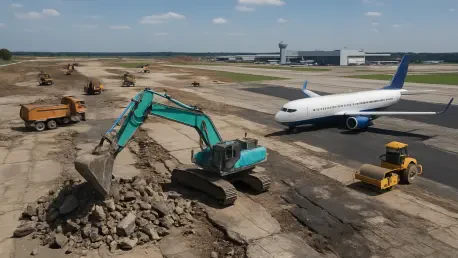

The vulnerability of the American national airspace reached a critical breaking point when a single hardware malfunction in a rural Arkansas town paralyzed the movement of thousands of aircraft and millions of travelers across the country. This unprecedented ground stop did more than just disrupt holiday schedules; it exposed the deep-seated decay of the technological foundation upon which modern flight depends, prompting the Department of Transportation to demand a massive infusion of capital. As the Federal Aviation Administration struggles to maintain its grip on an increasingly digital landscape using hardware from the turn of the century, the debate over how to fund a comprehensive $50.1 billion overhaul has moved to the center of the legislative stage in Washington. The tension between the immediate need for technological modernization and the rigorous fiscal oversight demanded by a bipartisan coalition of lawmakers highlights a fundamental crisis in how the United States manages its most vital transportation infrastructure in 2026.
Analyzing the Scope of the Modernization Funding
Transportation Secretary Sean Duffy’s proposal is a monumental shift from the historically fragmented approach to aviation budgeting that has characterized federal policy for decades. The request is meticulously structured into five distinct investment pillars, with each category slated to receive approximately $10 billion to address specific systemic weaknesses. At the core of this initiative is the complete replacement of the air traffic control system’s aging digital backbone, which currently relies on antiquated technology that remains highly susceptible to localized failures. Beyond the technical software and hardware upgrades, the plan also allocates significant resources toward the modernization of physical airport terminals at major transit hubs and general infrastructure improvements that have been deferred for years. By requesting this lump sum, the administration hopes to bypass the inefficiencies of incremental annual funding, arguing that only a decisive investment can bridge the gap.
Building on this push for a unified investment strategy, the Department of Transportation has signaled a degree of strategic flexibility to ensure that critical safety measures are not entirely abandoned if Congress proves hesitant. Secretary Duffy has emphasized that while the $50.1 billion request represents the ideal scenario for a total system reboot, the agency is prepared to break the proposal down into smaller, safety-critical modules. This contingency approach would prioritize the most vulnerable segments of the aviation network, such as the transition from legacy copper wiring to high-capacity fiber optic lines at regional control centers. Such a move acknowledges the political difficulty of passing a multi-billion-dollar spending package while simultaneously insisting that the risk of total system failure is too great to ignore. This pragmatism is designed to force a conversation about specific technical risks, moving the debate beyond simple fiscal calculations toward a deeper understanding of the hardware necessary for flight.
Investigating the Arkansas Technical Breakdown
The urgency of the current funding request is inextricably linked to the recent technical disaster in El Dorado, Arkansas, where a standard network upgrade spiraled into a nationwide aviation crisis. During an attempt by federal contractor L3Harris to modernize the local network, a newly installed Juniper router began broadcasting an overwhelming deluge of data that effectively blinded seventeen of the nation’s twenty-two regional air traffic control centers. The device was reportedly making over one thousand connection attempts every few seconds, creating a digital instability that compromised radar feeds and communication protocols vital for high-altitude flight coordination. This incident served as a stark reminder of how a single point of failure in a small, remote installation can cascade through the entire national infrastructure, forcing the FAA to perform an emergency rollback to twenty-five-year-old Cisco routers. Relying on hardware from the late nineties to stabilize the system has become a primary talking point for modernization.
However, this technical failure has also fueled a wave of skepticism among lawmakers who are wary of providing such a massive influx of cash to an agency that oversaw such a catastrophic implementation error. Republican leaders have expressed significant doubt regarding the broader scope of the spending, with some suggesting that the airline industry itself should contribute more directly to the costs of terminal upgrades and general infrastructure. Meanwhile, Senate Democrats are focusing their attention on the lack of a definitive root cause analysis, demanding that the Department of Transportation provide a more transparent explanation of how a single router could bypass all systemic redundancies. This political friction is exacerbated by the conflicting narratives from corporate partners, as Hewlett Packard Enterprise has defended its hardware by suggesting that the configuration, rather than the device itself, was the flaw. The legislative path remains blocked by disagreement over whether the crisis is the result of funding or oversight.
Assessing the Economic and Operational Path Forward
The financial implications of the Arkansas ground stop have resonated far beyond the halls of Congress, impacting the bottom lines of the country’s largest air carriers and the broader national economy. Industry analysts have estimated that the four major U.S. airlines—American, Delta, United, and Southwest—suffered a combined loss of approximately $345 million due to flight cancellations, passenger refunds, and logistical disruptions. These mounting costs serve as a warning of the potential economic devastation that could occur if a similar failure takes place during peak travel periods, such as the upcoming holiday season. The airline industry finds itself in a precarious position, demanding a more reliable air traffic control network while simultaneously resisting calls to shoulder the multibillion-dollar bill for its modernization. This stalemate underscores the complexity of managing a public-private ecosystem where technical infrastructure is federally controlled but its failure leads to massive private sector losses and public frustration.
To resolve this crisis, the Federal Aviation Administration moved to stabilize the current network by pausing all high-risk router installations until a more resilient implementation framework was established. Lawmakers identified the transition from legacy copper infrastructure to fiber optics as the most critical priority, suggesting that future funding should be strictly targeted at these core technical upgrades. Instead of pursuing the full $50 billion package, the government began focusing on a series of smaller, high-impact investments designed to harden the digital backbone of the air traffic control centers against localized failures. Technical experts recommended a renewed emphasis on redundant network architectures that could isolate malfunctioning hardware before it impacted the national radar feed. By prioritizing these specific safety enhancements and demanding greater accountability from federal contractors, the administration sought to rebuild public trust. This phased approach provided a more realistic path toward modernization that protected the nation.