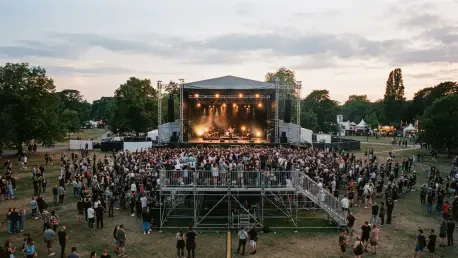

Strategic focus is shifting from simple ticket volume toward maximizing revenue per attendee through personalized upgrades and sophisticated audience data analysis. As the Australian entertainment landscape prepares for 2027, the industry finds itself at a unique crossroads characterized by record-shattering top-line figures alongside razor-thin profit margins. Despite the sector generating an impressive $3.4 billion recently, the reality for local organizers is stark, with only about half of major festivals achieving financial stability. This discrepancy stems from a perfect storm of rising production costs, logistical complexities, and a labor shortage that has fundamentally altered the math of live entertainment. Rather than relying on the blunt instrument of general admission price hikes, which are hitting a ceiling among cost-conscious consumers, savvy promoters are turning toward a more surgical approach to monetization. This evolution reflects a broader trend of professionalization within the domestic market, prioritizing long-term brand health over volume.
Enhancing Financial Sustainability Through Smart Revenue
Strategies: Maximizing Attendee Value
The traditional reliance on a one-size-fits-all ticket model is rapidly becoming a relic of the past as organizers seek more resilient financial frameworks. Instead of pushing the entry-level price point beyond the reach of the average fan, the industry is increasingly focusing on the revenue-per-attendee metric as the primary indicator of success. This strategy necessitates a sophisticated segmentation of the audience to identify cohorts with a higher propensity for discretionary spending on enhanced experiences. By offering tiered admission options that range from basic entry to high-end exclusive access, event planners can preserve the democratic nature of live music while securing the margins necessary to cover soaring overheads. These premium tiers often include perks such as expedited entry, dedicated viewing areas, and private lounge access, providing clear value propositions that justify the additional cost. This approach transforms the event from a static transaction into a multilayered commercial ecosystem that caters to diverse financial demographics.
Beyond physical access, the integration of high-value service bundles is playing a critical role in stabilizing event budgets across the continent. Modern organizers are moving away from fragmented sales by combining food, beverage, and merchandise into seamless digital packages that can be purchased well in advance of the gates opening. These prepaid bundles not only improve cash flow for the promoter but also enhance the attendee experience by reducing the friction of on-site transactions and providing a sense of predictable cost. For the fan, the convenience of a curated, all-inclusive package often outweighs the slightly higher price tag, especially when it guarantees access to limited-edition products or specialty dining options. By diversifying the ways in which fans can interact financially with a brand, festivals are building a defense against the volatility of the touring market. This strategy shifts the focus from the quantity of people through the turnstiles to the depth of the commercial relationship established with each individual fan.
Leveraging Data: Personalized Monetization
The shift toward smart revenue is underpinned by the aggressive adoption of audience analytics that allow for a level of personalization previously unseen in the Australian market. Rather than deploying broad, generic marketing campaigns that often result in low conversion rates, promoters are now leveraging deep behavioral data to deliver targeted offers. By analyzing historical purchase patterns and digital engagement, event organizers can predict which fans are most likely to respond to specific upsell opportunities, such as backstage tours or artist meet-and-greets. This precision targeting ensures that marketing efforts are directed toward the most receptive segments, thereby maximizing the efficiency of promotional budgets. Furthermore, the use of real-time data allows for dynamic adjustments during the event cycle, enabling organizers to push inventory for underutilized premium services when demand spikes. This data-driven approach not only boosts immediate sales but also fosters a more intimate understanding of the fan base.
In a climate of economic uncertainty, the ability to insulate an event from sudden shifts in consumer behavior is a primary driver for investment in data technology. By treating every attendee as a unique customer with distinct preferences, the industry can create more resilient commercial models that are less dependent on general admission volume. This is particularly relevant as cost-of-living pressures force many fans to be more selective about their entertainment choices, often choosing one high-quality experience over several mediocre ones. Personalized monetization allows organizers to capture that specific demand by tailoring the event experience to the individual’s desires, whether that means a luxury glamping setup or a specialized craft beer package. As these data strategies become more refined, they provide a roadmap for sustainability that moves beyond the limitations of the traditional ticket booth. The resulting financial stability allows for greater creative risk-taking, as a diverse array of revenue streams covers the core operational costs.
Prioritizing Authenticity in a Digital Age
The Human Element: Rejection of Synthetic Content
As generative artificial intelligence and digital saturation become ubiquitous, a powerful countercultural movement is taking root among younger demographics in Australia. Led by Gen Z, this trend manifests as an intense desire for human-centered experiences that provide a sense of permanence and tangible reality. The resurgence of physical media, particularly vinyl records and high-quality CDs, serves as a bellwether for this shift, representing a rejection of digital saturation. Consumers are increasingly looking for physical markers of ownership and a direct, unmediated connection to the artistic process that cannot be replicated by an algorithm. This craving for authenticity has profound implications for the live event space, as the perceived value of a performance is now directly tied to its human credentials. Fans are no longer satisfied with polished spectacles; they are seeking the raw, unpredictable energy that only comes from a live human interaction. This move toward the organic is a direct response to a digital world that often feels ephemeral.
The quest for proof of authenticity is fundamentally changing how live performances are marketed and staged, with a growing skepticism toward holographic or AI-generated shows. While these technological marvels may offer a novelty factor, they often fail to provide the deep emotional validation that attendees derive from being in the same physical space as a live artist. The unique nature of a live performance—the slight imperfections, the spontaneous crowd interaction, and the shared atmosphere—is becoming the industry’s most valuable asset. Event organizers are finding that leaning into these visceral elements is the key to maintaining relevance in an era where digital content is cheap and infinite. By emphasizing the presence of the artist and the collective experience of the crowd, promoters can differentiate their offerings from the stream of online media. This focus ensures that the live event remains a sanctuary of human connection, providing a sense of community that digital platforms struggle to emulate.
Implementing a Model: High-Tech and High-Touch
The successful event landscape of the near future will be defined by a sophisticated high-tech and high-touch model that utilizes digital innovation to enhance human connection. In this framework, technology is relegated to a supportive role, handling the complex logistics, data analysis, and operational efficiencies behind the curtain. Artificial intelligence and advanced software suites are being deployed to streamline crowd flow, optimize staffing levels, and manage complex supply chains in real time. This ensures that the operational side of the event runs with surgical precision, minimizing the various friction points that often detract from the fan experience. By automating the mundane and the administrative, organizers can redirect their resources toward the front-facing aspects of the event that require a human touch. The objective is to create a seamless environment where the technology is invisible to the attendee, allowing them to remain fully immersed in the performance and the shared social atmosphere.
As the industry transitioned toward this refined model, the focus remained squarely on removing the barriers between the artist and the audience. Data collection efforts were leveraged not just for profit, but to eliminate frustrations like long queues and confusing schedules, freeing attendees to focus on the art. Organizers who successfully navigated this period adopted a philosophy where every digital tool served a physical purpose, ensuring that human connection remained the central pillar of the live experience. Moving forward, the industry should continue to prioritize transparent data practices and invest in venue infrastructure that supports both technical efficiency and atmospheric quality. Leaders in the space identified that the long-term viability of live events depended on their ability to offer a sense of belonging in a physical space. By maintaining this balance, the Australian market established a sustainable path that respected the consumer’s wallet while nourishing their need for community.