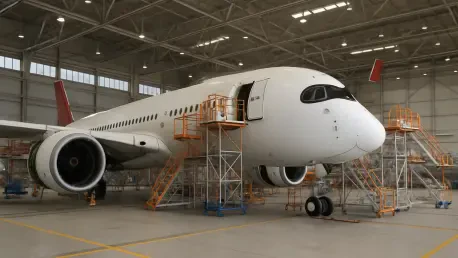

Iberia Maintenance’s new capability to perform heavy maintenance on the A350 follows a strategic expansion designed to strengthen its standing in the international aviation industry. This certification, recently granted by the Spanish Aviation Safety and Security Agency (AESA), represents a massive operational milestone, as it was issued without any initial limitations—a feat never before achieved by the company’s heavy maintenance division. This authorization marks the culmination of an intensive two-year transformation that began in late 2024, during which the organization underwent a radical overhaul of its infrastructure. The timing is critical because the global fleet of A350 aircraft is maturing, and the need for high-level technical interventions is rising rapidly. By successfully navigating the rigorous regulatory environment, the company has proven its ability to handle one of the most technologically advanced widebody aircraft in service today, ensuring it remains at the forefront of the maintenance sector.
Operational Excellence and Regulatory Achievement
The achievement of full regulatory approval was not merely a bureaucratic victory but a fundamental shift in how the facility manages complex aeronautical projects. By modernizing the internal maintenance ecosystem, the organization established a blueprint for handling next-generation aircraft that utilize composite materials and digital-first architectures. This transition required a holistic approach, moving away from legacy processes toward a more integrated, data-driven methodology. The ability to perform comprehensive overhauls without external oversight underscores a high level of organizational maturity and technical self-sufficiency. As a result, the facility now serves as a primary hub for widebody excellence within the region, offering a level of expertise that matches the sophisticated engineering of the Airbus fleet. This evolution has paved the way for more streamlined operations and enhanced safety protocols across all maintenance divisions.
Technical Readiness: Infrastructure and Workforce Training
To meet the specific technical demands of the A350, the preparation phase involved over 150 distinct action lines designed to upgrade every facet of the maintenance ecosystem. Technicians and engineers completed specialized training programs focused on high-precision tasks, such as repairing advanced carbon-fiber airframes and managing complex integrated avionics. Furthermore, the company invested in state-of-the-art tooling and updated its IT infrastructure to ensure seamless synchronization with the aircraft’s onboard diagnostic systems. Enrique Robledo noted that these investments confirmed the division’s readiness to handle the full scope of heavy maintenance requirements. By refining technical documentation and optimizing hangar layouts, the team created a high-efficiency workflow that significantly reduced the time required for major inspections. This meticulous preparation ensured that the facility could maintain the highest standards of airworthiness for the modern fleet.
Market Strategy: Global Competitiveness and Future Growth
Looking toward the broader landscape, this newly acquired capability enabled the division to capture a larger share of the international MRO market as more A350 aircraft entered their heavy maintenance cycles in 2026. By transitioning from a subsidiary support unit to a robust, industry-facing service provider, the organization successfully attracted a diverse range of third-party airline customers seeking specialized engineering support. This diversification of revenue streams provided a stable financial foundation for continued technological investment and facility expansion. Moving forward, the focus shifted to implementing predictive maintenance algorithms and sustainable hangar practices to meet the evolving needs of global aviation. These strategic steps ensured that the company remained a dominant force in the widebody sector, providing actionable solutions for airlines facing complex fleet challenges. Ultimately, the successful certification project established a new benchmark for excellence in the international aviation maintenance community.