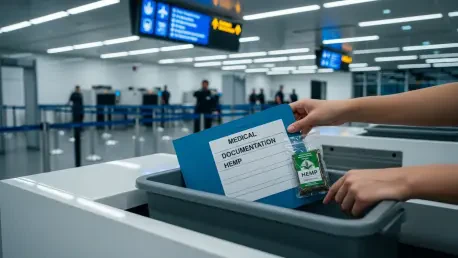

The complex landscape of American air travel has undergone a significant transformation as the Transportation Security Administration addresses the growing prevalence of medical cannabis among domestic passengers. While the agency has long maintained a strict focus on identifying potential threats to aviation security, the increasing number of states with legalized medical programs has necessitated a more transparent approach to handling medicinal products at checkpoints. Travelers are no longer left in a state of total uncertainty when packing their prescribed treatments, as the latest updates to the official guidelines provide a clearer roadmap for navigating security protocols. This shift does not represent a change in federal law, but rather a pragmatic acknowledgement of the daily realities faced by millions of citizens who rely on these substances for their health. The challenge lies in balancing these new allowances with the rigid frameworks of federal prohibition that still govern the country’s airspace.
Legal Framework: The Operational Shift in Security Checkpoints
Regulatory Clarity: Screening and Special Instructions
The recent updates to the official “What Can I Bring?” portal signal a move toward greater transparency by listing medical marijuana as a permissible item in both carry-on and checked luggage under specific conditions. Security officers are primarily focused on detecting explosives and other dangerous items that pose an immediate risk to the aircraft and its occupants, meaning their search protocols are not designed to hunt for illegal drugs. However, if a substance is discovered during the standard screening process, the new instructions provide a framework for how the situation should be handled without immediate escalation. Travelers are encouraged to carry documentation of their medical status, although the TSA maintains that the final decision rests with the officer on duty. This operational clarity helps reduce the friction that once defined the experience for medical users, allowing for a more streamlined passage through the terminal while maintaining the integrity of the security process.
Federal Boundaries: The Persistent Jurisdictional Conflict
Despite these revised guidelines, the legal paradox between state-level medical programs and federal controlled substance regulations remains a critical point of concern for every passenger. Because cannabis remains classified as a Schedule I substance at the federal level, the TSA’s permission to pass through a checkpoint does not grant legal immunity from potential prosecution or confiscation by other authorities. If an officer discovers a substance that appears to violate federal law, they are often required to refer the matter to local law enforcement, who will then determine the course of action based on the laws of that jurisdiction. This means that a traveler departing from a state where medical use is legal might still face challenges if their flight is diverted to a state with stricter prohibitions. Understanding this jurisdictional web is essential for anyone planning to travel with medical products, as checkpoint clearance does not necessarily equate to total legal protection.
Consumer Safety: Implications for Travelers and the Ancillary Market
Border Risks: Industrial Hemp and International Travel
The distinction between high-THC medical cannabis and industrial hemp products containing less than three-tenths of a percent of THC remains a cornerstone of the current regulatory framework. Products derived from hemp that meet federal standards are generally treated with less scrutiny, provided they are clearly labeled and comply with existing agricultural regulations. However, the complexity of this situation intensifies dramatically when considering international travel, which remains an exceptionally high-risk endeavor for any individual carrying cannabis products. Crossing international borders with any form of the substance, regardless of medical necessity or the legality of the product in the departing country, can lead to severe legal consequences including arrest and long-term travel bans. Travelers must remain aware that the TSA’s domestic guidelines offer no protection once a flight leaves United States territory. The agency’s updates are intended only for internal travel within the nation.
Market Adaptation: The Rise of Specialized Travel Solutions
The ancillary market responded to these evolving standards by developing sophisticated travel accessories that aimed to provide discretion and security for medical patients on the move. Manufacturers began producing high-quality odor-proof bags and specialized storage containers that allowed for the secure transport of medications without attracting unnecessary attention from fellow travelers or security personnel. These innovations suggested a growing social and economic acceptance of medical cannabis as a legitimate part of the modern healthcare regime. To navigate this landscape effectively, passengers were advised to research the specific laws of their destination and maintain clear medical documentation at all times. They also utilized discreet packaging solutions to minimize potential disruptions during the screening process. By staying informed about the intersection of federal policy and state law, travelers took proactive steps to ensure their journeys remained uninterrupted while prioritizing their health needs.