
The modern fast-food landscape has evolved into a jarring paradox where record-high menu prices are increasingly met with a precipitous decline in the quality of human interaction and operational efficiency. Current industry metrics through 2026 reveal a startling trend: despite the infusion of sophisticated automation and digital ordering platforms, customer satisfaction scores have plummeted to their lowest levels in a decade. This phenomenon is not merely a localized issue or a string of unfortunate incidents, but a systemic deterioration of the fundamental promise of the fast-food experience. Patrons who once relied on these establishments for speed and accuracy now frequently encounter extended wait times, frequent order mistakes, and a noticeable absence of professional courtesy. This shift reflects a deeper misalignment between corporate growth strategies and the realities of ground-level operations, creating an environment where the basic tenets of hospitality have been sacrificed for perceived efficiency. As the gap between consumer expectations and reality continues to widen, the industry faces a critical turning point that necessitates a fundamental reevaluation of how brands value both their customers and their workforce. The erosion of trust is particularly evident in the growing disconnect between corporate marketing and the daily reality of the drive-thru lane.
Corporate Strategy and the Erosion of Quality
Post-Acquisition Declines: The Case of Tim Hortons
The acquisition of Tim Hortons by Restaurant Brands International serves as a definitive case study in how a corporate shift toward aggressive cost-cutting can erode a brand’s community standing. Once a symbol of reliable hospitality and local connection, the chain has undergone a transition that prioritizes short-term profit margins over the employee experience and product consistency. This strategic pivot has resulted in chronic understaffing and a reduction in training resources, leaving front-line workers ill-equipped to handle the demands of a modern high-volume environment. When employees are forced to operate in a state of constant survival, the ability to provide friendly or even basic service becomes a secondary concern. The ripple effect is palpable throughout the franchise system, where the pressure to meet stringent performance metrics often leads to a visible decline in morale. Consequently, many long-time patrons have expressed a sense of alienation, noting that the brand’s original identity has been hollowed out in favor of a homogenized, transaction-oriented model that lacks the human touch that once defined the Canadian coffee giant’s success. This decline illustrates that when corporate entities prioritize shareholder dividends over the quality of the service floor, the long-term health of the brand and its relationship with the public suffer significantly.
Corporate Distance: The Vanishing Support at Jack in the Box
In contrast to brand dilution, Jack in the Box exemplifies a catastrophic breakdown in corporate accountability and the mechanisms of conflict resolution. Many consumers have reported an alarming lack of response when attempting to rectify common issues such as billing errors or failed transactions within the company’s mobile application. This phenomenon, often described as corporate “radio silence,” indicates a culture that has distanced itself from the end-user experience to a degree that makes resolution nearly impossible for the average customer. Local restaurant managers frequently find themselves in a precarious position, lacking the authority or corporate support to override digital system errors or provide immediate refunds. This disconnect suggests that the organizational structure has become so fragmented that there is no longer a clear path for consumer feedback to reach those capable of making substantive changes. Without a robust system for addressing grievances, the brand risks permanent damage to its reputation, as frustrated customers interpret the lack of communication as a fundamental indifference to their patronage and financial investment. This lack of accountability creates a vacuum where both employees and customers feel abandoned by the very corporate entities that should be providing the tools for successful service delivery and problem resolution.
Operational Challenges and Digital Friction
Systemic Overload: The Multi-Channel Chaos at McDonald’s
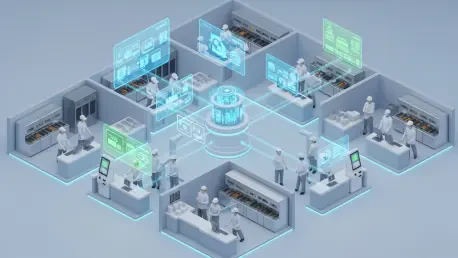
McDonald’s illustrates the specific operational chaos that emerges when a legacy brand attempts to integrate multiple modern ordering channels without a proportional increase in logistical support. Employees at these high-traffic locations are now tasked with managing a dizzying array of inputs, including traditional walk-in orders, dual-lane drive-thrus, proprietary mobile app requests, and a constant stream of third-party delivery drivers. This convergence creates a high-pressure environment where technical glitches are almost inevitable and order inaccuracies become the norm rather than the exception. The psychological and physical burden on the staff is immense, as they must navigate the “digital friction” of reconciling disparate ticketing systems in real-time while maintaining the speed-of-service metrics demanded by corporate headquarters. When the digital infrastructure fails or orders are mismatched, the result is often a visible state of disarray within the kitchen, leading to longer wait times for customers who were promised the convenience of “fast” food. This technological overload has transformed many locations into high-stress hubs where accuracy and customer engagement are routinely sacrificed to keep up with the sheer volume of digital noise, fundamentally altering the nature of the kitchen environment and the quality of the final product delivered to the patron.
Technological Friction: The Hidden Costs of Digital Ordering
The rapid implementation of proprietary apps and third-party delivery partnerships has introduced a layer of complexity that current staffing levels and traditional kitchen layouts are simply not designed to accommodate. This digital friction manifests most clearly when physical inventory fails to align with digital menus, leading to scenarios where customers pay for items that are currently out of stock. In many instances, there is no standardized protocol for front-line workers to handle these discrepancies, resulting in prolonged negotiations at the counter or drive-thru window that further delay operations. The lack of integrated, user-friendly systems means that employees often spend more time troubleshooting software issues than preparing food or interacting with patrons. Furthermore, the reliance on delivery platforms creates a tiered priority system that can leave in-person customers feeling neglected as staff scramble to fulfill a backlog of digital tickets. This technological imbalance has shifted the focus from quality control to volume management, leaving little room for the human oversight necessary to ensure that every order is correct and every customer feels valued. As digital systems continue to evolve faster than the physical infrastructure that supports them, the gap in service quality will likely continue to grow unless brands prioritize backend integration and realistic staffing models over flashy consumer-facing features.
The Crisis of the Fast Food Workforce
Labor Relations: The Erosion of Employee Engagement
The service crisis within the industry is also deeply rooted in ongoing labor disputes and a pervasive sense of management instability at major chains like Burger King and Wendy’s. At Burger King, a history of wage suppression and challenging working conditions has led to a significant decline in employee engagement, which often manifests as a perceived lack of concern for the customer experience. When workers feel that their labor is undervalued and their career prospects are stagnant, the motivation to maintain high standards of hospitality inevitably diminishes. Similarly, Wendy’s has struggled with high executive turnover and the economic pressures of inflation, creating a trickle-down effect that destabilizes local management. This instability often results in inconsistent staffing levels and frequent supply chain disruptions, leading to “out-of-stock” scenarios that frustrate both employees and patrons. When leadership at the highest levels is in a state of flux, the lack of a clear, unified vision permeates the restaurant level, making it difficult to maintain the consistent guidance and support necessary for a positive workplace culture and superior service delivery. These internal pressures create a volatile environment where the quality of the customer interaction is the first thing to suffer, as stressed managers and underpaid staff focus on survival rather than excellence.
The Service-Product Paradox: Normalizing Mediocrity
Popeyes represents a unique phenomenon in the industry known as the service-product paradox, where high demand for a specific product allows a chain to persist despite consistently poor service ratings. The cultural phenomenon surrounding certain menu items has created a scenario where customers have become conditioned to expect slow service and brusque interactions as part of the transaction. This normalization of poor service is a dangerous trend, as it suggests that a strong product can successfully mask profound operational failures and a lack of investment in staff training. However, this reliance on product popularity over service quality is a precarious long-term strategy, as it breeds a sense of “customer service fatigue” among the public. While consumers may tolerate these failures in the short term due to a lack of viable alternatives, the accumulation of negative experiences slowly erodes brand loyalty. For an industry that relies on high-frequency repeat business, the failure to address these human-centric operational flaws risks creating a permanent disconnect between the brand and its core audience, ultimately leading to a decline that even the most popular product cannot reverse. The industry must realize that while a singular item can draw a crowd, it is the consistency and quality of the service that sustains a brand through shifts in consumer tastes and economic conditions.
Strategic Pathways: Restoring the Foundation of Hospitality
The fast-food industry eventually recognized that its survival depended on a fundamental shift away from pure automation and back toward the human elements of hospitality. Strategic leaders discovered that investing in higher wages and comprehensive training programs was not merely a social responsibility but a financial necessity to reduce turnover and improve order accuracy. By the end of this period, several major chains began implementing realistic staffing models that accounted for the complexities of multi-channel ordering, ensuring that employees were no longer stretched to a breaking point. These companies also prioritized the development of more integrated digital systems that allowed for real-time inventory updates, significantly reducing the friction that previously defined the customer experience. Furthermore, a renewed focus on local management empowerment allowed restaurant leaders to resolve disputes quickly without the need for constant corporate intervention. This transition back to a service-first mindset provided a roadmap for recovery, proving that while technology could enhance the transaction, the human connection remained the cornerstone of a sustainable and respected brand in an increasingly competitive marketplace. Moving forward, the industry learned that the path to profitability was paved with satisfied employees and empowered managers who had the time and tools to treat every customer as more than just a data point in a digital queue.