
Rising sea levels and increasing ocean temperatures have placed the Maldives at the forefront of a global environmental crisis, necessitating a swift transition from traditional conservation methods to sophisticated, technology-driven interventions. The archipelago, comprising nearly 1,200 islands, currently faces a reality where coral bleaching events have impacted over sixty percent of its vital reef systems, threatening both biodiversity and the primary foundations of the local economy. In response, a massive wave of innovation is sweeping through the region, characterized by the integration of autonomous underwater vehicles and real-time data analytics. These technologies do not merely observe the decline but actively participate in the restoration process by identifying resilient coral genotypes and monitoring water chemistry with unprecedented precision. This shift marks a significant departure from reactive environmentalism, positioning the Maldives as a living laboratory for oceanic sustainability that other coastal nations are now closely watching.
1. Digital Infrastructure: Implementation of Intelligent Monitoring
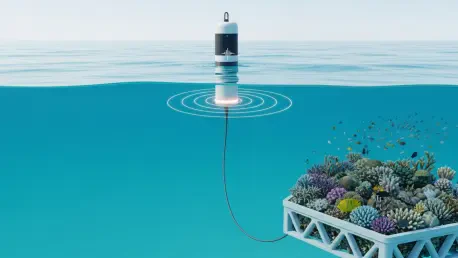
The deployment of distributed sensor networks across the Maldivian atolls has transformed the way marine biologists interact with the underwater environment. These low-power Internet of Things devices are strategically placed within the reef structures to provide a continuous stream of data regarding salinity, temperature, and light penetration levels. By utilizing edge computing, these sensors can process information locally before transmitting summarized reports to centralized hubs, significantly reducing the bandwidth required for satellite communication in remote areas. This granular level of detail allows for the immediate identification of heat stress pockets, enabling conservationists to deploy temporary shading or cooling measures before widespread bleaching occurs. Furthermore, machine learning algorithms are now capable of analyzing thousands of hours of acoustic data to assess reef health based on the sounds produced by various marine species, offering a non-invasive way to measure biodiversity.
Beyond stationary sensors, the use of autonomous underwater vehicles has become a cornerstone of the national marine management strategy. These drones are equipped with high-resolution multispectral cameras that map the seafloor in three dimensions, creating digital twins of the coral reefs that can be analyzed for structural integrity and growth rates over time. When paired with satellite imagery, these localized maps provide a comprehensive view of how sedimentation and coastal development are impacting offshore ecosystems. This dual-layered approach allows government agencies to enforce stricter environmental regulations by providing indisputable visual evidence of habitat degradation or recovery. Moreover, the automation of these surveys has drastically lowered the cost of large-scale monitoring, making it feasible to cover vast areas of the exclusive economic zone that were previously inaccessible to human divers. By centralizing this data, the Maldives is fostering a culture of scientific collaboration.
2. Ecological Resilience: Bioengineering and Strategic Transitions
Technological advancements have moved beyond observation and into the physical reconstruction of damaged marine habitats through the use of 3D-printed coral scaffolds. These structures are fabricated using pH-neutral materials that mimic the chemical composition of natural calcium carbonate, encouraging rapid colonization by coral larvae. In many restoration sites, these scaffolds are enhanced with Biorock technology, which involves passing a low-voltage electrical current through the metal framework to accelerate the calcification process. This method has proven to increase the growth rates of corals by up to five times, while simultaneously making them more resistant to thermal stress and physical damage from storms. By scaling these interventions, the Maldives is effectively building a resilient subterranean infrastructure that serves as a protective barrier against coastal erosion. The precision of 3D printing also allows for the creation of complex geometries that provide niches for specific fish species.
The transition toward a fully digitized and bioengineered marine conservation model necessitated a shift in how global stakeholders approached island resiliency. It became clear that the successful integration of smart technology required a parallel investment in local technical capacity and specialized education. Policymakers moved beyond isolated pilot programs to implement a nationwide digital infrastructure that supported real-time ecological auditing and decentralized funding models. For other coastal regions, the primary takeaway involved the necessity of combining hard engineering with biological insights to create durable environmental solutions. Moving forward, the focus turned to the standardization of data protocols to allow for seamless cross-border collaboration among oceanic nations. The Maldivian experience demonstrated that the survival of fragile ecosystems depended on the willingness to embrace high-tech interventions as a fundamental component of national security and economic stability.