
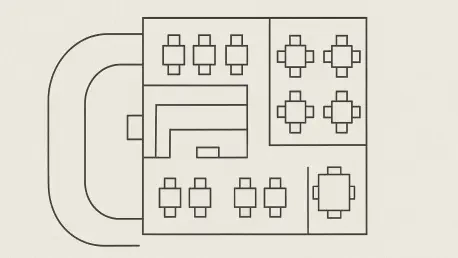
Navigating the complex world of American hospitality development requires an eagle-eyed focus on the data trails left by municipal planners and real estate scouts long before the first kitchen fire is lit. The landscape of American dining is undergoing a sophisticated transformation as the industry

The Philippine archipelago stands at a critical crossroads where traditional hospitality meets the high-octane demands of a hyper-connected global travel market, requiring a bold new direction. With tourism accounting for a substantial 8.1 percent of the national economy in 2025 and supporting over

Public Works spokesperson John Ogan noted that doubling the number of buses on the road has created a less crowded environment for passengers. This significant adjustment to Go COMO’s operations marks a turning point for Columbia’s transit infrastructure, which recently transitioned back to its

The hospitality industry is currently navigating a pivotal transition where the traditional reliance on manual administrative oversight is being replaced by sophisticated algorithmic solutions designed to prioritize human interaction over screen-based management. This evolution is driven by the

The twenty-year reliance on web-based dashboards is ending as property managers face architectural limits that prevent software from executing complex business strategies. For a long time, the short-term rental market functioned through manual oversight where Property Management Systems acted as

A request made to a housekeeper at ten in the morning should be remembered and acted upon by a concierge later that afternoon through a unified data layer. This specific level of synchronization represents the pinnacle of modern hospitality, where technology serves as an invisible but omnipresent