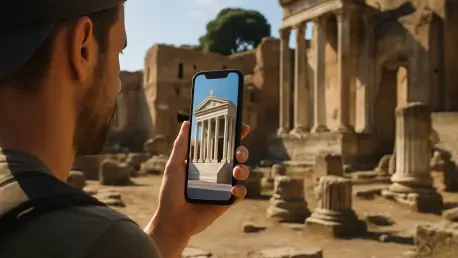

A new multilingual smartphone application will allow travelers to scan educational panels to unlock archival images and scholarly bibliographies throughout the archaeological site. This groundbreaking initiative represents a sophisticated integration of virtual reality, photorealistic 3D modeling, and extensive digital content, allowing visitors to move beyond the physical constraints of current ruins. Scheduled for official unveiling on November 9, 2026, at the Ostiense Museum, the project features high-level representation from the national Department for the Promotion of Cultural Heritage. By blending technical innovation with historical rigor, the park intends to breathe life into the ruins of the Roman city and its maritime infrastructure. This transformation turns static archaeological remains into an interactive journey, offering a new chapter in heritage preservation. The goal is to provide a seamless transition between the visible stone and the rich history.
Seamless Integration: The Mobile User Experience
At the center of this update is the Ostia Antica application, a free digital companion designed to enhance the on-site visitor experience through modern smartphone technology. By scanning educational panels located throughout the park, guests can access a massive library of archival images, historical drawings, and detailed bibliographies that offer a scholarly context for the site. To ensure a welcoming experience for international travelers, the platform offers full support in eleven different languages, including English, Spanish, Mandarin, and Japanese. This linguistic diversity allows a global audience to engage deeply with the narrative of the city without traditional barriers. Furthermore, the application provides visual documentation that was previously accessible only to researchers. The digital platform serves as a portable museum, delivering high-quality educational content directly to the hands of the curious traveler, making the history of the port city more accessible.
Beyond standard historical information, the technology provides a creative solution for viewing monuments that are currently closed for conservation or safety reasons. Through 360-degree panoramic photographs and virtual reconstructions, visitors can virtually step inside restricted spaces from their exact standing location. For those seeking a more tactile and immersive experience, the park has introduced standalone virtual reality headsets available at ticket offices or as part of a ticket package. These devices facilitate a deeper dive into the Roman world, where photorealistic graphics replace empty foundations with bustling streets and decorated interiors. This approach ensures that even the most fragile or inaccessible parts of the city remain open to public appreciation without risking the physical integrity of the structures. It represents a significant step forward in balancing heritage conservation with the demands of public education in the modern digital era.
Cultural Itineraries: Navigating the Urban Landscape
The project features two distinct virtual itineraries located within the arcades of the Ostia Theater, designed to guide visitors through the heart of ancient domestic and public life. The first route begins at the Porta Romana, the monumental entrance that once served as the primary threshold for those arriving from Rome. Visitors then travel along the Decumanus Maximus, the main artery of the city, which leads to the famous Baths of Neptune. Here, the technology allows for a close-up examination of the black-and-white mosaics and the various chambers of the bathing complex. The journey concludes at the Theater, where the VR experience recreates a poignant historical moment: sitting in the auditorium at sunset to watch the finale of a performance against the backdrop of the original marble stage. By integrating previous digital efforts, such as the S.T.Ar.T. Ostia project, the park provides a comprehensive narrative that bridges the gap between various archaeological eras.
A second tour shifts the focus to the daily routines and social structures of the Roman middle and lower classes along the Via di Diana. This specific route winds through the city’s famous multi-story apartment buildings, known as insulae, which housed a significant portion of the urban population. Users can explore the House of Diana and the Thermopolium, an ancient snack bar, providing a rare look at the culinary and residential habits of regular citizens. This path allows the public to understand the social hierarchy and urban density of a bustling port city during the height of the Empire. The experience culminates in the Forum Square, which served as the social and political epicenter where temples and administrative buildings stood. This focus on domesticity and common life complements the grandeur of public monuments, offering a well-rounded perspective of ancient society. This approach helps to humanize the ruins, making history as compelling as stories of emperors.
Engineering Wonders: The Maritime Hub Reconstruction
The technological transformation extends beyond the city walls to the nearby Imperial Harbors in Fiumicino, focusing on the massive logistical operations of the Roman Empire. Situated at Casale Torlonia, this specific experience shifts the narrative to the maritime infrastructure that once fed the capital. Using virtual reality, visitors can virtually board a Roman vessel and experience the arrival at Portus, witnessing the sheer scale of ancient engineering. This segment is particularly detailed, showcasing the towering facades of the massive warehouses and the constant motion of dockworkers handling diverse cargo from across the Mediterranean. By illustrating the sophistication of Roman maritime trade, the project highlights how the city of Rome managed its vast supply chains. The immersion into this bustling harbor environment provides an understanding of the economic power that underpinned the stability of the Empire. This experience serves to connect the urban life of Ostia with its essential maritime roots.
The simulation begins at sea, entering the Port of Claudius and navigating past the massive piers until it reaches the iconic hexagonal basin commissioned by Emperor Trajan. Through 360-degree panoramic views, the project illustrates the unique geometry and functional layout of the harbor system. This virtual voyage emphasizes the strategic importance of the port as a gateway for grain, luxury goods, and materials arriving from distant provinces. The photorealistic rendering of the ships and harbor facilities allows visitors to appreciate the technical mastery required to build such extensive structures in the open sea. By visualizing these sunken or buried landscapes, the technology reveals the hidden layers of history that are no longer visible to the naked eye. This maritime perspective offers a crucial missing piece of the archaeological puzzle, showing how the environment was transformed to meet the needs of the imperial capital, underscoring the role of Portus as the primary lung of the Roman world.
Strategic Innovation: Balancing Research and Accessibility
Park leadership has emphasized that these digital tools are built on a foundation of strict archaeological accuracy and scientific integrity. Director Alessandro D’Alessio noted that the goal was not to replace the physical experience of the ruins but to provide various levels of in-depth exploration for a diverse public. A major priority during the development phase was philological accuracy, ensuring that every virtual column, fresco, and street scene was backed by rigorous research and peer-reviewed data. This commitment to truth ensures that the technology serves as a legitimate educational tool rather than a mere entertainment feature. By involving historians and archaeologists in the design process, the park has managed to create a digital world that is both visually stunning and academically sound. This strategy positions Italy as a leader in the field of digital humanities, setting a benchmark for how modern technology can respect the past while making it accessible to audiences across the globe.
The implementation of these tools established a new standard for cultural heritage sites seeking to bridge the gap between ancient stone and modern digital expectations. By adopting the language of interactive media, the park successfully engaged a younger generation of tech-savvy travelers who required visual and dynamic learning environments. The initiative ensured that the legacy of the Roman Empire remained relevant and understandable for a diverse public, regardless of their prior historical knowledge. Officials recognized that the project functioned as a radical renewal of cultural outreach, providing actionable steps for other global landmarks to modernize their visitor experiences. The successful integration of scholarly research with consumer technology offered a sustainable model for preserving fragile environments while increasing public awareness. Ultimately, the project transformed Ostia Antica into a vibrant, accessible window into the peak of Roman civilization, showing that technology acted as the ultimate bridge.