
The inability of standard microwaves to dry a food surface has historically prevented chef-free establishments from serving popular items like burgers or chips. This limitation meant that hotel menus were often restricted to a repetitive selection of “wet” dishes, such as curries, stews, and pastas, which could be easily reheated without losing their basic appeal. However, as we navigate through 2026, the demand for high-quality, diverse dining options in hospitality has led to a significant technological breakthrough. Venues no longer have to compromise on texture or variety just because they lack a full-scale kitchen staff. Modern finishing systems have evolved to handle complex cooking parameters that previously required a professional chef’s intuition. This shift allows bars and room service operations to provide a full restaurant-style menu at any hour, ensuring that guests can enjoy crisp fries and toasted buns without the need for a chef on the payroll. This evolution ensures that even a basic bar can maintain a diverse and appealing menu at any hour of the day or night, improving the guest experience and driving higher secondary spending across the property.
1. Limitations of Single-Appliance Cooking: The Texture Challenge
Standard culinary finishing relies on understanding the relationship between heat and moisture. A dish that leaves a professional production kitchen fully cooked must be brought back to its serving temperature in a way that restores its original texture. A microwave effectively heats the water molecules inside the food, while a steam unit surrounds the product with moisture. While these methods are incredibly fast for dishes served in a sauce, they are fundamentally incapable of drying a surface. Without dry, moving heat, items like breaded chicken fillets or toasted buns lose their structural integrity and become unappealingly soft. To achieve a crisp finish, a kitchen must employ an air fryer or a convection unit. Until recently, managing these distinct heating requirements without a chef was considered too risky for most operators. The complexity of choosing the right equipment often resulted in simplified menus that lacked variety and failed to satisfy the evolving tastes of modern travelers who seek authentic textures.
The restriction to “bowl” foods like pasta or rice has historically limited the revenue potential of many hotel outlets. When a guest sees only a few wet dishes on a menu, they are less likely to stay for a full meal or order multiple items. A more diverse menu that includes small plates, burgers, and slow-cooked meats has been shown to increase average check sizes significantly. Modern hospitality data from early 2026 suggests that venues incorporating multi-textured menus have seen their sales grow by as much as three times compared to those using older, single-appliance setups. This growth is driven by the fact that guests can now find items they actually want to eat, rather than settling for what the kitchen can easily finish. By utilizing technology that expands the culinary range, venues are transforming their food service from a basic necessity into a profitable and attractive guest amenity. This shift is essential for staying competitive in a market where guest satisfaction is closely tied to dining variety and the availability of premium food.
2. The Scan-to-Cook Solution: Centralizing Kitchen Intelligence
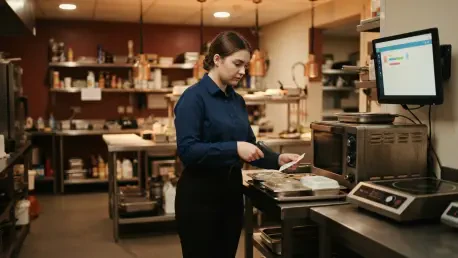
The Nova Chef Scan-to-Cook Station acts as the central brain of a modern, chef-free kitchen environment, controlling up to eight different appliances from a single interface. It integrates specialized machines like air fryers, combi ovens, and high-powered microwaves into a cohesive unit. This system removes the guesswork from the finishing process by storing the precise programs required for each individual dish. A staff member does not need to know which temperature or humidity level is required for a miso salmon or a beef burger; they simply interact with the touchscreen and let the station handle the technical execution. The station coordinates the timing and heat distribution, ensuring that every component of a meal reaches the guest in peak condition. This centralized approach allows a venue to operate a complex menu with minimal space and training requirements. It essentially provides the consistency of a production line while maintaining the high quality of a chef-led kitchen, making it a viable solution for various hospitality settings.
Moving technical decision-making from human operators to a digital system is the cornerstone of modern culinary consistency. In years past, the quality of a meal often depended on which staff member was working the shift and how well they understood the kitchen equipment. With the introduction of pre-programmed digital instructions, that variability has been eliminated. The chef who develops the recipes in a central, accredited kitchen determines the exact finishing parameters once, and those instructions are carried out perfectly at every location. This ensures that a brand’s reputation is protected regardless of where the food is served. Whether it is a busy city hotel or a small regional bar, the guest receives a meal that looks and tastes exactly as intended. This level of quality control was once impossible without a trained chef on-site, but by 2026, it has become the standard for efficient hospitality operations. The station bridges the gap between high-volume preparation and precise local execution, allowing for a scalable and reliable food service model.
3. Operational Procedure: Implementing the Finishing Workflow
Operating the Scan-to-Cook system is a streamlined process that begins with identifying the food item through a barcode scanner. Each meal kit is labeled with a unique code that corresponds to its specific finishing profile in the system’s database. Once the staff member scans the barcode, the interface displays the name of the dish and provides clear prompts on how to proceed. It specifically indicates which appliance should be used, such as an air fryer for crispiness or a microwave for sauced components. This visual guidance eliminates the risk of using the wrong heating method, which is a common error in traditional kitchen settings. By following these automated prompts, employees can manage multiple orders simultaneously with high accuracy. The interface is designed to be intuitive, requiring almost no previous culinary experience to master. This allows venues to maintain a high level of service even during periods of high staff turnover or when using temporary employees for special events or busy shifts.
Once the appliance is loaded and the cycle is initiated, the station takes over the management of the timing and heat intensity. The employee simply places the item in the machine and starts the pre-set program, which has been optimized for that specific dish. There is no need for manual timers or temperature adjustments, as the system handles every detail of the cycle. Most menu items are ready to be served within a window of three to ten minutes, providing a rapid turnaround that guests appreciate. After the cycle is complete, the final step involves plating the food according to established presentation standards. This straightforward workflow allows the staff to focus more on guest interaction and beverages.