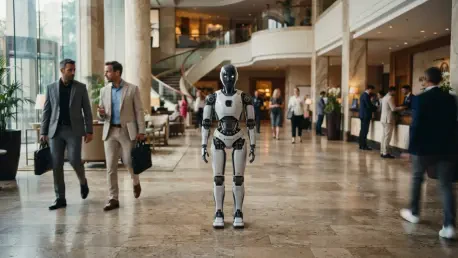

Humanoid robots are now moving beyond the novelty phase into functional service roles that provide genuine operational value for high-traffic hotel lobbies. On November 24, 2026, the global hospitality landscape underwent a significant transformation when YYForce Inc. deployed its proprietary-trained humanoid robot, “Six Seven,” at the Novotel Singapore on Stevens. This milestone marks the definitive shift from experimental machine learning to practical, embodied AI that manages complex interpersonal interactions in real time. By introducing these sophisticated units into public spaces, the industry is addressing a critical juncture where technology meets human-centric service. The deployment is not merely a technical showcase but a response to the persistent labor shortages and high operational costs that have challenged the service sector. This specific implementation demonstrates how automation can enhance the visitor experience by offering immediate assistance while ensuring human staff can dedicate their time to high-value interactions.
Technological Framework: Bridging Digital and Physical Realities
The operational success of “Six Seven” is primarily attributed to a sophisticated development workflow that utilizes NVIDIA Isaac Sim to bridge the gap between simulation and the physical world. This high-fidelity environment allowed the engineering team to conduct extensive synthetic training, validating the robot’s physical behaviors before it ever encountered a guest in a public lobby. By modeling complex hospitality scenarios within a virtual space, the system learned to navigate the unpredictable movements of a busy environment with remarkable precision. This preemptive training ensures that the robot can avoid obstacles, recognize human presence, and maintain safety protocols in dynamic environments where static programming would fail. Consequently, the transition from a laboratory setting to the Novotel lobby was characterized by a high degree of reliability and performance consistency. The use of such advanced simulation frameworks represents a fundamental change in how service robots are prepared for the reality of public interaction.
At the heart of the robot’s real-time responsiveness is the NVIDIA Jetson edge AI computing platform, which enables powerful onboard processing. This hardware choice is essential for hospitality applications because it facilitates low-latency AI inference, allowing the robot to process voice commands and gestures locally rather than relying on a distant cloud server. Because the processing occurs on the device itself, “Six Seven” can engage in fluid, natural conversations that mimic human reaction speeds, which is vital for maintaining guest engagement and trust. Furthermore, this local processing capability enhances security and reliability, as the robot remains functional even during periods of network instability. The integration of edge computing allows the unit to interpret subtle linguistic nuances and provide immediate, relevant feedback to guest inquiries. This synergy between robust hardware and intelligent software ensures that the humanoid unit serves as a truly interactive concierge rather than a mere digital kiosk with a physical shell.
Service Integration: Optimizing Lobby Management
Beyond its physical presence, the robot is fully integrated into a proprietary “Workforce OS” architecture that serves as a central intelligence hub for the property. This system allows “Six Seven” to act as a comprehensive concierge, providing guests with instant access to detailed information about on-site dining options and venue locations. By managing these routine inquiries, the robot alleviates the burden on front-desk staff during peak check-in periods. Additionally, the unit provides real-time updates regarding daily hotel events, ensuring that visitors are always informed of the property’s offerings. This level of automation does not replace the human touch but rather augments it by streamlining the information-gathering process. The efficiency gained through this integration allows hotels to maintain high service standards even during periods of high occupancy. The success of this pilot in 2026 serves as a blueprint for the period from 2026 to 2028, where such systems are expected to become standard in luxury hotels globally.
The strategic expansion of this technology is part of a broader vision to integrate embodied AI across various sectors, including retail and facility management. YYForce is using the data collected from its operations in Singapore and Malaysia to refine its AI models and scale its workforce platform internationally. By combining intelligent matching tools with physical hardware, the company seeks to provide a comprehensive ecosystem that addresses the global decline in service-sector labor. This integrated approach allows businesses to monitor performance metrics in real time, adjusting the deployment of humanoid units based on peak demand or specific guest feedback. The goal is to create a connected workforce where technology handles repetitive, data-intensive tasks, while humans focus on the nuance and empathy that machines cannot yet replicate. This evolution in workforce management is expected to redefine the operational standards for service organizations, offering a path toward sustainable growth in a competitive global marketplace.
Strategic Foresight: Navigating Implementation Hurdles
Despite the clear advantages of humanoid robotics, the transition to widespread adoption involves navigating significant operational and regulatory hurdles. Ensuring the consistent accuracy of AI-generated responses is paramount, as incorrect information can lead to guest frustration and potential safety concerns. Furthermore, the reliability of global hardware supply chains remains a critical factor for scaling these solutions, as the components required for high-performance units are often subject to economic shifts. Organizations must also contend with the complexities of data privacy and personal protection laws, which require strict protocols for how guest information is processed. Addressing these challenges requires a transparent approach to technology deployment, where guest trust is prioritized through clear communication and robust security measures. The move from controlled simulation environments to the unpredictable reality of public spaces is the ultimate test for these machines, requiring continuous monitoring to maintain peak performance.
In the final assessment of the project at Novotel Singapore on Stevens, the deployment of “Six Seven” represented a successful synthesis of edge AI and humanoid design. The initiative proved that robots could function as effective service partners, provided they were supported by a robust technological infrastructure and a clear operational strategy. To move forward, hospitality leaders should have conducted thorough feasibility studies to identify specific service gaps that automation could fill without compromising the brand’s personal touch. It was also essential that organizations invested in staff training to ensure a harmonious collaboration between human employees and their robotic counterparts. Future developments required a focus on modular hardware designs that allowed for easy maintenance and upgrades as AI capabilities continued to evolve. By prioritizing both technical reliability and emotional intelligence, the industry established a new benchmark for how technology could be used to elevate the guest experience while driving significant operational efficiencies.