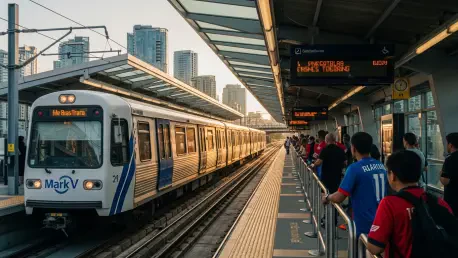

As hundreds of thousands of international soccer enthusiasts descend upon the Vancouver region this summer, the local transit authority is meeting the unprecedented demand by implementing a sophisticated multi-modal strategy designed to move massive crowds efficiently across the metropolitan area. The sheer scale of the event necessitates a departure from standard seasonal scheduling. With matches being held at BC Place, the pressure on the Stadium-Chinatown and Expo Line stations has reached a critical peak. To address this, officials have deployed a series of strategic interventions that blend increased physical capacity with high-tech operational management. This transformation is not merely about surviving a surge in ridership but about demonstrating how a world-class city can leverage major sporting events to accelerate long-term infrastructure goals. From additional train cars to extended service hours, the system is currently functioning at its highest capacity for the fans.
Enhancing Network Capacity and Operational Efficiency
SkyTrain and SeaBus: Optimized Performance
The primary backbone of the regional transit network, the SkyTrain system, has undergone a significant operational overhaul to accommodate the influx of passengers traveling to various fan zones and the primary stadium. By increasing the frequency of trains on the Expo and Millennium lines, the transit authority has ensured that wait times remain under three minutes during peak match hours. This rapid turnover is supported by the deployment of newer Mark V train sets, which offer increased standing room and improved HVAC systems to handle the summer heat and high occupancy. Technical teams are stationed at key junctions to provide immediate mechanical support, reducing the risk of service disruptions that could ripple through the entire grid. These enhancements allow the system to move upwards of twenty thousand passengers per hour away from the stadium district, effectively clearing the downtown core in record time while maintaining a high level of safety and passenger comfort.
Electric Bus Routes: High-Capacity Integration
Beyond the rails and water, the bus network has seen a massive injection of resources, particularly along the newly established RapidBus corridors that serve as high-capacity arteries for the city. These routes utilize dedicated bus lanes and signal priority technology to bypass traffic congestion, ensuring that travel times remain predictable despite the increased volume of private vehicles on the road. The introduction of articulated electric buses has allowed for greater passenger density on high-demand routes, such as the R4 line, which connects major transit hubs to peripheral celebration sites. Transit planners have utilized historical data to predict exactly where bottlenecks are likely to occur, allowing for the pre-positioning of “shadow buses” that can be deployed instantly to handle unexpected surges in ridership. This proactive approach ensures that no single point in the network becomes a permanent chokepoint, maintaining the overall flow of movement throughout the region.
Digital Innovation and Seamless Rider Experiences
Rider Experiences: Contactless and Multilingual Tools
To streamline the boarding process for international visitors who may not be familiar with local fare structures, the transit system has fully integrated advanced contactless payment options across all platforms. Passengers can now use their mobile wallets, smartwatches, or any major international credit card to tap and go at every fare gate and bus terminal. This technology eliminates the need for physical tickets or the purchase of regional transit cards, significantly reducing the queues at vending machines inside the stations. The backend processing system has been upgraded to handle millions of transactions per day with millisecond latency, ensuring that the flow of passengers remains uninterrupted. By adopting a “fare-capped” model, the system automatically calculates the best possible rate for the user, providing an economical solution for tourists who are making multiple trips throughout the city. This level of convenience is a key component in encouraging riders to use transit.
Analytics and Legacy: Predictive Network Management
The implementation of these advanced transit strategies established a new benchmark for how metropolitan regions managed large-scale international gatherings. Transit authorities successfully integrated hardware upgrades with software innovations to create a resilient network that handled record-breaking volumes without compromising safety. Moving forward, the lessons learned from this period suggested that a focus on modular capacity and real-time data integration was essential for modern urban mobility. Stakeholders recommended that city planners prioritized the permanent expansion of dedicated bus lanes to maintain the speeds achieved during the event. Furthermore, the widespread adoption of contactless payments demonstrated that reducing friction at the point of entry was the most effective way to increase public transit participation. These actions ensured that the infrastructure remained robust and adaptable. The commitment to a zero-emission fleet proved that operational goals were met.