
Sous Sous represents an ambitious exercise in adaptive reuse, turning a neighborhood landmark into a multidisciplinary destination for art, history, and experimental gastronomy. Located within the newly debuted Hotel Lucile in the heart of Silver Lake, the restaurant stands as a testament to a six-year restoration project led by the Casetta Group. By reclaiming a 1930s-era Romanesque church, the developers have moved beyond the conventional confines of hotel dining, creating a venue that functions as both a culinary sanctuary and a cultural cornerstone. This transformation does not merely provide a place to eat; it offers a profound exploration of how historical structures can be reimagined for modern public life without stripping away their spiritual or architectural gravity. In the rapidly evolving landscape of Los Angeles hospitality, this project serves as a bridge between the storied traditions of the past and the avant-garde sensibilities of the present. The result is a high-volume, high-concept environment that remains deeply rooted in its local context while reaching for international standards of excellence.
Architectural Restoration: Honoring the Ecclesiastical Past
The physical metamorphosis of the church’s nave into a contemporary dining hall required a delicate balance between structural preservation and modern utility. Venice-based architects and designers at Electric Bowery focused on maintaining the building’s 1931 Romanesque features, such as the soaring timber-beamed ceilings and the original stained-glass windows that now bathe the dining room in a kaleidoscope of filtered light. By treating the building as a primary artifact rather than a mere shell, the design team ensured that the verticality and grandeur typical of ecclesiastical architecture remained the centerpiece of the experience. This reverence for the space is palpable from the moment a guest enters, as the sheer scale of the room commands a level of attention rarely found in neighborhood bistros. The integration of 25-foot heavy curtains provides a necessary functional division, allowing the bar area and the main dining room to coexist while offering the flexibility to host intimate gatherings or large-scale community events within the same hallowed halls.
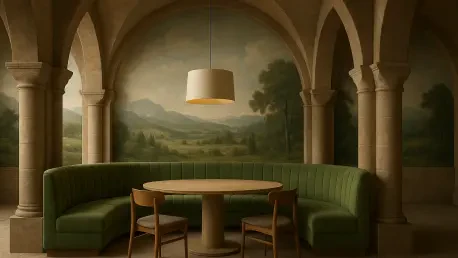
Beyond the broad strokes of structural restoration, the interior design utilizes texture and color to ground the ethereal architecture in the earthy reality of Southern California. Mossy green semi-circular banquettes line the perimeter of the room, creating pockets of intimacy that contrast with the open, airy nature of the central nave. The designers drew significant inspiration from the European intellectual history reflected in Silver Lake’s own street names, connecting the neighborhood’s literary roots with a sophisticated, continental aesthetic. Every element, from the dramatic wooden arches that echo the structural beams of the original roof to the custom lighting fixtures that provide a warm, amber glow, was chosen to reinforce the narrative of the building’s rebirth. This meticulous attention to detail extends to the smallest components of the service, including stained-glass coasters handcrafted by local artist Janel Foo, which serve as a tactile link between the building’s historic windows and the modern diner’s tabletop experience.
Aesthetic Philosophy: The Integration of Art and Space
The concept of the “living art gallery” is central to the identity of the venue, ensuring that the environment remains dynamic rather than static. Collaborating with the Rhett Baruch Gallery and Uprise, the management has committed to rotating art installations that challenge the traditional boundaries of restaurant decor. Currently, the space is anchored by two massive hand-painted murals by Erin Lynn Welsh, which depict the rugged and evocative landscapes of Los Angeles’ East Side. These works do not simply hang on the walls; they participate in a dialogue with the building’s history, juxtaposing the permanence of the 1930s stone and wood with contemporary interpretations of the surrounding environment. This multidisciplinary approach transforms a simple dinner into an immersive cultural event, where the visual stimulation of modern art is as integral to the evening as the menu itself. By providing a platform for artists like Thai Mainhard and Harlan Hue, the restaurant fosters a unique ecosystem where the creative energy of the community is reflected back to the patrons.
This commitment to artistic integration serves a dual purpose, functioning as both an aesthetic choice and a strategic community engagement tool. By hosting artist talks and literary gatherings, the venue intends to function as a secular community hub, mirroring the original social role of the church. This effort to maintain the building’s status as a gathering place is essential for ensuring that the project is viewed as a contribution to the neighborhood rather than a generic luxury imposition. The interplay between the fixed historical elements and the fluid, rotating art creates a sense of discovery that encourages repeat visits, as the space literally changes over time. This evolution prevents the grandeur of the Romanesque architecture from becoming imposing or monotonous, instead keeping the atmosphere vibrant and reactive to the current trends in the Los Angeles art scene. The intersection of architectural history and contemporary creativity thus becomes the primary driver of the restaurant’s identity, setting a new standard for how multidisciplinary spaces can thrive within an urban setting.
Culinary Innovation: The Convergence of Two Souths
The kitchen is led by Chef Patrick Costa, whose culinary vision is defined by the unexpected intersection of the American Southeast and Southern France. Moving away from the Italian-inspired menus of his previous ventures, Costa has developed a “Two Souths” philosophy that emphasizes the shared coastal heritage and agricultural bounty of these distinct regions. This approach utilizes the technical precision of French cooking to elevate the soulful, often rustic traditions of the American South, all while remaining firmly committed to the seasonal produce of California. By focusing on brightness, acidity, and the inherent quality of raw ingredients, the kitchen avoids the heavy, cream-based sauces that can often weigh down traditional continental cuisine. Instead, the menu prioritizes seafood-forward profiles and vegetable-centric preparations that feel appropriate for the local climate and the sophisticated palates of Silver Lake residents. This thematic consistency allows the restaurant to tell a coherent story that spans continents while remaining grounded in a very specific, personal narrative.
This fusion of regional identities is not merely a stylistic gimmick but a reflection of the diverse backgrounds of the culinary team. Drawing from his own roots in the Chesapeake Bay and Virginia, Costa integrates ingredients and techniques that are often overlooked in high-end Los Angeles dining. The presence of espelette-crusted oysters and zucchini carpaccio highlights a commitment to global influences, while dishes like hushpuppies served with serrano chili and honey butter provide a nostalgic nod to traditional Southern hospitality. This duality creates a menu that is both challenging and comforting, offering diners the opportunity to explore new flavor combinations within a recognizable framework. By sourcing primarily from North American waters through specialized purveyors, the kitchen ensures that the quality of the seafood remains the focal point of the dining experience. The result is a culinary program that feels uniquely situated in the present moment, reflecting a broader industry trend toward hyper-regionality and the exploration of sub-cultural culinary overlaps.
Signature Gastronomy: Synthesizing Global and Local Flavors
The thematic anchor of the dining experience is a signature bouillabaisse that serves as a literal and figurative melting pot of the restaurant’s influences. This dish represents a sophisticated synthesis of a traditional Southern shrimp boil and a classic French seafood stew, incorporating chorizo, new potatoes, halibut, mussels, and clams. The presentation involves a saffron-infused fish fumet poured tableside, a theatrical touch that emphasizes the freshness and aromatic complexity of the preparation. Accompanied by crusty bread and a rich rouille, the dish demonstrates how disparate cultural traditions can be harmoniously integrated through skillful execution. It is a bold statement of the kitchen’s intent, proving that the soulful heart of coastal American cooking can be refined through the lens of European technique without losing its essential character. This signature offering has quickly become the defining element of the menu, encapsulating the “Sous Sous” mission in a single, well-balanced bowl.
Complementing the seafood-heavy offerings are dishes that reimagine American classics through a lens of French refinement. The “Le Burg” is a notable example, elevating the standard cheeseburger with the addition of caramelized onions and a house-made dijonnaise, served on a perfectly toasted bun. This inclusion ensures that the menu remains accessible to a wide variety of diners while maintaining the high standards of the kitchen’s technical output. Similarly, the rainbow trout with a blackened polenta crust showcases a mastery of texture and heat, balancing the delicate flavor of the fish with a bold, Southern-inspired coating. Every plate is designed to reflect the literal translation of the restaurant’s name—”Sous Sous” or “below”—referencing the southern geographic influences that guide the culinary direction. By maintaining this focus, the kitchen creates a cohesive narrative that guides the diner through a series of courses that feel interconnected, rather than a disparate collection of unrelated dishes.
Beverage Craft: A Liquid Tribute to Regional Traditions
The beverage program, curated by Lee Zaremba, functions as a liquid tribute to the rich cocktail heritage of New Orleans, which is widely regarded as the historical epicenter of modern mixology. The drink menu is designed to be both playful and technically rigorous, offering reinterpreted versions of classic recipes that align with the kitchen’s “Two Souths” philosophy. For instance, the “Sazerac-ish” takes the traditional rye-based cocktail and infuses it with toasted coconut, providing a subtle, tropical undertone that softens the drink’s characteristic bite. Another standout is the “Georgia Peach,” a modern riff on the 1850s-era Brandy Crusta that features Cognac and a malted peach liqueur, finished with a meticulously sugar-encrusted rim. These selections are not merely drinks; they are historical dialogues that connect the cocktail culture of the American South with the refined spirits of France, mirroring the complexity of the food menu and enhancing the overall narrative of the venue.
In addition to spirits, the bar emphasizes savory and garden-fresh components that reflect the agricultural focus of the restaurant. The Fried Green Tomato Margarita is a prime example of this innovative approach, utilizing green tomato and Old Bay seasoning to create a savory, complex cocktail that echoes the flavors of a classic Southern appetizer. This commitment to unconventional pairings ensures that the beverage program remains as experimental and engaging as the culinary output. The list also includes a robust selection of zero-proof options and draft beers sourced from local Los Angeles producers, such as Skyduster, which reinforces the restaurant’s commitment to the immediate community. By offering a diverse range of beverages that cater to both the traditionalist and the adventurous drinker, the bar becomes a destination in its own right, further solidifying the venue’s status as a multidisciplinary social hub. This integration of local sourcing and global inspiration ensures that the beverage program is an essential component of the holistic dining experience.
Future Considerations: Redefining the Community Hub
The conclusion of the initial phase of operation demonstrated that the success of the project relied on its ability to merge historical preservation with a forward-thinking business model. The management team prioritized the creation of a space that felt inclusive and community-oriented, rather than just an exclusive hotel amenity. By positioning the restaurant as a multidisciplinary venue for art and history, they successfully attracted a diverse clientele that valued both the aesthetic beauty of the 1930s architecture and the technical excellence of the culinary program. This strategy proved effective in establishing the venue as a neighborhood landmark, ensuring its long-term viability in a competitive market. The integration of local artists and artisans into the fabric of the business model created a sense of shared ownership among the residents of Silver Lake, which was instrumental in fostering a loyal customer base. The project essentially redefined the potential for adaptive reuse in the hospitality industry, providing a blueprint for how historic properties could be saved through creative and culturally relevant programming.
Looking ahead, the next steps for the project involve expanding its role as a cultural incubator through a series of planned initiatives. The introduction of a regular series of literary salons and artist-in-residence programs will further cement the restaurant’s identity as a “living gallery.” These efforts will ensure that the space remains a site of active intellectual and creative exchange, rather than a static relic of the past. Additionally, the culinary team planned to deepen its partnerships with regional sustainable fisheries and regenerative farms, aiming to lead the industry in transparent and ethical sourcing practices. This commitment to environmental and social responsibility is expected to become a core pillar of the brand, resonating with a modern consumer base that increasingly values transparency and local impact. By continuing to innovate at the intersection of history, art, and gastronomy, the venue is poised to remain a vital part of the urban fabric for years to come, demonstrating that the most successful modern businesses are those that honor their heritage while actively participating in the creation of a sustainable and creative future.