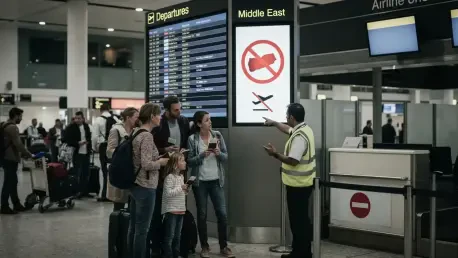

Global government advisories now emphasize that any attempt to enter Yemen is a gamble against overwhelming odds where the price of failure is often life-threatening. The security landscape has reached a point where traditional risk management no longer applies, as the overlap of military conflict and institutional decay creates a vacuum of safety. By late 2026, the international community has transitioned from cautious warnings to absolute prohibitions, reflecting a total erosion of the infrastructure necessary to protect foreign lives. This unprecedented shift is not merely a reaction to sporadic violence but a recognition of a systemic collapse that has rendered the entire nation a high-risk zone. Whether one considers the urban centers or the remote coastlines, the absence of functional authority means that any crisis encountered on the ground will likely remain unresolved. Consequently, the world’s most powerful nations have aligned their diplomatic messaging to ensure that no traveler remains under the illusion that any part of this territory offers sanctuary from the surrounding volatility.
A Synchronized Global Response: Unified Diplomatic Warnings
The United States, the United Kingdom, Canada, and Australia have officially synchronized their travel advisories to the highest possible alert levels in a rare display of diplomatic alignment. As of October 2026, these nations have issued a Level 4: Do Not Travel mandate, citing a volatile mixture of terrorism, civil unrest, and the high prevalence of kidnapping. This coordinated stance serves as a definitive warning that the environment is far too unstable for any form of visit, regardless of the traveler’s intent or past experience level. The United States Department of State explicitly notes that the absence of a functioning embassy in Sana’a means there is virtually no capacity to provide emergency services to citizens on the ground. This lack of a safety net is a critical factor in the advisory, as it highlights that once an individual crosses the border, they are essentially beyond the reach of their home government’s protective and legal frameworks.
The United Kingdom and Australia have further clarified the severe consequences of ignoring these directives, noting that entry into Yemen likely voids standard travel insurance policies. This leaves individuals personally liable for the immense costs associated with medical emergencies or private evacuations, which can reach hundreds of thousands of dollars if a specialized security team is required. Because commercial flight options are dwindling and often require military clearance, these governments are urging any remaining foreign nationals to seize any available means of exit immediately before all remaining corridors are closed. The warnings emphasize that the window for departure is narrowing rapidly as regional tensions mount. For those who choose to stay, the risk of becoming trapped in a conflict zone is no longer a theoretical possibility but a statistical certainty. Consequently, the fiscal and physical risks of remaining in the country have become insurmountable for any person or organization.
Military Escalation: The Resumption of Active Hostilities
A major factor in the heightened warning levels is the total collapse of the fragile ceasefire that once offered a temporary reprieve between the Saudi-led coalition and Houthi forces. Throughout 2026, military operations have intensified significantly, with coalition forces resuming targeted strikes on critical infrastructure and subterranean facilities used for weapons storage. These air strikes and the resulting ground combat have erased previous gains in stability, turning the country back into an active war zone where front lines shift without any prior notice. The resumption of high-intensity warfare means that even areas previously considered quiet are now subject to sudden bombardment or tactical incursions. This instability makes it impossible for observers to designate any specific “safe zones” within the mainland, as the strategic objectives of the warring factions often involve the sudden seizure of transportation hubs and urban centers that were previously stable.
This conflict has also spilled into the Red Sea, specifically targeting the Bab al Mandab Strait, which is one of the world’s most critical maritime corridors. Houthi forces have escalated their attacks on commercial and merchant shipping, creating a high-risk maritime environment where misidentification is a constant threat to any vessel in the vicinity. The reach of these hostilities has expanded beyond Yemen’s borders, with reprisal attacks affecting regional security and prompting neighboring countries to increase their own defensive postures. This maritime volatility further complicates the extraction of foreign nationals, as sea routes are now just as dangerous as the contested land borders. The inclusion of maritime risks in global travel warnings reflects a shift in the nature of the conflict, which is now impacting global trade and naval security. For travelers, this means that even attempting to transit near Yemeni waters by private vessel or commercial ship carries an extreme risk of being caught in crossfire.
Internal Fragmentation: The Breakdown of Governance
Internal governance in Yemen has fragmented into a patchwork of territories controlled by local security forces, tribal groups, and Houthi units, none of which provide a cohesive legal structure. In the absence of a centralized authority, arbitrary arrests and enforced disappearances have become a common risk for anyone moving through the country, especially those suspected of having foreign ties. This lack of legal oversight means that travelers have no recourse if they are detained or targeted by various factions operating independently of any recognized government. The tribal nature of many regions further complicates the security situation, as local allegiances can shift rapidly, leading to the sudden detention of foreigners for use as political leverage. This environment of lawlessness is one of the primary reasons why humanitarian and diplomatic organizations have restricted their movements, as the rules of engagement are dictated by local commanders rather than international law.
The physical infrastructure of the nation is in a state of advanced decay, making overland movement an exercise in extreme risk. Beyond the threat of direct combat, the prevalence of landmines and unexploded ordnance on both major highways and rural tracks poses a constant danger to vehicles and pedestrians alike. Chronic fuel shortages and poor driving standards, combined with the sudden closure of mountain routes due to military activity, ensure that even basic transportation is unreliable and potentially life-threatening. Many roads have been intentionally sabotaged or are being used as defensive positions, making travel between cities a multi-day ordeal fraught with checkpoints and potential ambushes. The total collapse of road maintenance means that natural hazards, such as flash flooding or rockslides, remain uncleared for months, adding another layer of danger to an already perilous journey. For anyone attempting to navigate this landscape, the logistical challenges are often as deadly as the active conflict.
The Socotra Paradox: Debunking the Island Safety Myth
Despite the general chaos on the mainland, the island of Socotra has been marketed by some niche operators as a safe haven due to its remote location and unique biodiversity. However, global governments have moved to aggressively debunk this myth, explicitly including the island in their highest-tier travel mandates. The isolation of Socotra does not exempt it from the administrative collapse of the Yemeni state, and the security risks there remain significant due to the presence of competing local militias. While the island may appear peaceful in marketing materials featuring its famous Dragon’s Blood trees, the reality is a tense standoff between various regional interests that could boil over into violence at any moment. Furthermore, the lack of medical facilities on the island means that even a minor injury can become a life-threatening crisis, as there are no reliable means of medevac to the mainland or neighboring countries under the current security protocols.
A critical issue facing potential visitors to Socotra involves the legality of entry documents and the rising trend of visa fraud. Many visas issued by third-party tour operators are unofficial or legally invalid, as only the internationally recognized Yemeni government holds the authority to grant entry. Travelers using unauthorized paperwork find themselves in legal jeopardy, operating outside the protection of international law and without any possibility of consular support should they encounter trouble. Being caught with invalid documentation can lead to immediate detention or expulsion under harsh conditions, with no diplomatic representative available to intervene. This legal ambiguity is a deliberate trap used by unscrupulous operators to exploit the desire for “off-the-beaten-path” travel, often leaving visitors stranded without a valid way to leave. Governments warn that Socotra is an integral part of the Yemeni crisis and that its geographic distance from Sana’a does not provide a shield from the country’s overall instability.
Logistical Breakdown: The Erasure of Support Networks
The practical realities of travel to Yemen have become insurmountable as mainstream tour operators and airlines have entirely withdrawn their services from the region. The country’s airspace is currently restricted and monitored by military coalitions, meaning that any flight—humanitarian or otherwise—requires specific permissions that are notoriously difficult to obtain. This lack of commercial access makes a rapid departure during an emergency nearly impossible for private citizens, who would be forced to rely on irregular and dangerous land routes. Even if a flight is scheduled, it is subject to sudden cancellation if the security environment changes, leaving travelers stuck in a combat zone indefinitely. The withdrawal of international logistics firms also means that the delivery of essential goods, such as food and clean water, is inconsistent, forcing any visitor to compete with the local population for rapidly dwindling and increasingly expensive resources.
Furthermore, the domestic medical system is in a state of total catastrophe, with most facilities unable to provide even basic trauma care. Hospitals that remain open are plagued by severe shortages of basic supplies, electricity, and the specialized equipment necessary to treat serious illness. When coupled with the fact that insurance providers will not cover incidents in a Level 4 zone, the financial and physical stakes of entering the country are viewed by international agencies as an unacceptable gamble. There are almost no qualified surgeons or specialists remaining in the country, and the few functioning clinics are overwhelmed by the needs of the local population. For a foreigner, a medical emergency in this environment is likely to be fatal, as there is no reliable way to be stabilized or transported to a modern facility in another country. This systemic failure of the healthcare sector is perhaps the most compelling reason why travel to the region has been deemed fundamentally impossible by security experts.
Strategic Observations: Navigating Future Security Realities
The international community concluded that the window for safe engagement with Yemen closed as the conflict transitioned into a permanent state of fragmentation. Organizations that previously managed risks through local partnerships found that these networks dissolved under the pressure of renewed coalition strikes and shifting tribal loyalties. It became clear that no amount of private security or local knowledge could mitigate the systemic dangers posed by a state in total collapse. Consequently, the focus shifted toward remote monitoring and the use of satellite intelligence to track humanitarian needs from a distance. The decision to maintain the highest warning levels served as a necessary barrier to prevent further hostage situations and medical tragedies that would only strain already limited diplomatic resources. For those seeking to assist the region, the primary recommendation moved toward supporting international aid agencies operating from neighboring hubs rather than attempting any physical presence.
Moving forward, any individual or organization considering involvement in the region must prioritize digital security and remote communication over physical entry. The historical data gathered throughout 2026 indicated that the most successful interventions were those conducted through verified local proxies who already possessed the necessary cultural and survival infrastructure. For the general public, the most actionable step remained a strict adherence to government advisories and a total avoidance of any operator promising “safe” access to contested zones. It was established that the preservation of life in such a volatile theater depends entirely on the recognition of one’s own limitations in the face of a total institutional breakdown. By choosing to support Yemeni causes through legitimate international channels, global citizens contributed to the stabilization of the region without adding to the complexity of the security crisis. The lessons learned during this period of intense volatility provided a blueprint for managing travel risks in other collapsing states across the globe.