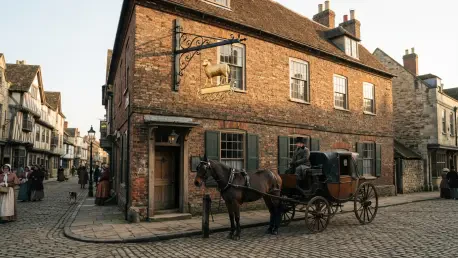

While Ohio was entering the Union in 1803, Jonas Seaman was busy investing four dollars to secure a hospitality license for a log cabin tavern in Lebanon. This initial investment laid the foundation for what would become the state’s oldest continuously operating hotel and restaurant, a feat achieved by few other American institutions. At the time of its founding, the region was a rugged frontier where stagecoaches were the primary mode of long-distance travel, making such establishments vital waystations for weary pioneers. To accommodate travelers who were often unable to read, Seaman utilized visual branding by hanging a sign featuring a painted golden lamb, a symbol that remains synonymous with the venue’s identity today. This landmark has successfully transitioned from a rustic shelter into a sophisticated cultural hub, surviving the industrial revolution, multiple economic depressions, and the radical shifts of the modern digital age. Its survival is not merely a matter of historical luck but the result of deliberate architectural evolution and a commitment to preserving the pioneering spirit that once defined the American Midwest.
A Century of Stewardship and Presidential Legacies
The Portman Family: Stewardship and Heritage
The contemporary history of the inn is inseparable from the Portman family, who recently celebrated a century of continuous ownership that began when Robert Jones acquired the property in 1926. Jones was a visionary who recognized that the value of the establishment lay in its historical authenticity, a realization that prompted him to curate an extensive collection of Shaker furniture and period antiques. His dedication to this vision was tested early on by a significant fire in 1928, an event that could have ended the inn’s story had he not committed to a meticulous restoration that honored its nineteenth-century roots. Over the decades, the stewardship passed through the family to the current generation, including former U.S. Senator Rob Portman and his siblings, Wym and Ginna. Their collective leadership has focused on maintaining a delicate balance between the high costs of heritage preservation and the functional requirements of a modern hospitality business.
Maintaining a structure that has stood for over two centuries requires a specialized approach to facility management and a deep respect for the architectural integrity of the past. The Portman family has treated the building less like a standard commercial asset and more like a public trust, ensuring that every renovation respects the original brickwork and structural layout of the 1815 expansion. This philosophy has allowed the venue to remain a vibrant part of the Lebanon community, serving as a reliable anchor for local commerce and tourism. By reinvesting profits into long-term preservation projects rather than focusing solely on short-term gains, the family has created a sustainable model for heritage-based hospitality. This level of dedication ensures that the historical character of the inn is not diluted by modern trends, providing guests with an experience that feels genuinely connected to the early days of Ohio’s statehood.
Political Crossroads: Where Presidents and Authors Met
The halls of the inn serve as a physical record of American political and literary history, having hosted a staggering twelve United States presidents throughout its operational life. From the early visits of figures like William Henry Harrison to modern appearances by political leaders such as Mitt Romney, the venue has functioned as a neutral ground for diplomacy and public engagement. This political significance is not limited to those who held the nation’s highest office; influential figures like Henry Clay also utilized the inn as a strategic stopping point during the height of the stagecoach era. The presence of these leaders within the walls of a small-town Ohio tavern highlights the central role the establishment played in the nation’s westward expansion. Each visit has contributed to a collective narrative of power and influence that continues to attract history enthusiasts and political scholars who seek to walk the same floorboards as the nation’s founders.
Beyond the political realm, the establishment has long been a sanctuary for literary giants and cultural icons seeking a quiet reprieve from their travels. Renowned authors such as Charles Dickens, Mark Twain, and Harriet Beecher Stowe found inspiration and rest within these walls, contributing to the inn’s reputation as a crossroads of intellectual exchange. Charles Dickens famously documented his travels through the American frontier, and his stay at the Lebanon inn remains a point of pride for local historians. Even in the modern era, the guest list has expanded to include figures like astronaut Neil Armstrong and contemporary artists, proving that the inn’s appeal transcends specific eras or professional fields. This long-standing tradition of hosting influential thinkers and creators has cemented the venue’s status as a living museum, where the cultural history of the nineteenth and twentieth centuries remains accessible to every visitor who enters the lobby.
The Human Element and Culinary Traditions
Employee Culture: The Secret of Longevity
While the physical structure of the inn is impressive, its long-term success is largely driven by a unique internal culture often described as the “Golden Lamb Family.” This concept of employee loyalty is exemplified by individuals like De-De Bailey, who has dedicated fifty years of service to the establishment, beginning as a young hostess and eventually managing private dining operations. Such longevity is rare in the high-turnover hospitality industry and speaks to a management philosophy that prioritizes the professional growth and personal well-being of the staff. During the centennial celebrations of the Portman family ownership, more than two hundred current and former employees returned to Lebanon, some traveling across the country to reconnect with their former colleagues. This sense of belonging creates a consistent level of service that modern corporate chains often struggle to replicate, as the staff feels a personal stake in the inn’s continued prosperity.
The stories of the people who work behind the scenes are as much a part of the inn’s legacy as the famous guests who stay in the rooms above. Former manager Fred Compton even documented these internal narratives in a published history, detailing the daily operations and personal connections that have sustained the business through the decades. This dedication to documenting the human element ensures that the institutional knowledge of the inn is passed down from one generation of workers to the next. When guests dine at the restaurant, they are served by individuals who are often trained as amateur historians, capable of sharing anecdotes about the building’s past. This creates a service environment where the guest is not just a customer but a participant in a long-standing tradition of Midwestern hospitality. The stability of the workforce acts as a safeguard against the loss of the inn’s unique character, providing a bridge between the historical environment and the modern diner.
Culinary Roots: The Farm-to-Table Tradition
The culinary identity of the restaurant is anchored in a “scratch-made” philosophy that honors traditional American flavors while embracing modern agricultural standards. Iconic dishes such as the signature sauerkraut balls and crispy fried chicken have remained staples for generations, providing a sense of consistency for families who return year after year for holiday meals. However, the kitchen has also evolved to meet contemporary demands for transparency and quality through a robust farm-to-table program. The Portman family operates a 300-acre farm just outside Lebanon, which serves as a primary source for fresh greens, berries, and other seasonal ingredients. This hyper-local supply chain allows the chefs to design menus that reflect the actual harvest of the Ohio landscape, marked on the menu with a specific icon to denote farm-fresh origins. This integration of local agriculture ensures that the food served is not only high in quality but also deeply connected to the regional economy.
Managing the logistics of a restaurant that can serve over 1,200 guests on a single holiday like Thanksgiving requires a sophisticated operational strategy that does not sacrifice quality for volume. The recent expansion and renovation of the Black Horse Tavern, including the addition of a southern-style outdoor porch, have allowed the venue to increase its capacity while maintaining an intimate atmosphere. By offering a range of dining experiences—from formal dining rooms named after presidents to a casual tavern with a fireplace—the establishment remains relevant to a diverse demographic of patrons. The focus remains on providing comfort food that feels like it was prepared in a home kitchen, regardless of the scale of the operation. This commitment to culinary excellence, supported by a private farm and a highly trained kitchen staff, ensures that the restaurant remains a destination in its own right, separate from its historical status as a hotel.
Living in History and Future Resilience
Museum Living: Merging History with Luxury
The inn’s guest accommodations offer a rare opportunity for visitors to experience history firsthand through seventeen rooms, each named after a notable figure who once stayed at the property. These rooms are meticulously decorated with period-appropriate antiques, yet they are integrated with modern luxuries that 2026 travelers expect, such as heated marble floors and high-end walk-in showers. This strategic blending of old-world charm and contemporary comfort ensures that the inn remains competitive in a market where guests often choose between the convenience of modern chains and the character of boutique hotels. The goal of the innkeeper and the design team is to make guests feel as though they are staying in a working museum without the discomforts typically associated with historic buildings. This requires a constant cycle of maintenance and thoughtful upgrades to the building’s infrastructure, ensuring that the plumbing, electrical, and climate control systems meet modern standards while remaining hidden from view.
For the community of Lebanon, the inn serves as more than just a place to sleep; it is a repository of collective memories and a focal point for local celebrations. During the winter months, the building undergoes a massive aesthetic transformation, with elaborate holiday decorations that draw visitors from across the Midwest. The annual horse-drawn carriage parade in December is the busiest day of the operational year, turning the city into a scene that resembles a classic film. These seasonal traditions are vital for the inn’s economic health and its role as a social anchor, as multiple generations of families gather here to mark their own milestones. By serving as the backdrop for weddings, anniversaries, and community meetings, the establishment remains deeply woven into the social fabric of the town. This emotional connection from the local population provides a layer of resilience that purely commercial ventures rarely possess, as the community feels a collective responsibility to support the landmark.
Future Sustainability: Strategy for the Next Era
The long-term resilience of the establishment was reinforced through a series of strategic decisions that prioritized authenticity over rapid expansion. The management team recognized that the unique selling proposition of the inn resided in its status as Ohio’s oldest continuously operating hotel, a title that became more valuable as modern hospitality moved toward homogenization. By resisting the urge to modernize the lobby’s historical layout, they preserved the “time-travel” experience that attracts tourists seeking an escape from the digital world. The stewardship analyzed the evolving preferences of younger travelers and implemented digital storytelling initiatives that highlight the property’s historical significance through accessible online platforms. These efforts were designed to engage a new generation of patrons who value authentic experiences and locally sourced goods, ensuring that the customer base remains diverse and sustainable for the coming decades.
The leadership group established a comprehensive plan to secure the agricultural supply chain by expanding the output of the 300-acre family farm, which guaranteed a consistent source of fresh ingredients through 2030 and beyond. They also formalized a training program for new staff members that emphasized the building’s architectural history and the specific narratives of its famous guests. This move ensured that the institutional knowledge of the inn would not disappear with the retirement of long-tenured employees. The decision was made to integrate subtle technological improvements, such as advanced energy-efficient lighting and smart climate controls, which reduced the operational footprint without altering the historic aesthetic. These actionable steps reflected a forward-looking perspective that valued the lessons of the past while preparing for the logistical challenges of the future. By maintaining this balance, the institution confirmed its ability to serve as a bridge between the pioneer era and the modern world, protecting its legacy for the next century of Ohio history.