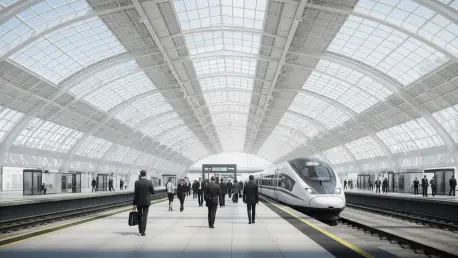

The realization that traditional highway expansion and short-haul aviation are no longer sustainable for modern urban growth has triggered an unprecedented global pivot toward high-speed rail development. By June 2026, the international community witnessed a monumental shift in transport policy as the United States, the United Kingdom, Brazil, and several European nations collectively committed over $100 billion to overhaul their respective rail networks. This initiative represents a decisive departure from the automotive-heavy transit models that defined the previous century, effectively positioning rail as the backbone of both domestic and international mobility. Policymakers have recognized that advanced rail technology is the most efficient solution for mass transit, offering a sustainable way to move large populations while meeting the rigorous economic demands of the modern era. This surge is not merely a technical update of existing tracks; it is a profound re-prioritization of long-term mobility.
Modernizing the North American Transport Hubs
Within the United States, the focus has shifted dramatically from the continuous expansion of highway systems to a comprehensive modernization of the rail infrastructure. The Northeast Corridor, connecting the primary hubs of Boston and Washington, D.C., has become the focal point of a massive federal funding effort designed to address long-standing vulnerabilities. Recent infrastructure challenges highlighted the fragility of the regional transport network, necessitating a rapid infusion of capital to enhance capacity and safety. By integrating advanced signaling and upgrading track quality, officials projected a significant increase in regional productivity and the generation of high-level engineering positions. This commitment to the Northeast Corridor serves as a template for other regions, proving that rail can alleviate the pressure on overcrowded airports and highways. The investment is intended to ensure that the most densely populated region of the country remains economically competitive.
This momentum toward rail expansion is not limited to the United States but is spreading throughout the Western Hemisphere, with significant projects emerging in Canada and Brazil. Canada is currently prioritizing the modernization of its freight corridors while simultaneously enhancing regional passenger services to bridge the vast distances between its major economic centers. Meanwhile, Brazil has committed substantial resources to commuter networks within its primary urban hubs, specifically targeting the congestion in São Paulo and Rio de Janeiro. These efforts illustrate a regional consensus that rail is a fundamental tool for economic stability and organized urban development. By reducing reliance on private vehicles and improving the efficiency of freight movement, these nations are fostering a more resilient infrastructure that can support growth. The integration of modern rail systems is helping to redefine urban connectivity across the Americas, creating a more cohesive and accessible environment for businesses.
Integrating Europe: A Borderless Transit Vision
While North American efforts focus on upgrading domestic corridors, Europe is intensifying its pursuit of a seamless and borderless rail network that aims to directly compete with regional aviation. Leading nations such as France, Switzerland, and Poland are spearheading initiatives to standardize technical operations and simplify ticketing systems across national borders. The ultimate objective is to make international train travel so efficient and cost-effective that it becomes the default choice for travelers over short-haul flights. This transition is being driven by the realization that aviation is increasingly impractical for continental trips of moderate distance. By harmonizing rail standards, Europe is effectively removing the friction that once hindered international travel, allowing for a more integrated continental economy. This strategy involves not only the construction of new high-speed lines but also the optimization of existing routes to ensure that transit times remain competitive with air travel.
European nations are demonstrating that various operational strategies can lead to substantial rail success when tailored to specific market needs. Spain has recently seen a dramatic decrease in ticket prices and a corresponding increase in service quality by encouraging competition between multiple rail operators. This liberalized approach has made high-speed travel accessible to a broader segment of the population, driving record ridership numbers. In contrast, Italy has successfully balanced its high-speed prestige projects with a systematic modernization of regional lines, ensuring that smaller towns remain connected to major economic hubs. This dual focus prevents the isolation of rural areas while maintaining the speed required for business travel. Furthermore, France continues to link its rail expansion directly to national carbon reduction goals, ensuring that every new track mile contributes to environmental targets. These diverse approaches show that rail can be both an economic engine and a tool for social cohesion.
Analyzing the Catalysts: Why Rail Dominates Now
The sudden intensity of this global investment surge is the result of several converging factors that have made rail the most attractive option for modern transit. Stringent climate mandates across the globe have highlighted the superior energy efficiency of rail compared to both private cars and commercial aviation. Simultaneously, the rising operational costs and persistent labor challenges within the aviation industry have made short-haul flights less economically viable and more prone to disruption. Governments are now viewing rail as a necessary economic lever that can alleviate highway congestion and help nations meet their environmental commitments without sacrificing mobility. The inherent scalability of rail allows it to handle the increasing volume of travelers in a way that other modes of transport simply cannot match. As energy prices fluctuate, the stability and efficiency of electric rail systems provide a reliable alternative for both government planners and the general traveling public.
Operational necessity is also compelling countries like Germany and the United Kingdom to take decisive action to modernize their aging infrastructure. Germany is currently fast-tracking a comprehensive overhaul of its national rail system to address long-standing reliability issues and preserve its role as a central hub for European freight transit. This massive technical undertaking is essential for maintaining the flow of goods across the continent and ensuring that the German economy remains resilient. Similarly, the United Kingdom is moving forward with major capacity expansion projects, acknowledging that its existing lines can no longer keep pace with the demands of a growing population. The national debate has shifted from a focus on the initial costs of these projects to a realization that the country’s economic functionality depends on a modern rail network. These nations are prioritizing reliability and capacity to ensure that their transit systems can support the complex logistics of the modern global market.
Economic Transformation: Supply Chains and Connectivity
The $100 billion global investment surge is creating a significant ripple effect throughout the industrial world, particularly within the specialized supply chains that support rail infrastructure. Demand for high-grade steel, advanced signaling technology, and specialized engineering expertise has reached record levels, sparking growth in sectors that have not seen such intensity in decades. This industrial boom is encouraging innovation in rail manufacturing, leading to the development of lighter materials and more energy-efficient propulsion systems. Companies that provide digital signaling and autonomous train control systems are seeing unprecedented growth as nations seek to squeeze more capacity out of existing tracks. This surge in demand is not only benefiting large manufacturers but also a wide array of smaller technology firms that provide niche solutions for rail maintenance and operation. The global rail industry is becoming a primary driver of industrial activity, providing stable jobs and fostering technological advancement.
For the modern traveler and the global business professional, these significant changes mean that historical geographical barriers are rapidly fading. As secondary cities become better connected to major economic hubs via high-speed rail, the distribution of economic opportunities is becoming more equitable. Individuals are no longer restricted to living near major airport hubs to participate in the global economy, as reliable and fast rail travel opens up new possibilities for residence and work. This decentralized growth is helping to alleviate the housing pressures in major metropolitan areas while revitalizing regional economies that were previously overlooked. The increased connectivity is also facilitating smoother business operations, allowing for same-day travel between distant cities without the stresses associated with air travel. As the global rail network continues to expand, it is fostering a new era of connectivity that prioritizes accessibility and economic integration for a wider demographic.
Strategic Lessons from the Global Rail Expansion
The massive global commitment to rail infrastructure underscored a pivotal transition in how modern societies approached mobility and environmental responsibility. Leaders recognized that the era of car-dependent urban planning reached its practical limit, necessitating a shift toward more scalable and sustainable alternatives. To ensure the long-term success of these investments, governments focused on establishing clear regulatory frameworks that encouraged private sector participation and technological innovation. It was determined that the integration of digital twin technology and predictive maintenance was essential for managing these vast new networks efficiently. Looking ahead, the focus moved toward creating unified international standards for high-speed rail to facilitate seamless cross-border travel. Stakeholders emphasized the importance of workforce development to train the next generation of specialized rail engineers and digital technicians. This collective action provided a blueprint for future infrastructure projects that balanced economic growth with ecological preservation.