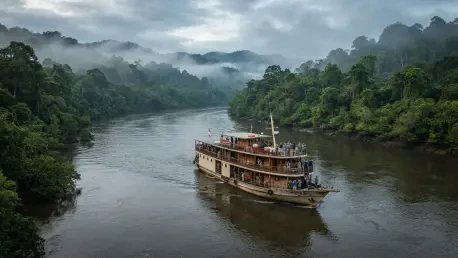

The upcoming March 2027 launch of the Borneo River Cruise on the Rajang River introduces the island’s first long-stay expedition using a specialized sixteen-cabin vessel. This development stands as a centerpiece of the Sarawak Tourism Board’s ambitious roadmap, recently unveiled to position Malaysia’s largest state as the definitive entry point to the island. By moving away from the generic discover-themed campaigns, the state has embraced the Gateway to Borneo identity, a strategic pivot designed to capture high-value international travelers. This transition is not merely a marketing exercise but a structural realignment of the state’s tourism ecosystem, prioritizing its immense biodiversity and UNESCO-recognized heritage. As the tourism board targets the 2027 travel season, the focus has shifted toward creating a unified narrative that emphasizes Sarawak as the natural starting point for authentic exploration. This rebranding effort serves to consolidate the state’s diverse cultural and natural assets into a singular, premium brand.
Enhancing Global Connectivity and Visitor Logistics
Building on this rebranding foundation, Sarawak is aggressively expanding its international reach through high-level partnerships with major aviation carriers. A significant Memorandum of Understanding signed with Malaysia Airlines at the World Travel Market London 2026 has paved the way for intensive joint marketing efforts specifically targeting the United Kingdom and European markets. By leveraging the airline’s extensive travel trade networks, the state aims to ensure that Sarawak remains at the forefront of traveler consciousness when planning complex Southeast Asian itineraries. This collaboration focuses on positioning the capital city, Kuching, as a primary landing spot, offering seamless transitions from long-haul flights into the heart of the Bornean rainforest. Such strategic alliances are crucial for overcoming geographical barriers and establishing the state as a sophisticated travel hub. These efforts are supported by data-driven marketing campaigns that highlight the ease of access.
Complementing the international connectivity push is a focus on simplifying the internal visitor experience through the AirBorneo collaboration. Scheduled for a full rollout in early 2027, the Discover Sarawak Pass and the Kuching Stopover Programme represent a logistical breakthrough for regional travel. The Discover Sarawak Pass integrates flights, lodging, and local transfers into a single digital package, removing the friction often associated with navigating remote destinations. Meanwhile, the Kuching Stopover Programme is designed to convert transit passengers into active tourists by providing incentives for short-term stays to explore the city’s heritage before moving onward. These initiatives are expected to significantly increase the average length of stay while ensuring that the economic benefits of tourism are distributed more broadly among local hospitality providers. By streamlining the path from the airport to the jungle, Sarawak is demonstrating its commitment to being a user-friendly gateway that prioritizes traveler convenience.
Innovative Niche Tourism and Heritage Preservation
The shift toward niche, high-value experiences is best exemplified by the expansion of slow tourism initiatives that emphasize depth over speed. The Borneo River Cruise, operating on the Rajang River, is designed to offer deep-access tours of remote river communities that were previously difficult to reach. This sixteen-cabin vessel provides an intimate setting for travelers to engage with the living heritage of indigenous groups through itineraries spanning four to seven nights. This approach moves away from mass-market tourism models, focusing instead on cultural immersion and responsible engagement with local traditions. By providing a platform for travelers to experience the island’s interior in a controlled and sustainable manner, Sarawak is setting a new standard for luxury expedition travel in the region. This initiative not only protects the integrity of the host communities but also provides a unique selling proposition that distinguishes Sarawak from other destinations in Southeast Asia’s market.
Parallel to the development of river-based tourism is the state’s commitment to preserving its geological and industrial heritage. The Sarawak Delta Geopark, having achieved status as a UNESCO Global Geopark in April 2026, serves as a primary site for scientific tourism and environmental education. This designation highlights the region’s unique geological formations and endemic biodiversity, providing a sophisticated framework for sustainable exploration. Complementing this is the Wallace Centre in Santubong, which honors the legacy of naturalist Alfred Russel Wallace and provides a historical context for the island’s natural wonders. Furthermore, the opening of the Brooke Dockyard Industrial Heritage Museum has added a layer of urban history to the visitor experience, featuring the historic HHY Zahora ship. These projects represent a significant investment in cultural infrastructure, ensuring that the state’s historical narrative is as compelling as its natural beauty for all who visit.
Global Recognition and Major International Events
The momentum for the 2027 tourism year is further bolstered by a calendar of high-profile international events that showcase the state’s modern infrastructure. Sarawak has been selected to co-host the 2027 Southeast Asian Games, with eighteen different sports scheduled to take place across various modern venues within the state. This regional sporting event provides a massive platform to display Sarawak’s hospitality and technical capabilities to an international audience, likely driving a surge in regional arrivals. Simultaneously, the iconic Rainforest World Music Festival will celebrate its thirtieth anniversary in 2027, continuing its legacy as a premier global cultural event. Held at the Sarawak Cultural Village, the festival serves as a vital bridge between traditional indigenous music and contemporary global trends, drawing thousands of international enthusiasts. These large-scale events are essential for testing and refining the state’s logistical systems, ensuring that the gateway infrastructure is fully ready.
In summary, the strategic roadmap successfully integrated marketing, logistics, and heritage preservation into a cohesive framework for growth. The state demonstrated that a specialized identity, backed by concrete improvements in air connectivity and digital services, could effectively reposition a region in the global market. Moving forward, the focus must remain on the long-term sustainability of these initiatives, particularly in ensuring that local communities continue to lead and benefit from the tourism influx. The recent international recognition, such as winning a PATA Gold Award for innovative marketing, proved that Sarawak’s blend of tradition and technology resonated with modern travelers. Industry leaders should now look toward enhancing the digital infrastructure to further personalize the visitor journey, ensuring that the Gateway to Borneo remains both accessible and technologically advanced. By maintaining this balance between modernization and preservation, the state ensured that its role was sustained.