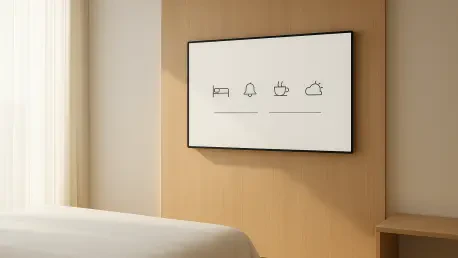

The transition from standalone devices to a unified digital ecosystem represents a fundamental change in how Marriott manages its vast technological footprint. This strategic shift moved away from fragmented hardware setups that often frustrated travelers who sought the same level of connectivity they enjoyed at home. By partnering with LG Electronics, Marriott prioritized a seamless integration where the guest room television served as the central intelligence hub. This collaboration did not merely focus on upgrading screen resolution; it redefined the screen as an interface for property-wide interaction. Guests arriving at flagship locations now encounter a personalized greeting and immediate access to room controls, local dining recommendations, and streaming services tailored to their profile. This deep integration minimized the friction previously associated with logging into third-party accounts or navigating complex hotel menus. The result was a sophisticated environment where technology operated invisibly in the background to enhance every aspect of the stay.
Integrating Smart Technology: The Core of Modern Hospitality
The foundation of this transformation rested on LG’s Pro:Centric platform, which acted as a gateway for internet-of-things devices within the guest suite. Rather than requiring multiple remotes or wall-mounted control panels, Marriott centralized climate control, lighting scenes, and motorized drapery within a single, intuitive interface on the LG OLED displays. This technical synergy allowed for the creation of smart scenes where a guest could select a movie mode that simultaneously dimmed the lights and closed the blinds. Furthermore, the partnership ensured that these features were not limited to premium suites but were scalable across different Marriott brands. This consistency across the portfolio meant that a frequent traveler could expect a familiar interface whether they stayed at a Ritz-Carlton or a Courtyard property. By leveraging high-speed connectivity and robust processing power, the system maintained low latency, ensuring that guest commands were executed with instantaneous precision.
Beyond hardware control, the digital ecosystem addressed the growing demand for personalized entertainment through secure, temporary authentication protocols. Recognizing that modern travelers preferred their own curated content over traditional linear television, LG and Marriott optimized the inclusion of Apple AirPlay 2 and integrated streaming applications. This system permitted guests to pair their personal devices securely without the fear of leaving their login credentials behind after checkout. The software was programmed to wipe all user data automatically upon the guest’s departure from the property, solving a major privacy concern that had hindered previous smart-room initiatives. This approach allowed Marriott to provide a high-value service that felt truly bespoke to the individual guest’s preferences. Consequently, the stay became an extension of the guest’s digital home life, providing access to music, movies, and fitness programs with zero configuration effort. This level of customization fostered brand loyalty.
Strategic Implementation: Driving Operational Efficiency and Long-Term Value
While guests enjoyed the surface-level benefits, Marriott utilized the back-end capabilities of LG’s technology to drive significant operational efficiencies across its global properties. The implementation of centralized management software allowed hotel engineers to monitor the health of every display and connected device from a single dashboard. This proactive maintenance model meant that technical issues could often be identified and resolved before a guest even noticed a problem, drastically reducing the volume of service calls. Additionally, the energy-efficient design of LG’s latest commercial OLED panels contributed to Marriott’s broader sustainability goals. These displays were engineered to adjust brightness based on ambient light conditions and to enter deep-sleep modes when no motion was detected in the room. By optimizing power consumption on a per-room basis, the hotel chain realized substantial savings in utility costs while also reducing its carbon footprint. This marriage of performance and environmental responsibility became a hallmark of the effort.
The successful deployment of these integrated systems demonstrated that the future of hospitality depended on the invisible fusion of hardware and software. Marriott took the necessary steps to ensure that their digital infrastructure remained flexible enough to accommodate further innovations in voice recognition and cloud computing. By standardizing the LG Pro:Centric environment, the company established a robust framework that supported rapid updates without requiring frequent hardware replacements. Stakeholders observed that the initial investment in high-quality smart displays paid off through increased guest satisfaction scores and decreased long-term operational overhead. Moving forward, the industry learned that technology should never be an obstacle but rather a silent facilitator of comfort and convenience. The collaboration between these two industry leaders proved that a unified platform was the most effective way to meet the rising expectations of the modern traveler. As properties continued to evolve, the focus remained on refining digital touchpoints for reliability.