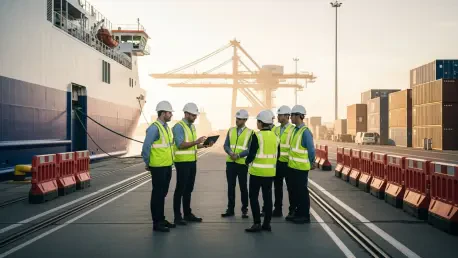

Forklifts hummed beside check-in lanes reborn as expo aisles while cruise signage blinked over badge printers, and Dover’s working terminal turned into the stage ports had been waiting for. The British Ports Association’s flagship conference arrived inside Cruise Terminal 1, placing policy talk and procurement next to the real logistics that move people and goods every day.
The result raised a question that set the tone for the week: what happens when a record-breaking industry gathering lives inside the beating heart of operations? With 450 delegate places—up from a sold-out 350 last year—the answer pointed toward scale, speed, and unusually candid collaboration.
The Nut Graph: Why This Matters
Moving into the UK’s busiest ferry port was more than a venue switch; it was a statement about urgency. Decarbonization deadlines, supply chain volatility, and rising expectations from customers and communities demanded a forum with access to the machinery, data, and decision-makers who could act now.
The conference’s growth underscored a wider trend in business events: immersive formats that blur the line between stage and site. By expanding into a three-day program with a core conference on October 21–22, organizers signaled that deeper engagement—not just bigger numbers—should drive outcomes across the sector.
Inside the Terminal: Format, Access, and Signature Moments
The program was built for momentum. Daytime sessions ran alongside an enlarged exhibition powered by sponsor activations, while evening networking and a gala dinner tightened bonds that would carry decisions back to boardrooms. The BPA awards capped the formalities by spotlighting innovation that could scale across ports of all sizes.
Crucially, areas typically closed to the public opened to delegates. Back-of-house tours, demo zones, and kit showcases made abstract plans tangible—shore power, digital twins, security upgrades, and landside decarbonization were not slides; they were humming assets under inspection. This is where a heritage terminal met a future-focused agenda.
Local culture had a clear role. Dover Soul at Maison Dieu brought Kent producers to the table and framed place-making as strategy rather than ornament. Regional food and drink told a story of maritime trade and hospitality, anchoring national debate in a community that lives with port operations every day.
The Body: Values, Voices, and the Numbers Behind Them
If a conference reveals its values through action, Port-2-Port did the heavy lifting. Riders rolled in after a 300km-plus charity challenge, demonstrating health, teamwork, and purpose-driven sponsorships that earned coverage beyond the trade press. Participation mechanics invited delegates to contribute miles, donations, or kit support, turning spectators into stakeholders.
Sustainability ran through delivery, not just the keynote deck. Catering partner Pikkle prioritized regional sourcing to cut food miles and uplift local suppliers, while students from a nearby catering college gained frontline experience. Organizers tracked local economic impact and carbon reduction across procurement, transport, and waste—proving that measurement could coexist with hospitality.
Leadership language matched the moment. “This is a pivotal year,” said Doug Bannister, Port of Dover CEO, emphasizing the need to “future-proof” the sector by uniting infrastructure, policy, and innovation. Freshwater events director Aled Edwards highlighted continuity with ambition: capacity growth without dilution, elevated exhibitions that rewarded sponsors, and stronger sustainability built into operations rather than bolted on.
These moves reflected broader event dynamics. Industry research showed rising demand for community-rooted formats, longer dwell time, and hands-on learning. Freshwater’s track record with large public and private programs offered relevant parallels: when operational zones are activated safely, attendee satisfaction and sponsor ROI tend to increase, while content becomes more credible because it is grounded in real-world constraints.
The Playbook: How Ports and Organizers Can Apply the Model
A scalable blueprint emerged. Capacity could rise from 350 to 450 by rethinking circulation, staggering peaks, and expanding exhibition footprints into underused spaces. Safety and meaning came from co-design with operational teams—clear perimeters, timed access, and guided walkthroughs that respected live environments.
Stakeholder alignment worked best when the ecosystem was mapped end-to-end: ports, supply chain partners, local government, educators, and sponsors. Co-created sessions then targeted cross-cutting issues—grid connection, workforce readiness, digital standards—so conversations converted into work plans.
The sponsorship strategy rewarded specificity. Tiered packages linked brand goals to program moments—demos in restricted zones, data-backed case studies on stage, and measurable lead capture. Signature social experiences grounded in place, like Dover Soul, deepened attachment, while cause-led elements such as Port-2-Port multiplied engagement far beyond the show floor.
Conclusion: What Came Next
By landing inside Cruise Terminal 1, the conference reset expectations for maritime events and left a template that others could adapt with confidence. Delegates departed with sharper roadmaps, sponsors captured qualified interest through hands-on proof, and local partners gained income, profile, and skills.
Registration, exhibition sales, and sponsorships remained open via BPA2026.com, giving organizations a timely path to secure space and plan activations. Teams that set early milestones—content submissions, demo logistics, and talent engagement with colleges—moved fastest from talk to delivery. Most of all, the week showed that when a heritage venue met operational access and measurable sustainability, the sector advanced together rather than in fragments.