
The seamless fusion of abstract imagination and tangible engineering represents the highest evolution of modern experiential marketing and live performance design. Illusion, a Belvedere-based firm, is pioneering a model where the creative-production divide is erased. By housing both worlds under one roof, the company ensures the original spark remains intact from sketch to installation. This approach eliminates the friction often found when separate crews interpret abstract blueprints.
The End of the Creative-Production Divide
The traditional gap between a visionary concept and its physical execution has long been a source of friction in the events industry. When a design team hands off a blueprint to a separate construction crew, the original spark often gets lost in translation or diluted by logistical constraints. A new model is emerging where these two worlds coexist under one roof, ensuring that what is dreamed up in a creative suite can actually be built on a festival ground without compromise.
This integrated workflow allows for a continuous feedback loop between the artist and the engineer. By maintaining a single line of communication, projects avoid the dilution of quality that occurs during handovers. The result is a structure that looks exactly like the digital render, proving that structural feasibility and artistic ambition can successfully inhabit the same space.
Why the “Joined-Up” Service Model Is the New Industry Standard
The “joined-up” service model has shifted from a luxury to an industry necessity. Brands no longer tolerate fragmented workflows caused by managing multiple vendors who speak different professional languages. This integrated approach fosters brand consistency by involving production experts in the earliest conceptual stages. Early collaboration prevents the common pitfall of designing structures that are aesthetically pleasing but physically impossible to construct within logistical limits.
Moreover, this model provides significant cost-efficiency by streamlining the procurement and fabrication process. Organizations can bypass the delays associated with multi-vendor coordination, allowing for greater agility in a fast-paced market. By consolidating these services, agencies ensure that every dollar spent contributes directly to a cohesive and high-impact physical presence.
Strategic Infrastructure and the Logistics of Scale
Scaling for global impact requires a robust physical footprint. The acquisition of Southern Van Lines Storage in London provided the capacity needed for long-term asset management and massive construction. Larger storage facilities allow for the management of complex tours and the preservation of high-value materials. This logistical backbone ensures that even the most ambitious multi-city programs can be executed with precision and reliability.
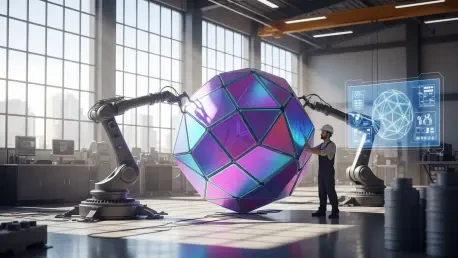
Furthermore, large-format 3D printing allows for complex shapes that traditional materials like timber and steel cannot achieve. This technology also supports sustainability by optimizing material usage and reducing construction waste. By utilizing additive manufacturing, production teams can create intricate structures faster than ever before while maintaining a high standard of environmental responsibility.
Expert Leadership and the Human Element of Production
Specialized leadership remains the backbone of large-scale installations. Appointing dedicated directors for operations and production created a framework capable of handling high-pressure environments. These roles ensure continuity between the brand’s vision and the workshop’s output. The industry validated this model by awarding the firm “Event Production of the Year,” highlighting the success of unified production strategies over siloed competition.
Establishing a dedicated client services team has also revolutionized how projects are managed. This human element acts as a bridge, ensuring that the technical complexities of construction are clearly communicated to the brand stakeholders. By prioritizing this specialized talent alongside advanced machinery, organizations can maintain a scalable and professional framework for any experiential challenge.
Strategies for Building a Seamless Experiential Partnership
Success in these projects relied on early-stage consulting to vet designs before fabrication. Agencies sought scalable partners with the capacity to refurbish assets for multi-year tours. Unified workflows and technology-driven fabrication ensured the transition from digital model to reality occurred without friction. These strategies established a durable foundation for future experiential excellence across the global event landscape.
Moving forward, the industry prioritized partners who offered a single point of contact for both design and engineering. Digital modeling and 3D visualization became essential tools for testing structures before they arrived on-site. By leveraging these integrated methodologies, brands successfully navigated the complexities of large-scale production while delivering immersive experiences that resonated with global audiences.