
Historical preservation remains a core focus of the project, ensuring the building’s 14th-century character is protected during its transition into a modern business hub. This ambitious redevelopment project addresses a growing demand for venues that offer more than just sterile conference rooms, blending centuries of English history with the rigorous technical standards of contemporary global commerce. Situated in the heart of Lincoln, the property has undergone a comprehensive multi-million-pound transformation that respects its 1386 origins while integrating the infrastructure necessary for high-stakes corporate engagement. By focusing on this intersection of heritage and utility, the hotel positions itself as a central pillar for regional economic growth, drawing interest from firms looking for unique locations outside the traditional hubs. This initiative underscores a broader shift in the hospitality sector where legacy buildings are reimagined as dynamic centers for networking.
Architecture and Infrastructure: Merging History With Utility
Specialized Spaces for Corporate Engagement
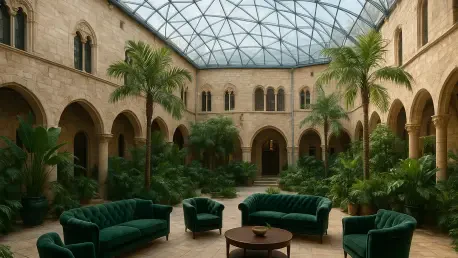
The centerpiece of the new architectural layout is the Royal Courtyard, a sophisticated space sheltered by a striking glass dome that floods the area with natural light, creating an environment conducive to productivity and high-level networking. Capable of hosting 100 delegates, this area is often paired with the adjacent King Richard II Suite to accommodate larger gatherings of up to 200 individuals. This flexibility allows for seamless transitions between formal presentations and social receptions, a critical requirement for modern multi-day events. Beyond the larger halls, the facility provides intimate settings like the Tank Room, which pays homage to the local invention of the military tank in 1915. This specific room caters to private executive sessions for up to ten people, offering a sense of gravity and historical importance that modern builds often lack. Such spatial diversity ensures that the venue can handle a wide spectrum of corporate needs, from massive product launches to board meetings.
Technical Integration and Modern Amenities
While the aesthetic remains rooted in the medieval era, the underlying technology is entirely forward-looking, featuring specialized audio-visual systems and high-speed connectivity throughout the premises. This integration was a primary driver of the investment, as the success of contemporary business centers relies heavily on their ability to support hybrid meetings and complex digital presentations. The hotel’s reputation for excellence is further bolstered by its history of hosting high-profile figures, ranging from British royalty to Hollywood actors, who appreciate the blend of privacy and luxury. Dedicated event coordinators now manage the logistics of every booking, ensuring that the technical aspects of a conference run as smoothly as the hospitality service. Furthermore, the provision of dedicated parking in a historic city center provides a significant logistical advantage for regional attendees. By offering these premium services at a competitive delegate rate, the venue attracts major clients.
Strategic Market Positioning and Economic Impact
Regional Growth and the Destination Experience
The revitalization of the property is part of a larger strategic push by the Loxley Collection to elevate regional hospitality standards and capitalize on the trend toward destination-based business travel. In 2026, corporate planners are increasingly seeking locations that offer cultural depth alongside professional amenities, a combination that Lincoln provides in abundance. By centering the business experience around local heritage and high-quality hospitality, the hotel encourages delegates to engage more deeply with the city’s surroundings, potentially extending their stays for leisure purposes. This approach transforms a standard business trip into a meaningful cultural exchange, which is becoming a key metric for employee engagement and wellness. The move also serves to strengthen the local economy by attracting international visitors who might otherwise bypass regional English cities. The successful launch of this business hub demonstrates that historical assets can serve as powerful catalysts for civic pride.
Future Considerations: Lessons in Heritage Management
Property owners found that the most effective path toward long-term viability involved a rigorous assessment of how historic constraints could be turned into unique selling points rather than obstacles. The project established a blueprint for future developments within the Loxley Collection, emphasizing that the preservation of architectural integrity must be coupled with an uncompromising commitment to modern service standards. Successful integration required stakeholders to prioritize high-specification digital infrastructure and flexible spatial design early in the planning phase to avoid costly retrofitting later. Industry analysts noted that the ability to offer a tangible connection to history provided a distinct competitive edge in an increasingly digital and homogenized marketplace. Decision-makers in the hospitality sector should have looked toward similar regional investments as a means to diversify their portfolios and mitigate the risks associated with saturated urban markets. Moving forward, the focus shifted toward sustainable practices.