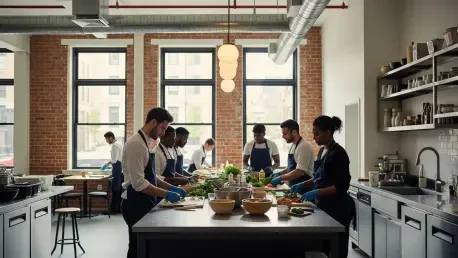

The survival of a beloved local institution often rests on a precarious balance between artistic integrity and the harsh realities of a competitive urban marketplace. In the heart of New York City’s East Village, Caravan of Dreams has stood as a sanctuary for organic, plant-based dining for nearly thirty-five years, yet its long-standing legacy was recently pushed to the absolute brink of total collapse. Angel Moreno, the 76-year-old entrepreneur behind the establishment, found himself trapped in a nightmare of mounting debts and predatory financial schemes that threatened to erase decades of hard work. While many businesses succumb to such pressures in silence, the story of this specific restaurant took an unexpected turn that captivated the digital world. The struggle highlights a broader tension facing small business owners who prioritize quality over profit, especially when external economic shifts and personal tragedies converge to create a perfect storm of financial instability that seems impossible to navigate without external intervention.
A Philosophical Commitment to Culinary Purity
The Cost of Uncompromising Standards: High-Quality Operations
For decades, the operational model of this East Village landmark was built on a philosophy that many modern consultants would deem financially reckless in a city like New York. Moreno’s dedication to health and purity meant that he frequently chose the most expensive ingredients and equipment available, regardless of how they impacted his profit margins or overhead. For instance, the restaurant exclusively imported a specific type of Moroccan olive oil, selected solely for its exceptionally high polyphenol content, which costs significantly more than standard organic options. Furthermore, the kitchen served specialty bread that cost $16 per loaf, maintaining this standard even when waste levels were high. To ensure the purity of every dish, a complex seven-stage water filtration system was installed and maintained at a high cost. While these choices fostered a deeply loyal following among health-conscious diners, they also ensured that the business operated with virtually no financial cushion for emergencies.
The pursuit of excellence extended beyond the ingredients and into the very infrastructure of the dining experience, creating a unique but fragile ecosystem. This commitment to quality became a double-edged sword as the cost of living and the price of raw organic materials surged in the mid-2020s. Every decision to prioritize the customer’s health over the bottom line effectively reduced the restaurant’s ability to weather a prolonged downturn. While other establishments might have compromised by switching to cheaper suppliers or reducing the complexity of their filtration processes, Moreno refused to deviate from his original mission. This rigid adherence to his founding principles created a product that was irreproducibly high in quality but left the owner personally exposed when the broader economic climate began to sour. The lack of a rainy-day fund meant that any disruption to the daily cash flow would immediately threaten the ability to pay staff, rent, and the premium suppliers that defined the brand.
Financial Vulnerability: The Aftermath of Global Disruption
The stability of the restaurant was fundamentally shaken by the lasting impacts of the global pandemic, which permanently altered the foot traffic patterns of the East Village. Even by 2026, the recovery of the regular customer base remained incomplete, leaving a revenue gap that Moreno struggled to bridge using traditional means. In a desperate attempt to keep the doors open and continue paying his dedicated staff, he exhausted a $150,000 small business loan and maxed out multiple credit cards to cover immediate operating expenses. These high-interest obligations began to compound, creating a cycle of debt that was increasingly difficult to service with the reduced margins of a high-cost organic kitchen. The situation was further exacerbated by the rising costs of labor and commercial utilities in Manhattan, which have reached record highs in recent years. Moreno found himself working longer hours at 76 years of age, yet the financial hole only seemed to grow deeper as time went on.
Beyond the systemic economic challenges, the personal financial health of the owner became inextricably linked to the survival of the business in a way that left him vulnerable to outside threats. As the pressure mounted to find a permanent solution to the mounting debt, Moreno became a target for opportunistic actors looking to exploit the desperation of elderly business owners. The intersection of a slow economic recovery and the specific overhead demands of an organic kitchen created a situation where the owner was forced to seek unconventional capital injections. This period of intense stress and financial strain set the stage for a catastrophic personal loss that nearly served as the final blow to the institution. The restaurant was no longer just a business; it had become a liability that threatened to consume Moreno’s entire life’s work. The fragility of independent restaurants in high-rent districts was laid bare as the debts reached a point where traditional bankruptcy seemed like the only remaining exit.
The Intersection of Crisis and Digital Advocacy
The Devastating Impact: Victims of Financial Scams
A tragic turning point occurred when Moreno, in an attempt to secure the restaurant’s future, fell victim to a sophisticated investment scam that wiped out his entire personal safety net. Desperate to preserve his remaining capital and find a way to clear the restaurant’s debts, he was misled by a fraudster who promised safe returns but eventually vanished with $300,000 of his life savings. This loss was not merely a personal blow; it removed any remaining possibility of Moreno self-funding the business through its current crisis or retiring with dignity. The scam highlighted a growing trend where elderly entrepreneurs are targeted with fraudulent capital preservation schemes, often at their most vulnerable moments. With his savings gone and the restaurant’s debt approaching $320,000, the situation appeared entirely hopeless. The emotional and physical toll on Moreno was immense, as he faced the prospect of losing both his home and the culinary legacy he had spent thirty-five years building in the heart of New York City.
The disappearance of these funds meant that there was no longer a path to recovery through traditional banking or private restructuring. The loss of $300,000 represented decades of frugality and hard work, intended to serve as a final defense for the Caravan of Dreams. Without this capital, the restaurant could no longer meet its basic obligations, and the threat of eviction became an imminent reality. The psychological impact of being defrauded can be paralyzing, yet Moreno continued to show up to the kitchen every day, driven by what his partner described as an irrational faith in the mission of the restaurant. This period was marked by a profound sense of isolation, as the small business owner struggled to reconcile his commitment to public health with the harsh reality of his financial ruin. It was only when this private struggle was brought to light through an external narrative that the trajectory of the restaurant began to shift from certain closure toward an unprecedented and rapid recovery.
A Viral Catalyst: The Power of Social Media Advocacy
The narrative took a dramatic and life-saving turn when Brandon Stanton, the creator of the celebrated Humans of New York project, encountered Moreno’s story and shared it with his global audience. Through a poignant and deeply personal interview with Moreno’s partner, Mercedes Gallego, the post detailed the contrast between the owner’s selfless commitment to his customers and the predatory forces that had brought him to the edge of ruin. This exposure acted as a massive megaphone, transforming a struggling local GoFundMe campaign into a viral cause that resonated with thousands of people who had never even visited the East Village. The power of digital storytelling allowed the public to see the restaurant not just as a place to eat, but as a vital cultural asset worth protecting. Within a matter of hours, the campaign was flooded with donations from around the world, proving that collective action could effectively counteract the damage caused by financial fraud and systemic economic pressures.
The response was immediate and overwhelming, with approximately 9,000 individual donors contributing to the cause in a display of digital solidarity. In a very short period, the campaign raised over $306,000, nearly reaching the ambitious $320,000 goal required to clear all outstanding debts and secure the restaurant’s lease. This influx of capital was more than just a financial lifeline; it was a validation of Moreno’s lifelong philosophy and a rejection of the forces that seek to exploit small business owners. The viral nature of the support demonstrated how modern technology can be harnessed to protect legacy institutions that provide genuine value to their communities. By connecting a global audience to a specific local crisis, the campaign provided a buffer against the unforgiving nature of the New York City real estate and financial markets. This collective intervention effectively hit the reset button for the restaurant, allowing Moreno to focus once again on his mission of providing high-quality, organic nutrition without the immediate threat of total bankruptcy.
Future Strategies: Lessons in Small Business Resilience
The successful intervention for Caravan of Dreams provided a blueprint for how community-focused businesses can leverage modern storytelling to navigate existential threats. To ensure long-term stability, small business owners must now look toward diversifying their revenue streams and building more robust digital presences before a crisis occurs. This includes creating membership programs or community-supported agriculture models that provide consistent cash flow regardless of daily foot traffic. Furthermore, the incident underscored the critical need for increased financial literacy and fraud prevention resources specifically tailored for aging entrepreneurs in the hospitality sector. Established institutions should also consider forming local alliances to negotiate better rates with suppliers and utilities, reducing the individual burden of high overhead costs. By shifting from a model of isolated struggle to one of collective transparency and engagement, independent restaurants can build the social capital necessary to survive in an increasingly volatile economic environment.
The restoration of financial stability for this iconic restaurant demonstrated that the public deeply values authenticity and health-conscious missions over standardized corporate dining. As the campaign concluded, the funds were utilized to pay off the high-interest loans and credit card debts that had been suffocating the operation. Moreno was able to retain his staff and continue the expensive filtration and ingredient sourcing that defined his brand, ensuring that his standards remained uncompromised. The transition from the brink of closure to financial security highlighted the necessity of a strong support network in the modern economy. Ultimately, the community decided that the loss of such a unique institution would be a detriment to the neighborhood’s character and health. The experience served as a powerful reminder that while the market can be indifferent to individual struggles, a well-told story can mobilize a global village to preserve a local treasure. Moving forward, the restaurant focused on implementing better financial safeguards and continuing its legacy as a sanctuary for purity in a crowded city.